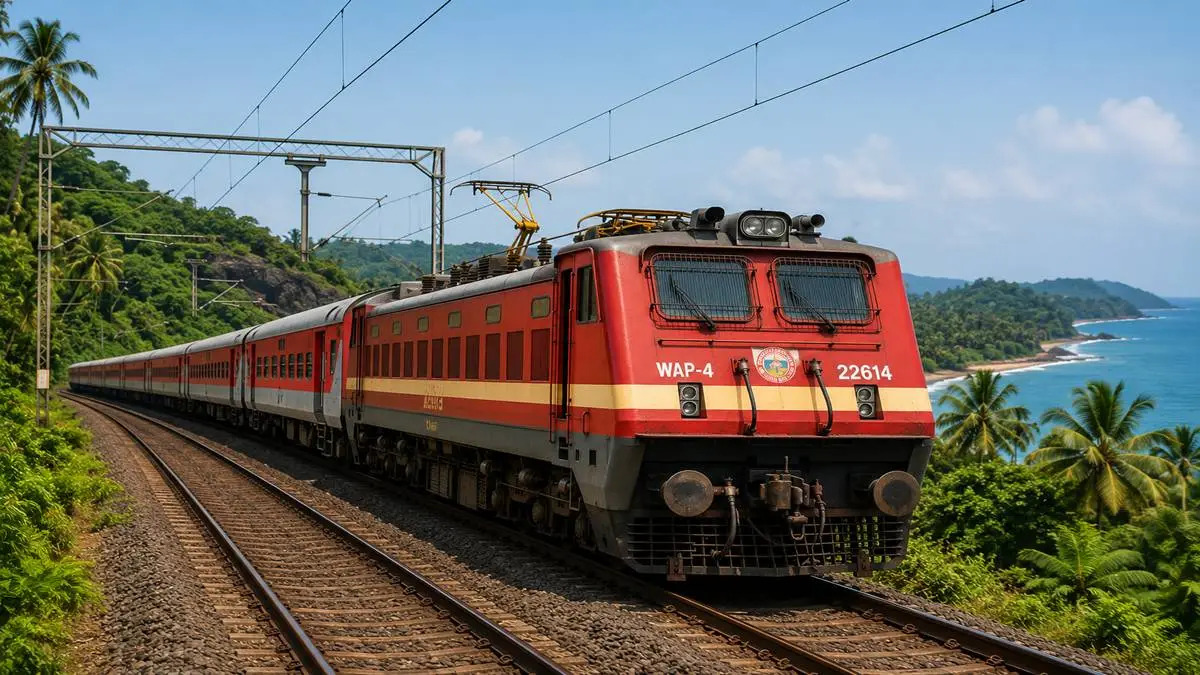
A new daily rail service linking Mumbai with Sawantwadi Road has begun operations ahead of Ganeshotsav, adding capacity on one of Maharashtra’s busiest seasonal travel corridors. The service is aimed at easing festival travel to Raigad, Ratnagiri and Sindhudurg while improving year-round access to the Konkan region. Beyond the immediate passenger demand, the connection could influence tourism, local commerce and the movement of workers and students between Mumbai and smaller coastal towns. The inaugural service was flagged off from Chhatrapati Shivaji Maharaj Terminus, with the first special train operating as service 01001. The route connects CSMT with Sawantwadi Road and includes stops at major suburban and Konkan stations, including Dadar, Thane, Panvel, Roha, Chiplun, Ratnagiri, Kankavli and Kudal.
The timing is significant. Ganeshotsav traditionally triggers a sharp increase in movement from Mumbai towards Konkan, where many families maintain ancestral homes. Additional scheduled capacity can reduce pressure on roads and provide an alternative to long-distance private vehicle travel during the festival period. The Mumbai Konkan connectivity push also has an economic dimension. Easier rail access can widen the visitor base for coastal destinations while supporting demand for accommodation, local transport, food services and small businesses. Urban planners, however, note that tourism growth is most beneficial when local infrastructure can absorb additional visitors without putting excessive pressure on water, waste management, roads and sensitive coastal ecosystems.
The train has a mixed configuration covering different passenger needs. It includes AC First Class, AC 2-Tier and AC 3-Tier coaches, along with sleeper and general second-class coaches. This creates a broader fare and comfort range for passengers travelling for family visits, education, employment or tourism. The wider railway capacity plan is also relevant to Mumbai’s regional mobility. Railway authorities have indicated that the suburban network currently handles about 3,200 services daily, with a target of 3,500 by 2030. Orders have also been placed for 238 air-conditioned local train rakes, with deliveries expected to begin from 2027 and continue through 2030. For Konkan, the value of the Mumbai Konkan connectivity expansion will ultimately depend on reliability beyond the festival rush. A dependable rail link can support more distributed economic activity by connecting smaller towns with Mumbai’s employment and consumer markets.
As Ganeshotsav approaches, the immediate priority will be handling the seasonal surge safely. Longer term, integrating rail improvements with local public transport and tourism infrastructure will determine whether better connectivity translates into durable regional growth rather than simply larger visitor numbers.