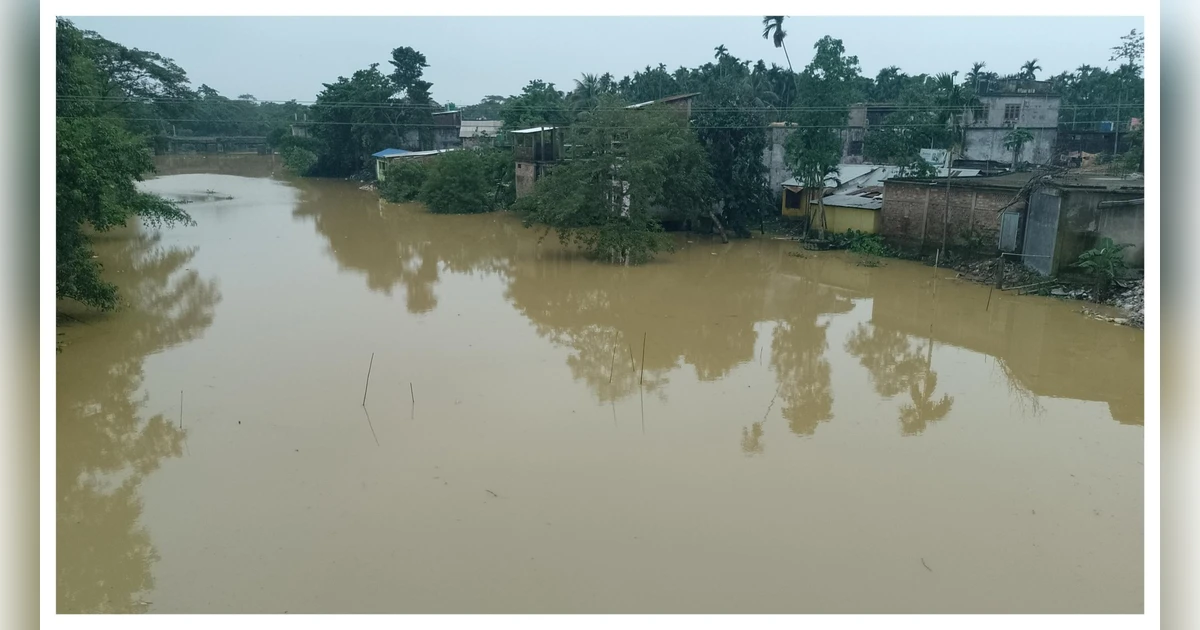
Kolkata is among the South Asian cities facing a mounting threat from rising sea levels, with a new United Nations assessment warning that permanent inundation could put millions of people across the region at risk of losing their homes. For Kolkata, the warning carries implications well beyond flooding, reaching housing, drainage, transport, groundwater, livelihoods and the long-term economics of urban development.
The UN Secretary-General’s report on sea-level rise identifies Kolkata, Mumbai and Dhaka within the low-lying South Asian delta region where human displacement is expected to become a defining consequence of rising seas. More than 14 million people across these areas are described as being at immediate risk from permanent inundation.The scale of the challenge is linked to a changing global baseline. Global mean sea level increased at an average rate of 4.7 mm annually between 2014 and 2023, before reaching 5.9 mm in 2024. The UN says at least 0.5 metres of rise by 2100 remains possible even under strong emissions reductions, while higher-end scenarios could produce substantially greater increases.For Kolkata, geography makes the warning particularly significant. The city sits beside the tidal Hooghly and within the wider Ganga-Brahmaputra delta system. Its relatively low elevation means that sea-level rise does not operate in isolation. High tides, intense rainfall, river flooding and storm surges can combine to increase waterlogging and disruption.
Research on Kolkata has already linked flood vulnerability to intense rainfall, inadequate drainage, expanding built-up surfaces and the loss or degradation of natural water-retention areas. Studies also identify land subsidence as an additional factor that can amplify flood exposure.The consequences extend into the city’s economic foundations. Flooding can interrupt public transport, damage roads and buildings, disrupt businesses and place additional pressure on drainage and sanitation systems. Saltwater intrusion can also threaten freshwater sources and soils, creating risks for water security and surrounding agricultural systems.Urban planners and climate researchers increasingly argue that Kolkata’s response cannot depend solely on larger drains or flood barriers. Development decisions need to account for floodplain conditions, drainage capacity, wetlands, groundwater and future climate exposure. Protecting natural buffers can also reduce pressure on expensive engineered infrastructure.
The UN assessment puts a wider planning question before Kolkata: whether future investment should simply protect today’s urban footprint or anticipate how climate change could alter where and how people can safely live. For a city already facing intense monsoon rainfall and flood exposure, integrating sea-level projections into housing, infrastructure and land-use decisions will become increasingly important.