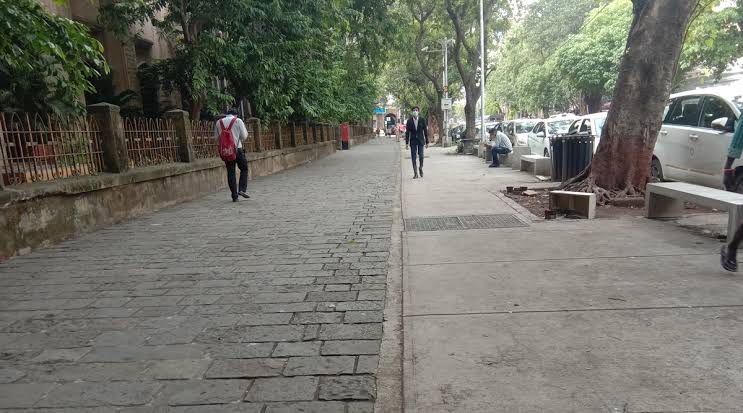
Mumbai Footpath Clearance Expands Across Key Transit Areas
Mumbai’s civic administration has expanded its footpath enforcement drive, with action taken against encroachments at 134 of the 200 pathways identified for the first phase. The campaign has covered 1,459 locations across all 26 administrative wards, while a recent operation near Bhandup Railway Station removed 94 unauthorised stalls. The scale of the exercise puts pedestrian access at the centre of a wider debate over how Mumbai manages limited public space. The latest operation in Bhandup focused on roads surrounding the western side of the railway station, where informal stalls and other obstructions had narrowed routes used by daily commuters. Civic teams also identified 14 footpaths for clearance in the area, with work reported to be under way at 11 locations.
The Mumbai footpath clearance programme is significant because railway stations generate concentrated pedestrian movement. When walking space is occupied by commercial activity, construction material or other obstructions, pedestrians are often pushed towards carriageways. That can increase conflict between people walking and moving vehicles, particularly during morning and evening peaks. The operation involved heavy equipment, civic personnel, workers and police support. While such resources can accelerate removal, urban planners say enforcement alone does not guarantee lasting access. Footpaths can become obstructed again unless cleared spaces are properly designed, maintained and monitored. The Mumbai footpath clearance campaign also intersects with the city’s informal economy. Street vending provides livelihoods for many households, making enforcement a question not only of mobility but also of how public space and economic activity coexist.
A sustainable approach requires clearly defined vending areas and accessible pedestrian corridors rather than simply shifting commercial activity from one location to another. The civic body is simultaneously targeting Garbage Vulnerable Points, where recurring waste accumulation can turn public areas into informal dumping zones. Removing such pressure points can improve street conditions, but long-term results depend on regular waste collection, enforcement and neighbourhood-level management. The reported figure of nearly 197 km of reclaimed pedestrian space also highlights the potential scale of the intervention. If maintained, additional unobstructed walking routes could improve access to public transport and encourage short-distance journeys on foot, reducing dependence on motorised travel.
The next test will be whether cleared pathways remain usable. For Mumbai, restoring footpaths should be measured not only by the number of encroachments removed, but by the quality, continuity and accessibility of pedestrian routes after enforcement teams leave. That will determine whether the campaign becomes a lasting improvement to the city’s public realm.