


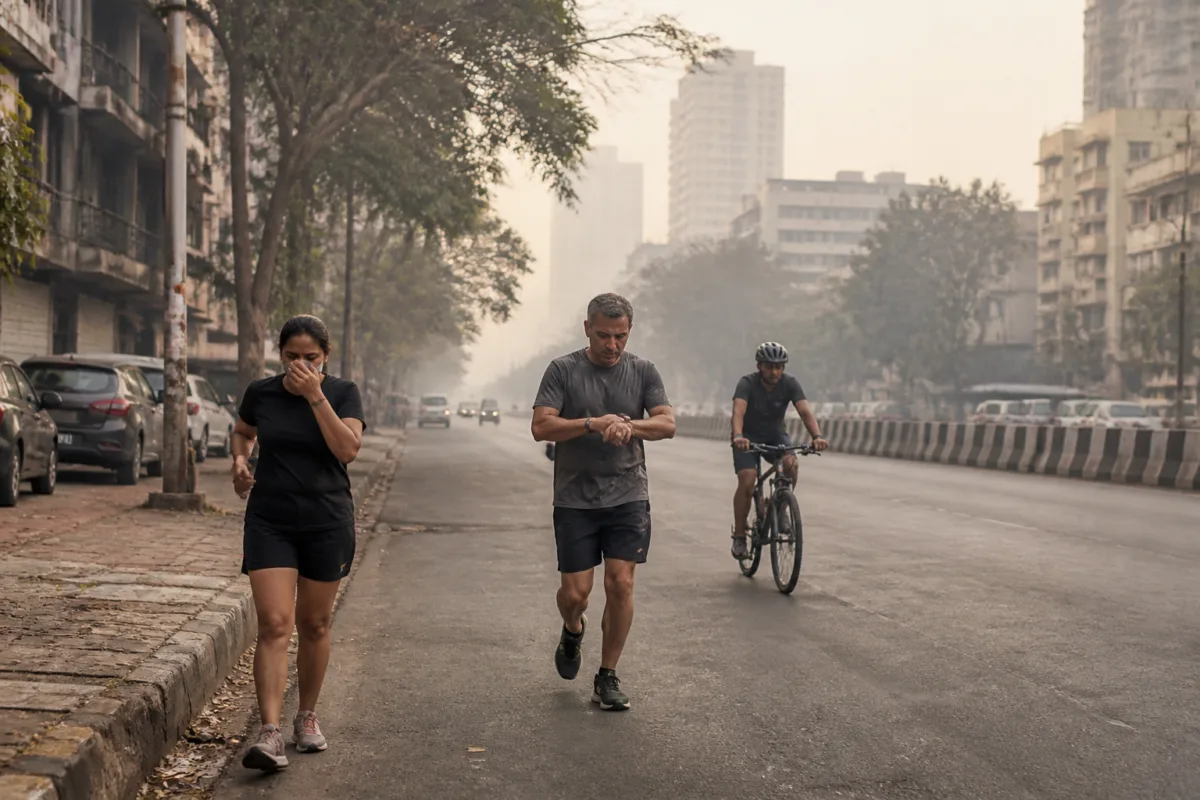
Mumbai’s worsening air quality is disrupting outdoor training for runners and cyclists, with some residents changing workout timings, skipping sessions or shifting part of their routines indoors, according to a Mid-Day report published on November 27.
The report documents the practical effects of polluted air through accounts from fitness enthusiasts and medical specialists. Amateur distance runner and running coach Shreyans Gupta said he avoids training very early in the morning and late at night, when he believes air quality is at its worst. He also said he sometimes takes a break when the AQI crosses 250.
Cyclist Synclair D’Souza, who has been cycling regularly since 2016, told Mid-Day that seasonal deterioration in air quality affects breathing and performance. He reported throat dryness and sickness while cycling and said indoor riding was an alternative, although the cost of an indoor setup could make it inaccessible to some people.
The issue is significant for Mumbai’s public realm because outdoor exercise depends on the usability of streets, open spaces and other public areas. When pollution discourages residents from using these spaces, the impact extends beyond individual training routines. The report also highlights a tension between indoor substitution and the practical conditions athletes need to prepare for outdoor races, including roads, humidity and hills.
Dr Manas Mengar, a senior consultant for pulmonology at KIMS Hospitals, Thane, told Mid-Day that poor air quality can increase the amount of pollutants entering the respiratory tract during exercise because breathing intensifies. He said fine particulate matter, or PM2.5, can travel deep into the lungs and trigger airway inflammation. Possible effects he identified include breathlessness, coughing, throat irritation, wheezing and reduced exercise capacity.
Mengar also warned that repeated exposure can cause persistent airway inflammation, reduce lung function and increase the risk of developing or worsening respiratory conditions such as asthma and chronic bronchitis. He said cumulative exposure was a concern for people who train outdoors regularly when pollution levels remain consistently high.
Some athletes are therefore adopting mixed routines rather than abandoning outdoor training altogether. Rishabh Dedhia, a former sprinter who now runs, told Mid-Day that he prefers indoor sessions for easy recovery runs and outdoor workouts for harder training. He said permanently moving indoors could affect race readiness because outdoor competition involves conditions that treadmills cannot fully reproduce.
The report also considers whether indoor running creates a separate injury risk. Dr Abhishek Nerurkar, a consultant orthopaedic surgeon at Lilavati Hospital, Bandra West, said treadmill running is not inherently more stressful on the knees or feet than road running. A uniform, slightly cushioned treadmill surface may reduce impact compared with harder outdoor surfaces, he said.
Nerurkar added that the effect depends on speed, incline, footwear, running technique and individual biomechanics. Repetitive movement on a treadmill can place sustained stress on particular muscle groups and joints, while a short warm-up and gradual introduction to indoor training can help reduce injury risks.
The accounts point to a growing dependence on personal adjustments—changing workout times, monitoring AQI readings and paying for indoor facilities—when outdoor air becomes difficult to tolerate. However, the report does not provide official citywide AQI data, identify specific pollution-control measures or record a response from Mumbai civic authorities. Those gaps leave the broader scale of the problem and the institutional response unclear, even as residents adapt their daily use of the city’s outdoor spaces.

