


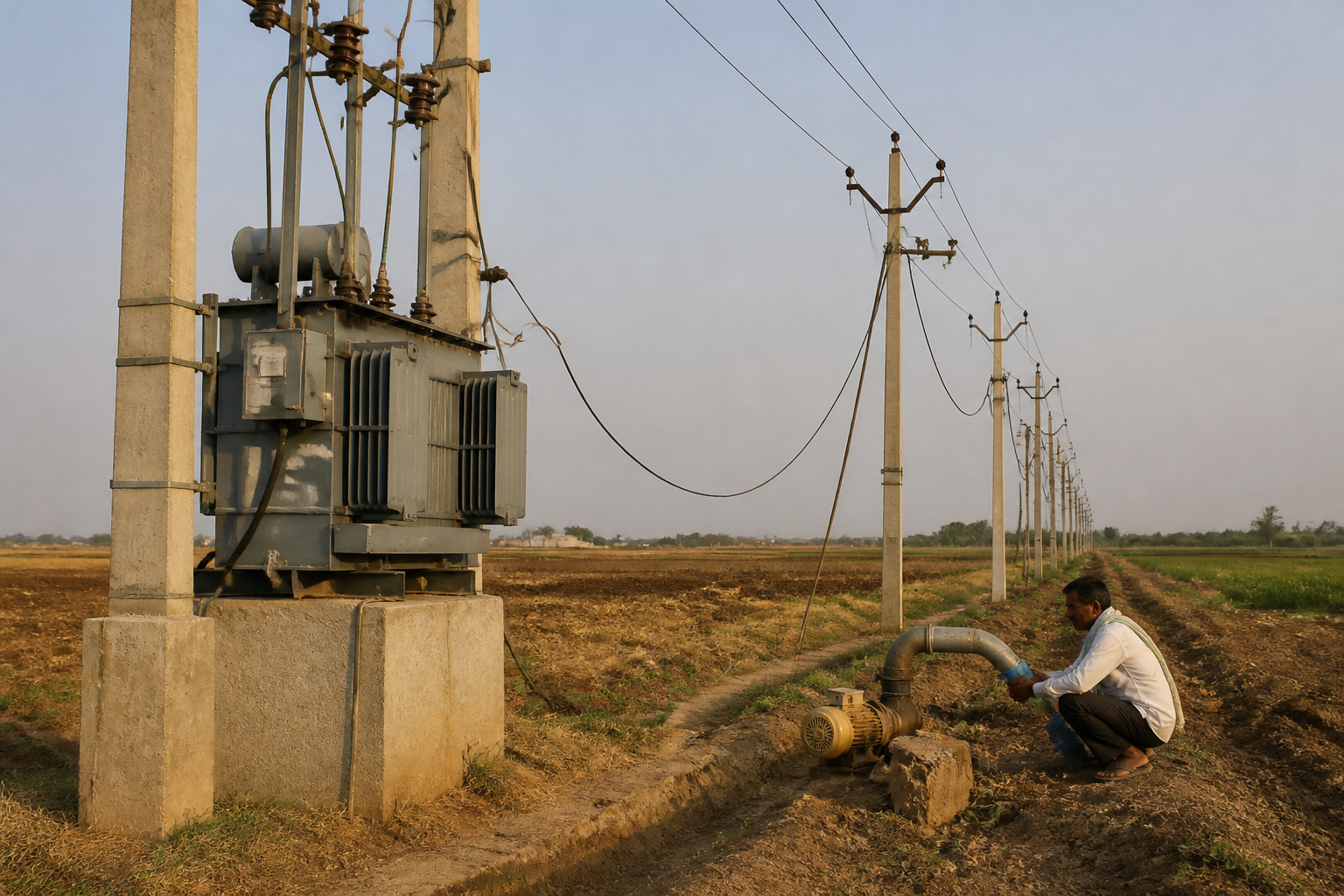
Maharashtra’s cabinet has approved a plan for the Maharashtra State Electricity Distribution Company Limited (MSEDCL) to install 1,000 load-bifurcation transformers in every district, alongside repairs to existing units, in a move aimed at improving electricity supply to farmers during drought conditions.
The specially designed transformers will separate the electricity load of agricultural and residential consumers. According to the reported plan, this will allow MSEDCL to provide more continuous power to agricultural consumers, including those operating motor pumps for irrigation. Implementation is expected to begin after the state government issues a government resolution.
The state has approved an allocation of Rs20 crore for each district under the District Planning and Development Council scheme. The funds will be used for procuring the new transformers and repairing older units. The scale of the intervention means that procurement and district-level execution will determine how quickly the cabinet decision translates into improved supply on the ground.
An MSEDCL official said the entire project would be completed at least before the rabi season. The timeline is significant for farmers who depend on electricity for irrigation during the agricultural cycle, particularly those receiving supply for agricultural motor pumps during night shifts.
The decision comes as drought conditions continue to affect parts of Maharashtra. A Beed-based activist, Uddhav Ghodke, said eight districts in Marathwada were facing a situation where water bodies had little or no water, reducing the immediate use of motor pumps. He added that self-help groups running small agricultural businesses required reliable electricity to operate machinery without interruptions.
Activists and farmers’ organisations have called for rapid implementation, warning that delays in procurement could weaken the purpose of the special allocation. Activist Shripad Lonari said districts should move quickly to procure the transformers after receiving approval for the dedicated budget, or the scheme’s core objective could remain unfulfilled.
The intervention also highlights the operational problem created when agricultural and residential demand is carried through shared distribution infrastructure. Separating the loads is intended to give the utility greater control over supply, although the reported plan does not specify district-wise procurement schedules, transformer specifications, or the number of older units to be repaired.
The next formal step is the issuance of the government resolution, after which district planning and development councils are expected to begin procurement. MSEDCL has indicated that the project should be completed before the rabi season.
