


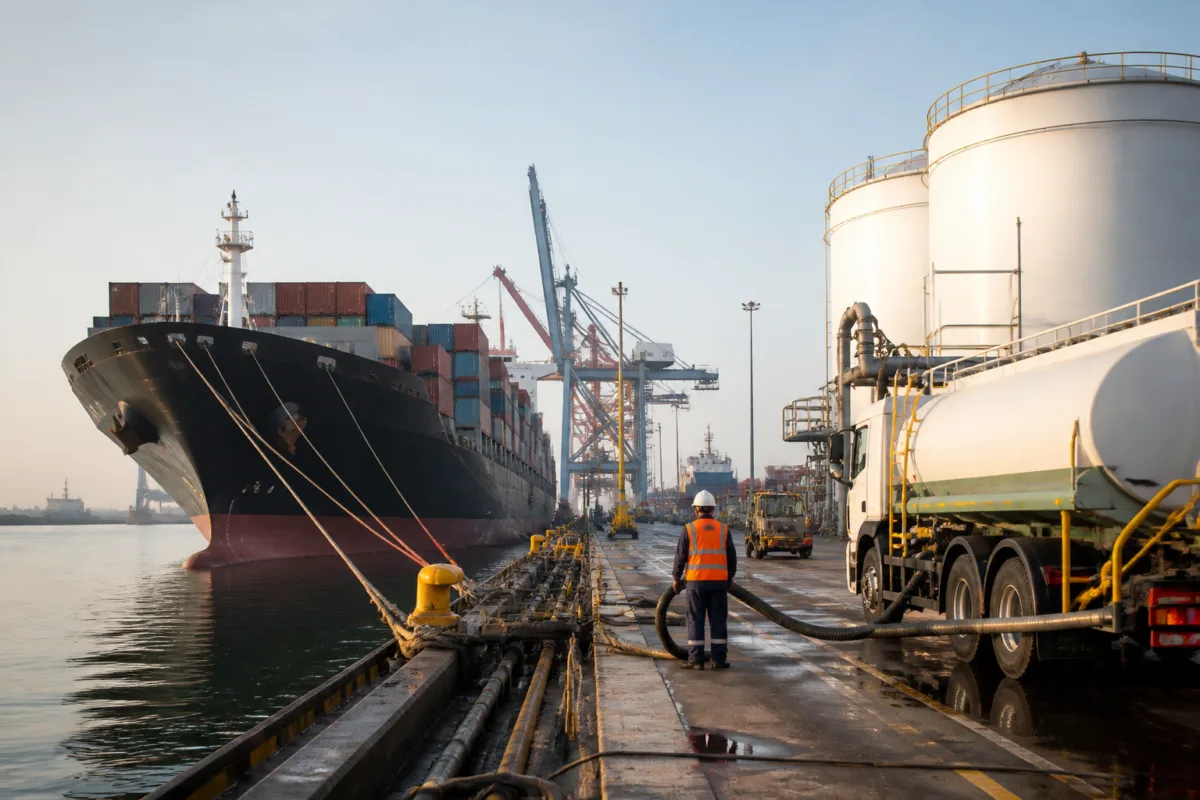
India is considering methanol as the first alternative fuel pathway for ships, with the Centre examining tax concessions, flexible compliance rules and port-level incentives to support the maritime sector’s green transition, according to officials cited by Economic Times.
The ports, shipping and waterways ministry and the director general of shipping have initiated a study on methanol use in shipping. The study is examining measures intended to make it easier for vessels to use Indian methanol refuelling facilities and to encourage suppliers to invest in the supporting infrastructure.
Among the proposals under consideration are uniformity in port charges and faster turnaround times for ships that plan to refuel with methanol. Officials are also examining uniform methanol pricing at Indian ports, infrastructure improvements for quicker vessel turnaround and easier regulatory approvals for setting up refuelling facilities.
The Centre could use tax concessions and flexibility in compliance requirements to encourage shipping companies to switch to methanol, the report said. The suggestions are still being analysed and no final policy decision or implementation schedule was provided in the material available.
Methanol can be produced domestically through sources such as agricultural residue, potentially giving India an alternative to relying only on imported fossil fuels for maritime energy. The report said officials are working to improve the local availability of alternative fuels, while infrastructure development for methanol-based shipping has already begun.
The availability of reliable demand will be important for the proposed fuel transition. Predictable port calls by international container lines could help create demand for methanol and provide suppliers with greater confidence to invest in production, storage and bunkering, the process of supplying fuel to ships.
For ports, the proposed shift would involve more than installing fuel storage. It would require coordinated pricing, vessel-handling procedures, regulatory approvals and refuelling systems so that ships can use methanol without extended delays. The study’s focus on port charges and turnaround times indicates that operational consistency is being considered alongside fuel availability.
The report did not specify the ports that would receive methanol bunkering facilities, the volume of fuel targeted, the proposed tax structure or the timeline for introducing the incentives. The ministry and the director general of shipping are continuing to examine the measures as work on local alternative-fuel infrastructure progresses.

