


Maharashtra’s revenue deficit is estimated at 0.6% of Gross State Domestic Product (GSDP) in 2025-26 and is projected to widen to 0.7% in 2026-27, according to the PRS Legislative Research State of State Finances 2026-27 report cited by the Times of India.
If the budget estimate holds, 2026-27 would be the eighth consecutive year in which the state records a revenue deficit. A revenue deficit occurs when recurring government expenditure exceeds revenue receipts. In practical fiscal terms, this leaves less of the state’s income available for capital expenditure, including spending on roads, bridges and public utilities.
The deficit was recorded at 0.6% of GSDP in 2019-20 before rising sharply to 1.6% in 2020-21. It narrowed to 0.5% in 2021-22 and 0.1% in 2022-23, then increased to 0.3% in 2023-24 and 0.6% in each of the following two financial years, according to the report’s figures.
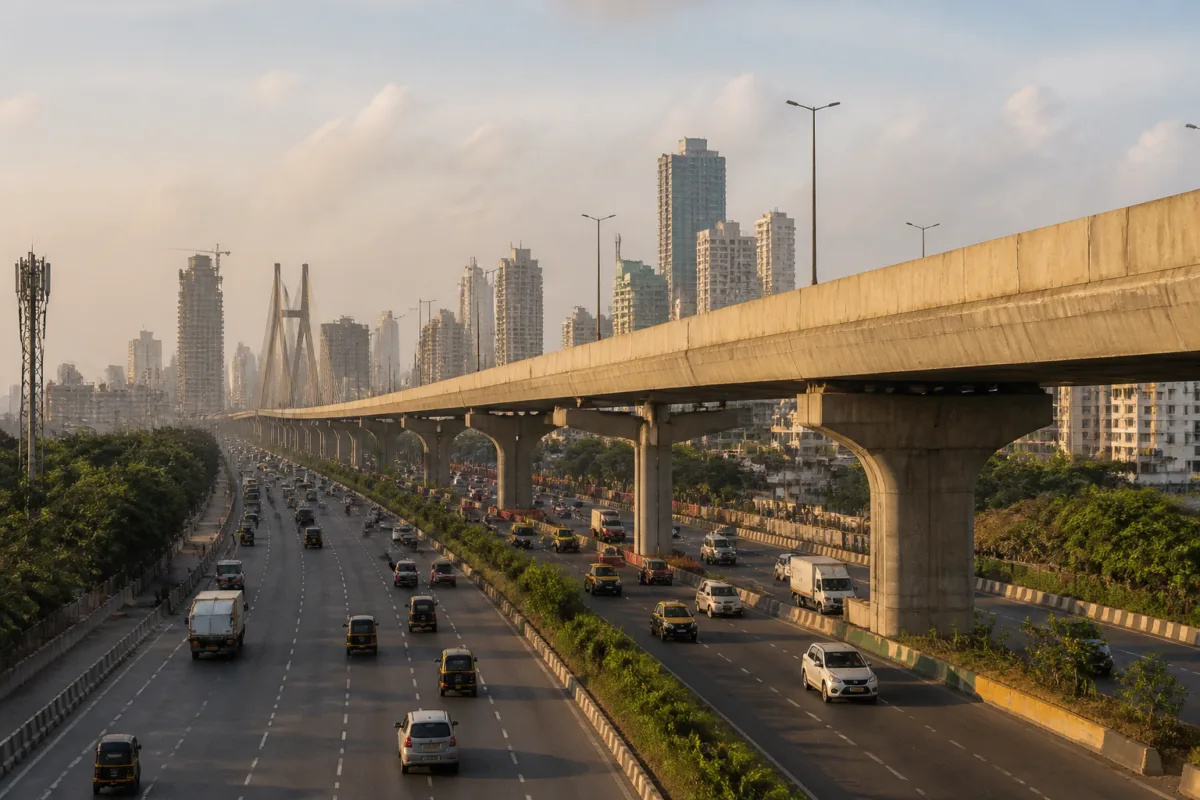
The pattern matters for urban infrastructure because capital projects compete with recurring expenditure for fiscal space. The available figures do not identify specific projects that will be delayed or cancelled, but they indicate that a larger share of government income is being absorbed by routine obligations. The distinction is important for a state managing transport networks, municipal services and other public assets across rapidly growing urban areas.
Maharashtra’s fiscal position is not uniformly weak. Its fiscal deficit is projected at around 2.6% of GSDP in 2026-27, below the 3% limit recommended by the 16th Finance Commission, according to the report. This comparison excludes loans under the Centre’s Special Assistance to States for Capital Investment scheme.
The state is also estimated to be among only three—along with Gujarat and Odisha—with outstanding liabilities below 20% of GSDP in 2025-26. That comparison also excludes 50-year interest-free loans under the Special Assistance to States for Capital Investment scheme.
Revenue composition provides another element of fiscal comfort. Around 67% of Maharashtra’s revenue receipts in 2026-27 are expected to come from its own tax collections. Its own-tax revenue is budgeted at 7.7% of GSDP, described in the report as among the higher ratios in the country. The projected revenue receipts comprise 67% own taxes, 16% the state’s share in central taxes, 11% grants-in-aid from the Centre and 6% own non-tax revenue.
The combination of a relatively strong tax base and a persistent revenue deficit points to a fiscal management challenge rather than a simple revenue collapse. The state has substantial own-tax receipts, but recurring expenditure is still expected to exceed total revenue receipts. For urban authorities and infrastructure agencies, the relevant question is how much capital spending can be protected while routine commitments continue to grow.
At the national level, the combined revenue deficit of states widened from 0.23% of GDP in 2022-23 to 0.71% in 2025-26. PRS attributed the increase partly to revenue expenditure growing faster than receipts, including amid rising subsidies and transfers.
The figures for Maharashtra in 2025-26 are based on provisional actuals and should not be treated as audited final figures, PRS cautioned. The 2026-27 number is a budget projection rather than a final outcome. Consequently, the fiscal pressure is clear in the available estimates, but its eventual effect on infrastructure allocations will depend on actual receipts, expenditure control and the state’s final accounts.

