


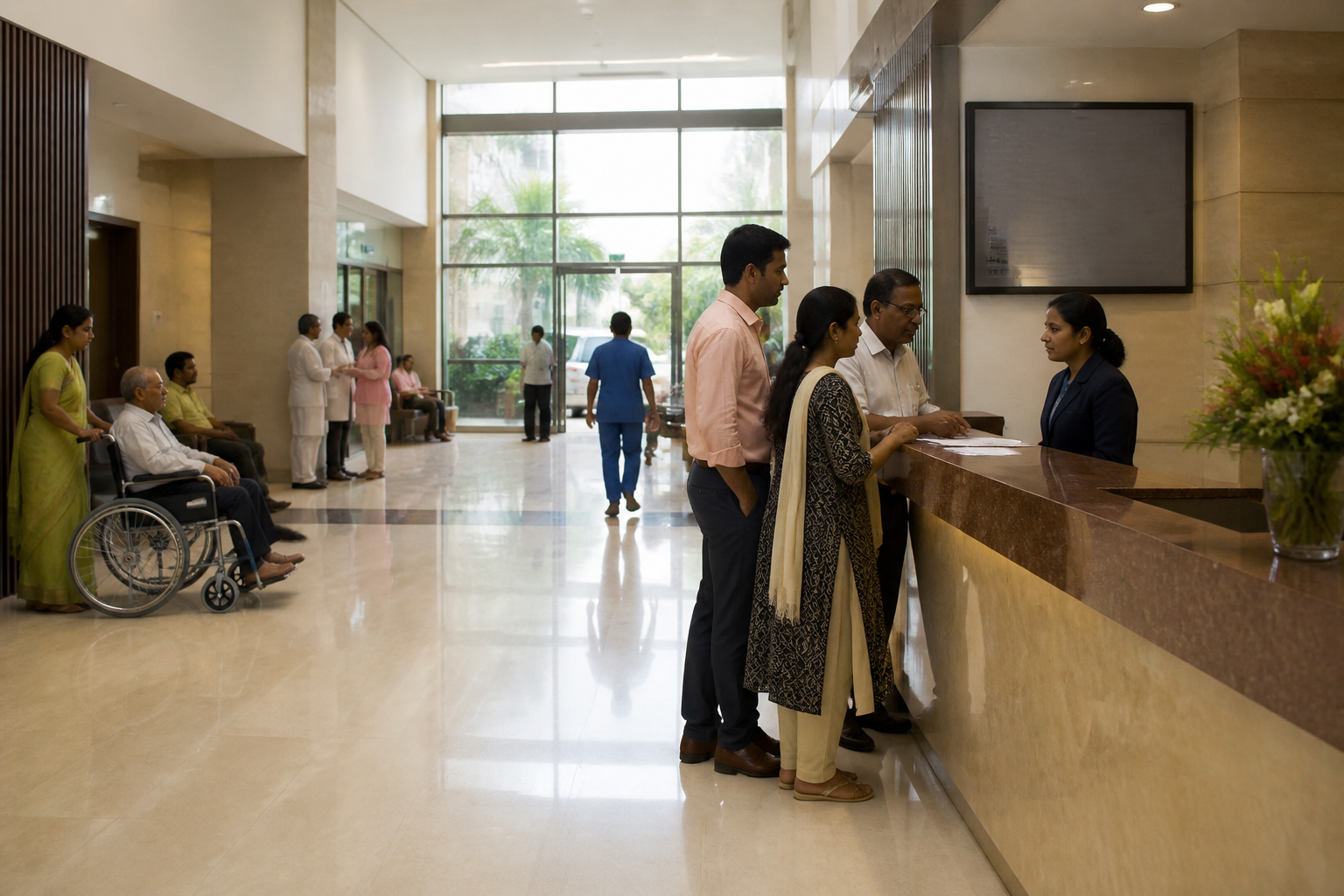
The Maharashtra government’s proposed clinical establishments law has brought hospital registration and treatment-price disclosure into the regulatory framework, but campaigners say it does not go far enough to control what private hospitals can charge. That gap places the question of healthcare affordability at the centre of a bill now being examined by a joint select committee of the state legislature.
The Maharashtra Clinical Establishments (Registration and Regulation) Bill, 2026, was introduced in the state legislature in July. According to the Jan Arogya Abhiyan, the bill requires hospitals to display treatment charges for patients but contains no clear and effective provision to regulate the rates charged by private hospitals. The campaign has called for fundamental changes to make the legislation more patient-centred.
The distinction between displaying a price and regulating it is central to the debate. A patient may be informed about the cost of a procedure, consultation or hospital bed, but disclosure alone does not necessarily make the service affordable or give the patient a meaningful ability to challenge an excessive bill. The campaign’s objections therefore focus not only on transparency, but also on the absence of enforceable ceilings, refund mechanisms and accessible complaint resolution.
This concern is particularly significant in Maharashtra’s largest urban centres, where private hospitals form an important part of the healthcare system and treatment costs can quickly exceed household incomes. The campaign cited a survey of five major private hospitals in Mumbai, Pune and Nagpur, which found average daily treatment costs ranging from about Rs 24,000 to Rs 1.62 lakh. The figures were presented as evidence that private hospital treatment is beyond the reach of many ordinary households when compared with average monthly incomes in the state.
The reported figures cover a wide range, indicating that hospital expenses vary substantially by institution, treatment and level of care. The source material does not establish the procedures included in each estimate or provide a full methodology for the survey. However, the figures are being used by the Jan Arogya Abhiyan to argue that treatment rates require public regulation rather than disclosure alone.
The campaign also cited data from the National Sample Survey’s 80th round, according to which the average out-of-pocket expenditure for a person hospitalised in Maharashtra was about Rs 40,500. Out-of-pocket spending refers to the portion paid directly by patients or their families rather than covered through insurance, public schemes or another funding source. For households without adequate financial protection, that payment can affect savings, debt and the ability to meet other basic expenses.
The campaign further said that hospital treatment costs had risen sharply over the previous seven years, with average hospitalisation expenses in rural areas increasing by about 87 per cent. Although the bill concerns the regulation of clinical establishments across the state, these figures broaden the issue beyond Mumbai’s private hospitals. They suggest that the pressure of medical expenses can extend across both urban and rural households, even though the scale and form of that pressure may differ.
Jan Arogya Abhiyan’s argument is that the proposed law should specify rate limits for routine treatment, different categories of hospital beds, diagnostic tests, intensive care units and doctors’ consultation fees. It has also asked for action against hospitals that charge more than government-approved rates. In its view, enforcement cannot stop at penalties: the law should provide a mechanism for returning excess money collected from patients.
That refund demand is important because a penalty imposed on a hospital after an investigation does not automatically restore a family’s finances. The campaign wants the complaint system to have the power to order repayment where excessive charges are established. The reported proposal would make the patient’s financial loss part of the regulatory process rather than treating a violation only as an administrative offence.
The campaign has also sought provisions preventing hospitals from detaining patients or retaining bodies because a bill has not been paid. It has called for a ban on demanding advance payment before emergency treatment. These demands address situations in which a patient or family may have limited bargaining power, particularly when treatment is urgent and there is no practical opportunity to compare prices or seek another provider.
The proposed safeguards would require the law to define not only the duties of hospitals but also the rights of patients and families. Registration rules and displayed charges can create a basic information framework, but they do not by themselves explain how a disputed bill will be examined, how quickly a complaint must be resolved or what remedy will be available. Those questions become especially important when an emergency limits a patient’s ability to make informed financial decisions.
The campaign has proposed district- and city-level grievance cells, a toll-free number and time-bound disposal of complaints. It has also asked that these bodies include patient representatives, social organisations and healthcare-sector groups. This proposed composition reflects an argument that hospital regulation should not remain solely within an administrative relationship between the government and providers. Patients and public-interest organisations, the campaign says, should have a formal place in oversight.
Whether such a mechanism can function effectively would depend on powers, staffing, timelines and access to hospital records. The supplied material does not specify how the proposed grievance bodies would be funded or how appeals would be handled. It also does not establish what regulatory authority the bill currently assigns to any existing agency. These details will be important in assessing whether the final law can move beyond disclosure requirements.
The bill’s examination by a 21-member joint select committee creates the immediate institutional setting for the debate. Jan Arogya Abhiyan plans to meet the legislators on the committee and urge them to support a patient-focused law. The campaign also intends to seek a state-level meeting between the health minister and organisations working in the health sector, with citizen participation through a ‘Send a message to the Health Minister’ campaign.
The committee stage is therefore likely to determine whether the proposed framework remains focused on registration and information or expands into price regulation, emergency obligations and enforceable patient remedies. The source material does not indicate whether the government has accepted any of the campaign’s demands. It also does not provide the text of the bill’s relevant clauses beyond the reported requirement to display treatment rates.
The political and administrative question is not simply whether hospitals should publish prices. It is whether patients can use that information in a system where medical treatment is often urgent, technically complex and financially unequal. A rate displayed on a board may improve transparency, but the public value of that information depends on whether patients can compare it, question it and obtain relief when the final bill exceeds the stated or permitted charge.
For cities such as Mumbai, Pune and Nagpur, the issue also concerns how essential services are governed when households rely on a mix of public and private providers. The reported survey figures place private hospital charges against household incomes, while the cited national survey data point to the burden of direct payment. Together, they frame hospital affordability as a question of urban welfare and public regulation, not merely a matter between an individual patient and a private provider.
The evidence currently available confirms that the proposed Maharashtra law includes a transparency element but, according to the Jan Arogya Abhiyan, lacks clear controls on private hospital rates. It also confirms that the campaign is seeking price ceilings, emergency-care protections, repayment of excess charges and stronger complaint mechanisms. What remains unclear is the government’s response, the precise wording of the bill’s regulatory provisions and whether the joint select committee will incorporate these demands.
The next developments to monitor are the campaign’s discussions with the 21-member committee, the proposed meeting with the health minister and any amendments made before the bill moves forward. Those steps will show whether Maharashtra’s clinical-establishments framework treats price disclosure as the endpoint of regulation or as the starting point for a broader system of patient protection.
