


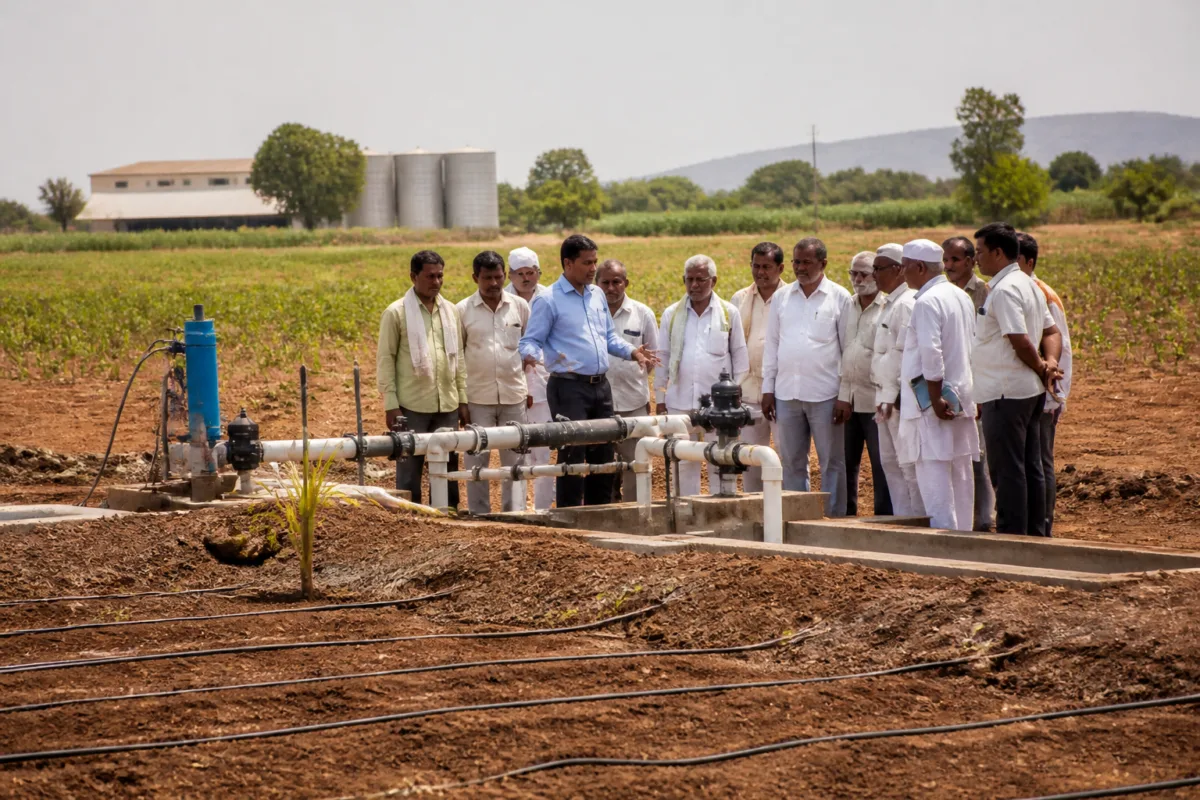
Maharashtra farmer study tours have become a test of how the state balances long-term agricultural learning with immediate drought relief and fiscal pressure. The state government has cleared Rs 4 crore to send 180 farmers abroad during 2026-27, even as it has officially classified 305 of the state’s 358 talukas as drought-affected.
The scheme is intended to expose farmers to modern farming technologies, agricultural research, export practices, food processing and international markets. However, the timing and scale of the allocation have placed the programme within a wider debate over public spending. The decision comes amid criticism of government travel expenditure and projections that Maharashtra’s debt burden will rise from Rs 9.3 lakh crore in 2025-26 to Rs 11.02 lakh crore in 2026-27, according to figures cited from state economic surveys.
The central question is not simply whether farmers should be exposed to overseas agricultural systems. It is whether the state has built a sufficiently clear mechanism to ensure that knowledge acquired abroad is converted into measurable improvements on farms, particularly in regions facing water stress and drought-related economic uncertainty.
Under the approved plan, five farmers from each of Maharashtra’s 34 districts will be selected, while another 10 will be chosen through a state-level panel. Nine government officers will accompany them, with one officer assigned for every 20 farmers. The government is expected to finalise the countries and detailed itinerary later.
Officials told the Times of India that the scheme has operated since 2004-05. Its stated purpose is to help farmers understand technologies used in developed countries, interact directly with farmers and institutions abroad, undertake field visits and learn about agricultural processing, export and market demand. The intended outcome, according to the official explanation, is that participants apply relevant practices on their own farms.
That stated design makes the programme different from a conventional official delegation. It is framed as an agricultural extension and capacity-building intervention, with the overseas visit serving as the learning component. Yet the available details do not establish how farmers will be selected beyond the district allocation and state-level panel, what technologies will be prioritised, or how the government will evaluate whether the visits produce results after participants return.
The absence of those details matters because overseas exposure is only one part of agricultural technology adoption. A technique demonstrated in another country may depend on different water availability, farm sizes, energy costs, supply chains, labour arrangements or market institutions. The report does not specify whether the itinerary will be designed around Maharashtra’s drought-affected regions, crop patterns or irrigation conditions. It also does not state whether participating farmers will be required to share their findings with wider farmer groups or local agricultural institutions.
The financial structure of the scheme has changed over time. In 2011, the subsidy was raised to 50% of the travel expenses incurred by a farmer, subject to a maximum of Rs 1 lakh per farmer. In 2025, the state doubled the maximum spending limit per farmer to Rs 2 lakh. A Government Resolution attributed the increase to higher airfares, accommodation and related costs, as well as changes in the rupee’s exchange rate against the dollar and the euro.
The latest allocation implies an average cost of about Rs 2.22 lakh for each of the 180 farmers, although the programme also includes nine accompanying officers and the final spending structure has not been disclosed in the supplied material. The average figure therefore cannot be treated as an individual farmer subsidy or as a final per-person cost. It does, however, show why the programme has attracted attention at a time when public scrutiny of government expenditure is high.
The comparison with the previous year is also significant. Maharashtra sanctioned Rs 2 crore for similar study tours in the previous year, meaning the approved allocation for 2026-27 is twice that amount. The increase coincides with a broader rise in the per-farmer spending limit, but the supplied report does not establish whether the larger allocation reflects more participants, higher travel costs, expanded itineraries or a combination of these factors.
The drought context gives the spending decision a sharper administrative dimension. The state has declared more than 85% of its talukas drought-affected. That classification indicates the geographical scale of the problem, although the report does not provide details of the relief measures being deployed in those talukas, the crops affected, water-storage conditions or the number of households facing income stress.
This distinction is important. A drought declaration and an agricultural learning programme operate on different time horizons. Drought measures address immediate distress and resource scarcity, while study tours are presented as an investment in knowledge, technology and market capacity. The policy challenge is therefore one of sequencing and accountability: a long-term capacity-building programme must be assessed alongside, not in place of, immediate drought response.
The political context has intensified that scrutiny. The allocation was reported days after opposition leaders, including NCP (SP) MLA Rohit Pawar and Sena (UBT) MLA Aaditya Thackeray, criticised the government over an alleged Rs 5 crore official trip to London. Chief Minister Fadnavis and minister Uday Samant cancelled their proposed UK visit for the City Quantum & AI Summit, citing drought, while a team led by principal secretary for industries P Anbalagan travelled to London, according to the report.
The farmer-tour programme is not identical to the London visit. It has operated for more than two decades and is justified as an agricultural development scheme rather than an official delegation for a single event. But the proximity of the two controversies has made the government’s spending choices part of the same public conversation: which kinds of travel are treated as essential, how expenditure is justified during a drought, and what evidence is used to demonstrate public value.
The institutional structure described in the report places the scheme within the state government’s agricultural policy and administrative machinery. Farmers are selected through district and state-level processes, officers accompany the groups, and the itinerary is to be finalised by the government. The report does not identify the specific department responsible for implementation, the agencies that will conduct post-tour follow-up, or the indicators that will be used to measure outcomes.
Those gaps are central to the programme’s accountability. A publicly funded study tour can produce value if the learning is translated into field demonstrations, farmer-to-farmer training, improved processing, better market access or more efficient use of water and other inputs. But without publicly stated objectives and follow-up measures, the programme risks being evaluated primarily through the number of farmers sent abroad rather than the changes achieved after their return.
The numbers released so far show the programme’s reach but not its impact. The plan covers 180 farmers, five from each of 34 districts and 10 selected at state level. Nine officers will accompany them. The state has operated the scheme since 2004-05, raised the maximum subsidy from Rs 1 lakh to Rs 2 lakh, and increased the annual allocation from Rs 2 crore last year to Rs 4 crore for 2026-27. None of these figures, by themselves, establish whether the programme has improved farm incomes, reduced production costs, increased exports or strengthened drought resilience.
That is the larger urban and regional governance question embedded in the controversy. Maharashtra’s drought response is not only a rural issue. Water availability, agricultural incomes, food prices, migration, demand for public services and regional economic stability are connected to the way the state manages its farming systems. Decisions made through agricultural departments affect towns and cities through supply chains, labour movement and public expenditure priorities.
The available evidence confirms that Maharashtra is expanding a long-running farmer exposure programme while facing extensive drought declarations and rising projected debt. It also confirms that the state has a stated rationale for the tours and has adjusted spending limits to reflect higher international travel costs. What remains unclear is how the selected farmers will be chosen, which countries and technologies will be included, how the drought context will shape the itinerary, and how outcomes will be measured after the tours. The government’s next steps are to finalise the itinerary and countries of visit; those details will determine whether the programme can demonstrate value beyond the travel itself.

