


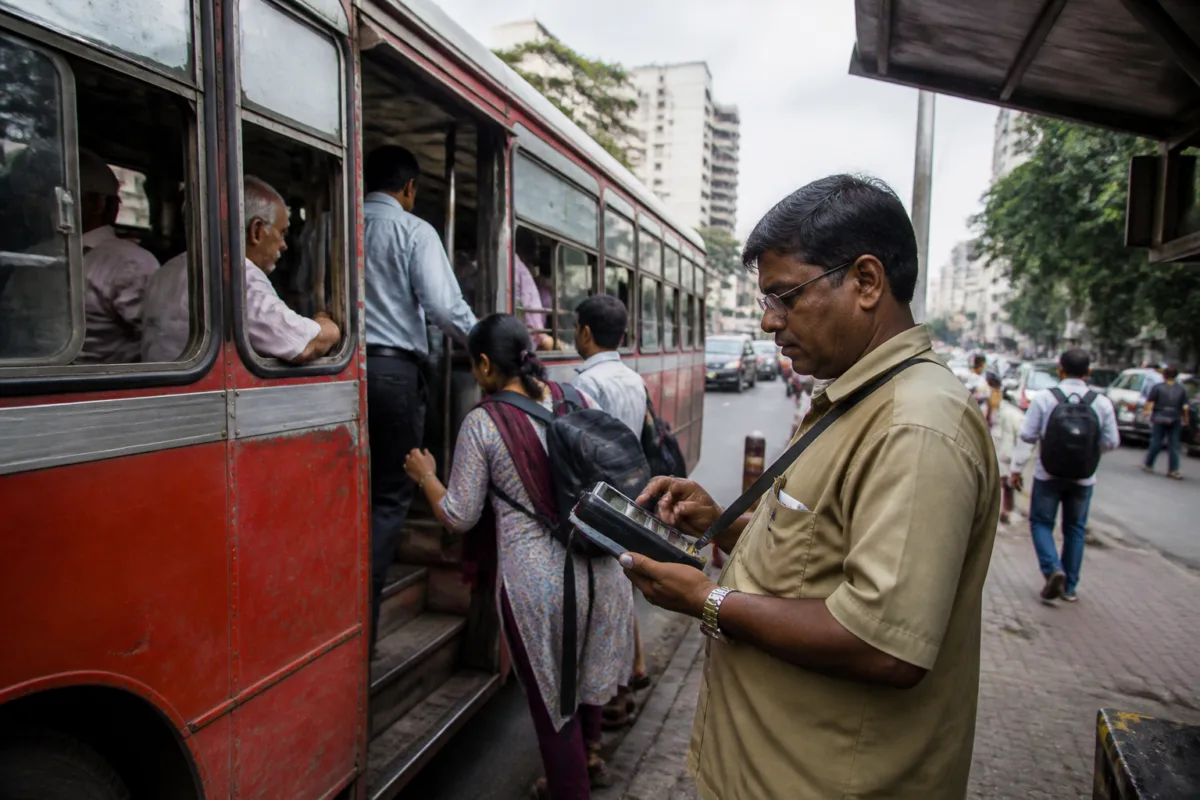
A Mumbai BEST committee member has demanded an Economic Offences Wing investigation into alleged billing irregularities involving the Chalo App contract, while the company has rejected the allegation and said its payments cover a wider ticketing and revenue-reconciliation system rather than only digital users.
Ajay Singh raised the issue at a BEST committee meeting on Thursday, alleging that the undertaking was paying the operator for a larger commuter base than the number of passengers actively using the app. He sought a thorough investigation by the Mumbai Police’s Economic Offences Wing.
According to Singh, around 22 lakh passengers travel on BEST buses each day, while only about 2 lakh actively use the Chalo App. He alleged that payments were instead being calculated for 30 lakh commuters. At a rate of 13 paise per ticket for 30 lakh passengers, Singh calculated the operator’s payment at nearly Rs 3.90 lakh per day.
The calculation cited at the meeting would amount to about Rs 1.17 crore a month and Rs 14.23 crore a year. Singh questioned why public funds were being paid on the basis of 30 lakh users when the number of active app users was allegedly much lower.
Chalo has refuted the charge. The company said its contract with BEST covers technology deployment for every ticket issued, crew planning and revenue reconciliation across all payment modes, and is not limited to passengers buying digital tickets through the app.
The company also said that, before its system was introduced, BEST paid significantly more per ticket without having a single integrated system covering these functions. Chalo said hardware had been deployed across 3,300 buses based on ridership of 30 lakh passengers, which formed the minimum guarantee under the contract.
Chalo described the minimum guarantee as a standard term in agreements with State Transport Undertakings. It said the contract’s scope therefore includes the operational infrastructure and services required across the bus network, rather than being determined only by the number of passengers actively using the mobile application.
The company further claimed that more than 50% of BEST commuters use its platform and that ticket issuance inside buses has reached 100%. It also said the project had received several national awards and was recognised as a benchmark model for State Transport Undertakings.
The competing claims centre on how BEST’s contract measures service delivery and calculates payments. Singh’s allegation is based on the difference between the reported number of active app users and the higher passenger figure used for billing, while Chalo says the agreement covers ticketing and operational technology deployed across the wider bus network. The outcome of any investigation or formal review has not been reported in the supplied account.

