


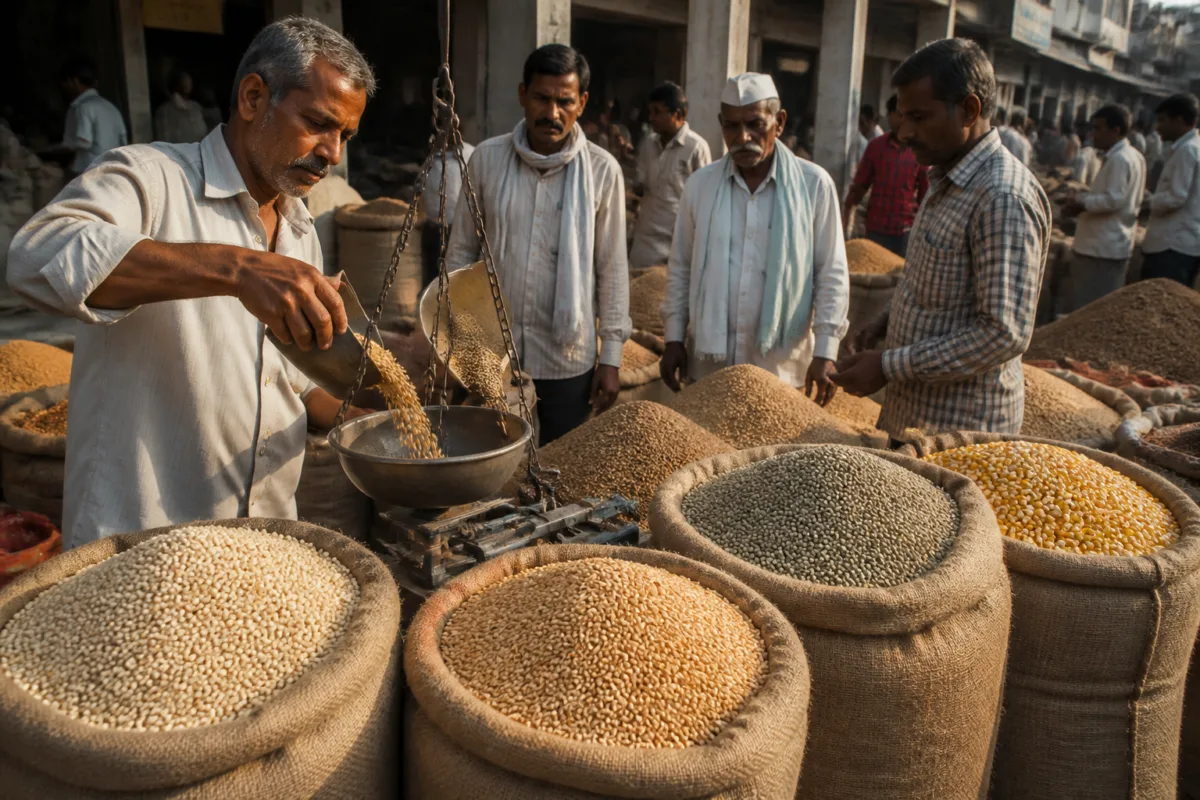
Grain prices have risen sharply in Pune and across Maharashtra after irregular rainfall and drought damaged crops, reducing market arrivals and increasing the cost of staples including jowar, wheat, bajra and maize, according to local grain traders cited by Punekar News.
The increase is putting additional pressure on household budgets, particularly for low-income and middle-class families. Traders said the price of indigenous jowar has increased by Rs 20 to Rs 25 per kg from its earlier range of Rs 45 to Rs 70 per kg. Jowar is widely used for bhakri and is often recommended as part of the diet of senior citizens, patients and people with diabetes.
Hybrid jowar brought into Maharashtra from Karnataka has also become costlier by Rs 5 to Rs 7 per kg because of reduced local supplies. The rise indicates that the impact of crop losses is extending beyond farms into regional supply chains, where lower arrivals are increasing dependence on produce from outside the state.
Wheat prices have increased by Rs 5 to Rs 7 per kg from the earlier level of Rs 36 to Rs 37 per kg. Bajra has become costlier by Rs 3 to Rs 5 per kg from around Rs 30 to Rs 32 per kg, while maize prices have risen by Rs 5 to Rs 7 per kg from approximately Rs 30 per kg.
The price increases are being reported during the festive season, when household spending is already under pressure. Traders expect prices to remain elevated until the next crop arrives. Based on the damage caused by recent crop losses, they said that could take at least eight months.
The reported increases also raise concerns about access to everyday nutrition. Jowar, in particular, is regarded by many households as an affordable staple, but the higher price of indigenous varieties could make it more difficult for families to maintain existing diets. For households already managing fixed incomes or rising grocery bills, the additional cost may require reductions in quantity or substitution with other grains.
The report estimates that the higher grain prices could increase monthly grocery expenditure by 20% to 30%. The effect will depend on household consumption, the extent of local crop damage and the availability of supplies from other states. The available report does not provide official market data or details of any government intervention.
For now, the immediate pressure is being felt through retail grain prices, while the longer-term concern is the duration of the supply shortage. Traders’ estimate that prices may remain high until the next crop arrives places the focus on crop recovery and the return of regular market arrivals. No official timeline for price stabilisation or relief measures was cited in the report.

