


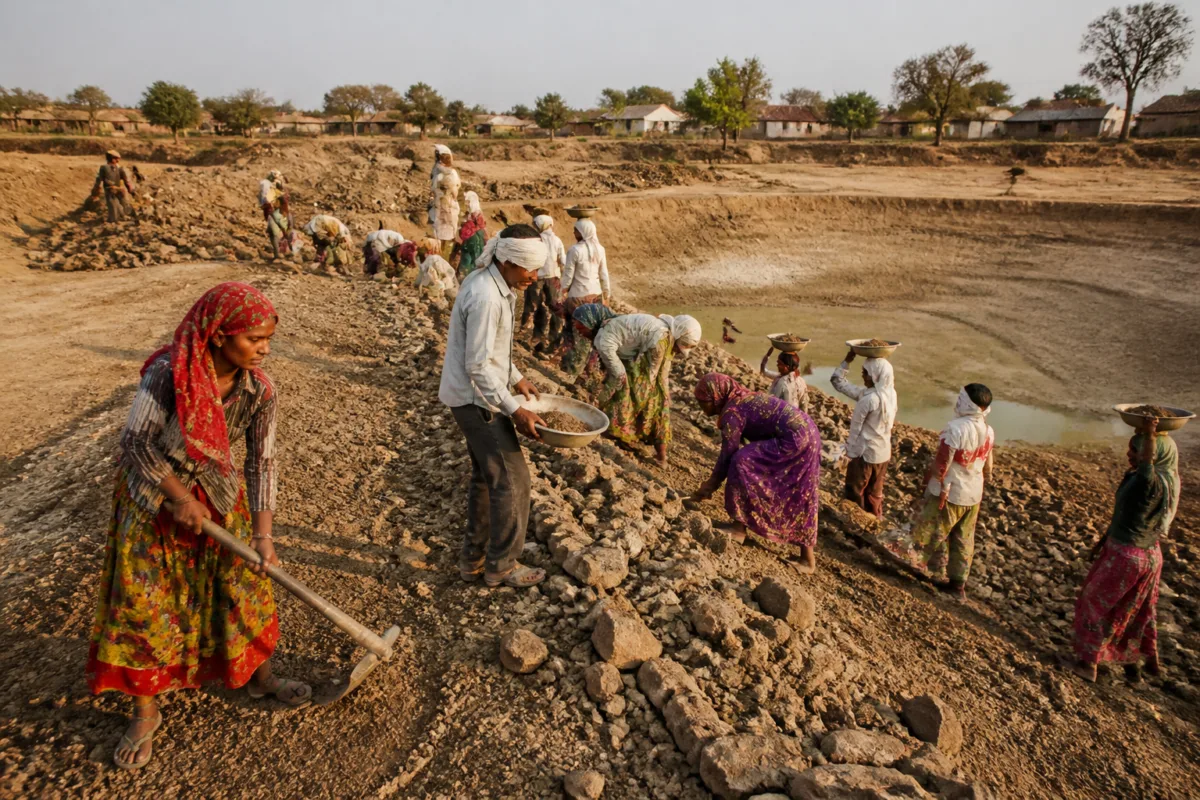
Maharashtra’s drought conditions have pushed three lakh workers into the rural employment guarantee scheme, with 13,912 works under way across 28,331 gram panchayat areas, according to a report by Loksatta. The programme is intended to provide work within villages and reduce distress migration as weak rainfall slows rabi sowing.
The drought has affected agricultural labourers and small landholders most severely, leaving fewer farm jobs available during the rabi season. The employment guarantee programme is being used to create local wage opportunities while also supporting water conservation, agriculture-related facilities and rural infrastructure.
The state’s employment guarantee department has made a fund allocation of Rs 6,728 crore for the response, the report said. The funding will support works that provide employment as well as create public and individual assets in rural areas. A total of 375 types of works can be undertaken through the programme.
The current employment is spread across 13,912 works in gram panchayat areas throughout the state. The number of workers seeking employment is expected to rise if drought conditions intensify, increasing pressure on the rural jobs programme and its local implementation machinery.
Regional allocations cited in the report include Rs 1,145 crore for the Amravati division, Rs 489 crore for the Konkan division, Rs 1,944 crore for the Chhatrapati Sambhajinagar division, Rs 119 crore for the Nagpur division and Rs 801 crore for the Pune division. The funding pattern comprises a 60% contribution from the Central Government and 40% from the Maharashtra Government.
The works are being taken up as a combined employment and rural asset-creation response. By keeping workers employed within their villages, the programme is also intended to limit migration caused by the shortage of agricultural work. The report did not provide a district-wise breakdown of the 13,912 works or specify the implementation timeline for individual projects.
Further expansion of the programme will depend on the severity of the drought, the number of workers seeking employment and the pace at which gram panchayat-level works are approved and executed. The state’s employment guarantee department is continuing to provide work under the scheme as demand rises.

