


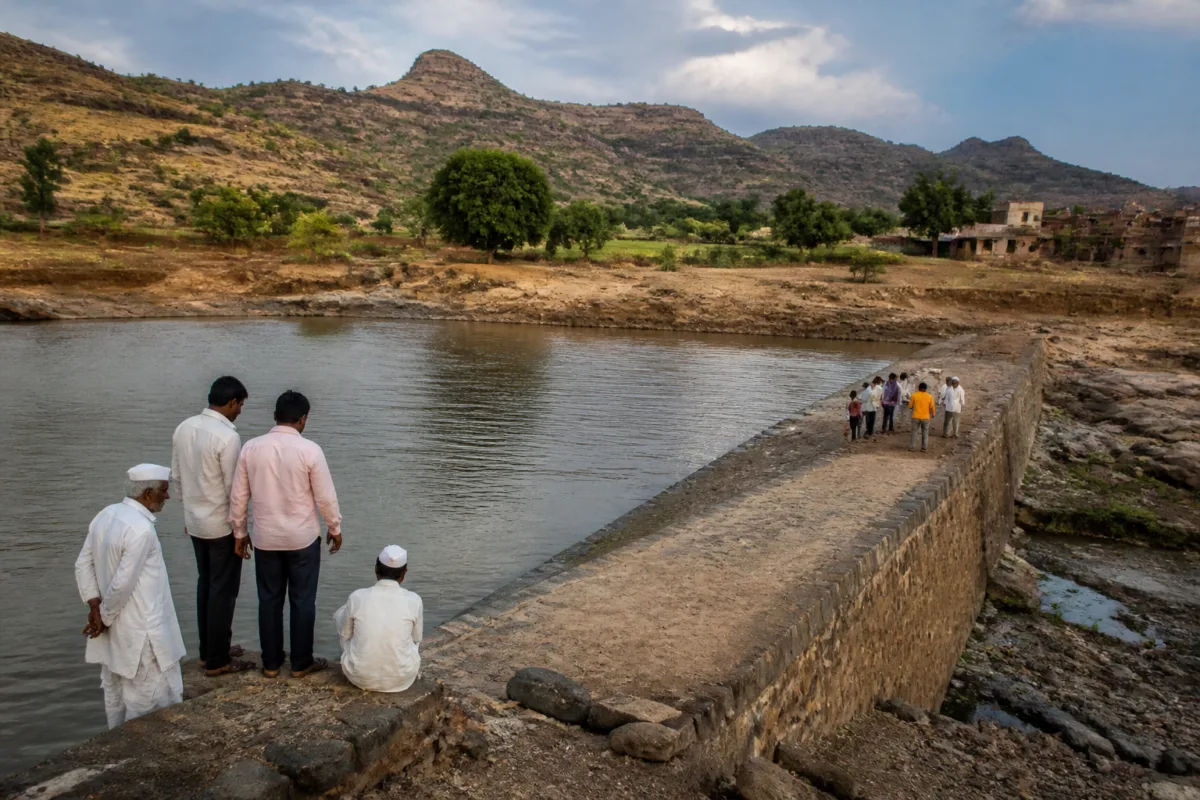
Nashik district administration has proposed 61,215 water conservation works across all 15 talukas to address drought conditions, strengthen local water security and create employment for rural workers. The plan places particular emphasis on 42,000-plus ‘Jaltara’ works under the ‘Viksit Bharat Ji Ram Ji’ scheme.
The programme comes after a break in rainfall affected the kharif season in 13 of Nashik’s 15 talukas. The deficient rainfall is also expected to reduce the area under the rabi crop, according to the report. Against this backdrop, the state government has introduced 12 measures for drought-affected talukas, while the district administration has prioritised water conservation as a longer-term response.
The proposed works include earthen and cement check dams, stone bunds, farm ponds, recharge pits, well recharge structures, earthen nala bunds, desilting, rainwater harvesting, lake rejuvenation, paddy field conservation, underground bunds, river rejuvenation, gabion structures, continuous contour trenches, bund repairs and forest ponds. The administration plans to implement these works with local community participation.
The largest number of proposed works is in Malegaon, with 21,420 projects. Baglan has 4,550 works, while Trimbakeshwar has 4,914, Dindori 4,322, Yeola 4,085, Sinnar 3,779, Nandgaon 3,406, Kalwan 3,372, Peth 3,160, Devla 2,030, Niphad 1,764, Surgana 1,459, Igatpuri 1,444, Chandwad 985 and Nashik taluka 525. Together, the figures add up to 61,215 proposed works.
The district’s tribal-dominated and hilly talukas face specific implementation constraints. In Peth, Surgana, Kalwan, Trimbakeshwar and Igatpuri, the terrain limits the feasibility of some Jaltara projects. The administration is therefore giving greater emphasis to Vanrai bunds in these areas.
In Peth, 73 gram panchayats have so far completed 163 Vanrai bunds. These structures have increased water storage capacity by approximately 607.02 million litres, according to the report. The figure highlights the potential of small, locally implemented structures in areas where terrain and access can restrict larger water conservation works.
The district administration has also appealed to social organisations, associations and companies to support the programme through corporate social responsibility funding. Deputy Collector Seema Ahire called for institutional participation and financial support for water conservation works being undertaken through community involvement.

