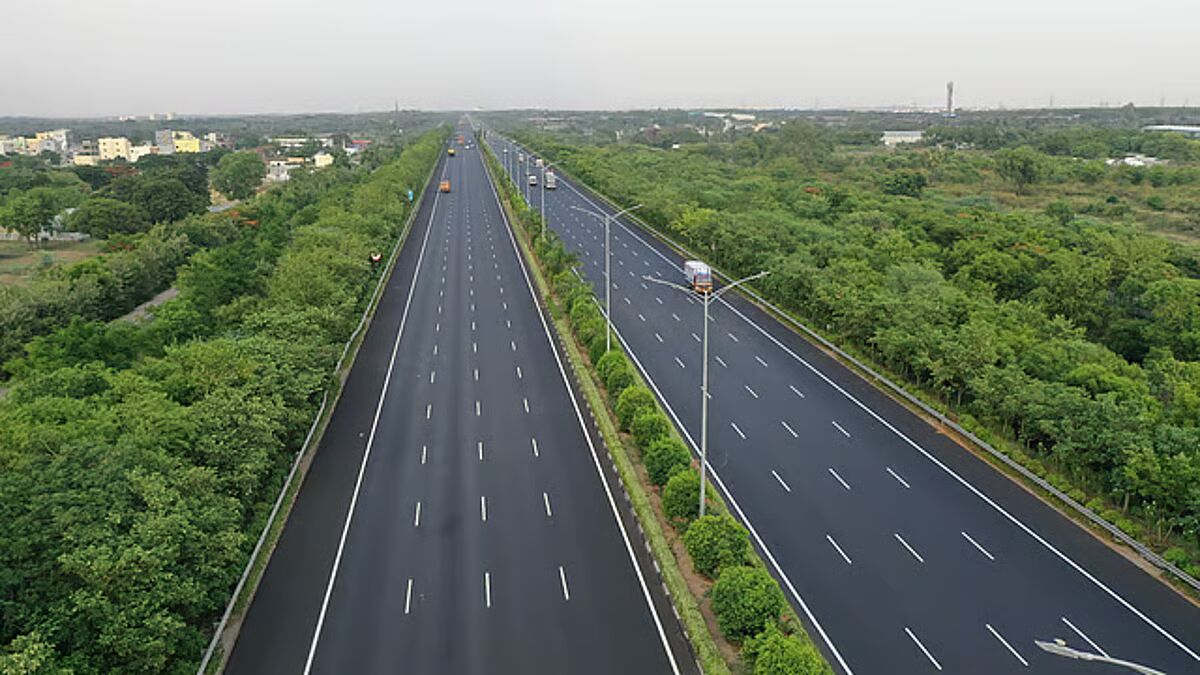
A new high-speed expressway connecting Lucknow and Kanpur is nearing operational readiness, promising to compress travel time between the two major Uttar Pradesh cities to under an hour. The 63-kilometre access-controlled corridor is expected to significantly alter regional mobility patterns, with implications for economic integration, commuting behaviour, and urban expansion.
Designed as a six-lane highway with provision for future expansion, the expressway will reduce journey time from the current 2.5–3 hours to approximately 35–45 minutes. This dramatic shift is enabled by a higher design speed of up to 120 km/h, positioning the corridor among the fastest intercity routes in the region. The project, developed at an estimated cost of ₹3,700 crore, links key entry points in Lucknow and Kanpur while bypassing congested urban stretches. By diverting long-distance traffic away from existing highways, the expressway is expected to ease pressure on National Highway networks and reduce bottlenecks in densely populated zones. However, the expressway introduces a clear trade-off between speed and cost. Toll rates for private vehicles have been set at around ₹275 for a one-way trip, rising to ₹415 for a same-day return journey. For commercial vehicles, charges are significantly higher, reflecting the infrastructure’s capital-intensive nature and maintenance requirements. While an annual pass option has been proposed to reduce costs for frequent commuters, affordability remains a concern for daily users.
The access-controlled design also limits vehicle categories. Only four-wheelers and heavy vehicles will be permitted, with two- and three-wheelers excluded to maintain safety and high-speed traffic flow. This raises questions about inclusivity, particularly in a region where a large share of commuters rely on smaller, more affordable modes of transport. From an urban development perspective, the corridor is likely to reshape land use along its alignment. Improved connectivity between Lucknow and Kanpur could accelerate peri-urban growth, encourage real estate development, and create new industrial and logistics clusters. Such corridors often act as economic spines, enabling faster movement of goods and labour while expanding the effective labour market between cities. Yet, urban planners caution that infrastructure-led growth must be carefully managed. Without coordinated land-use planning, improved connectivity can lead to unregulated sprawl, increased vehicle dependence, and environmental stress. Integrating public transport links, service roads, and last-mile connectivity will be essential to ensure that the benefits extend beyond private vehicle users.
There are also sustainability considerations. While the expressway may reduce travel time and fuel consumption per trip, increased vehicular movement could offset these gains unless complemented by cleaner transport policies. Encouraging electric mobility and multimodal transport integration will be key to aligning such projects with long-term climate goals. As the corridor prepares to open, it represents more than a transport upgrade—it signals a shift towards high-speed regional connectivity as a driver of economic growth. The real impact, however, will depend on how effectively the expressway is integrated into a broader, inclusive, and sustainable mobility ecosystem.