


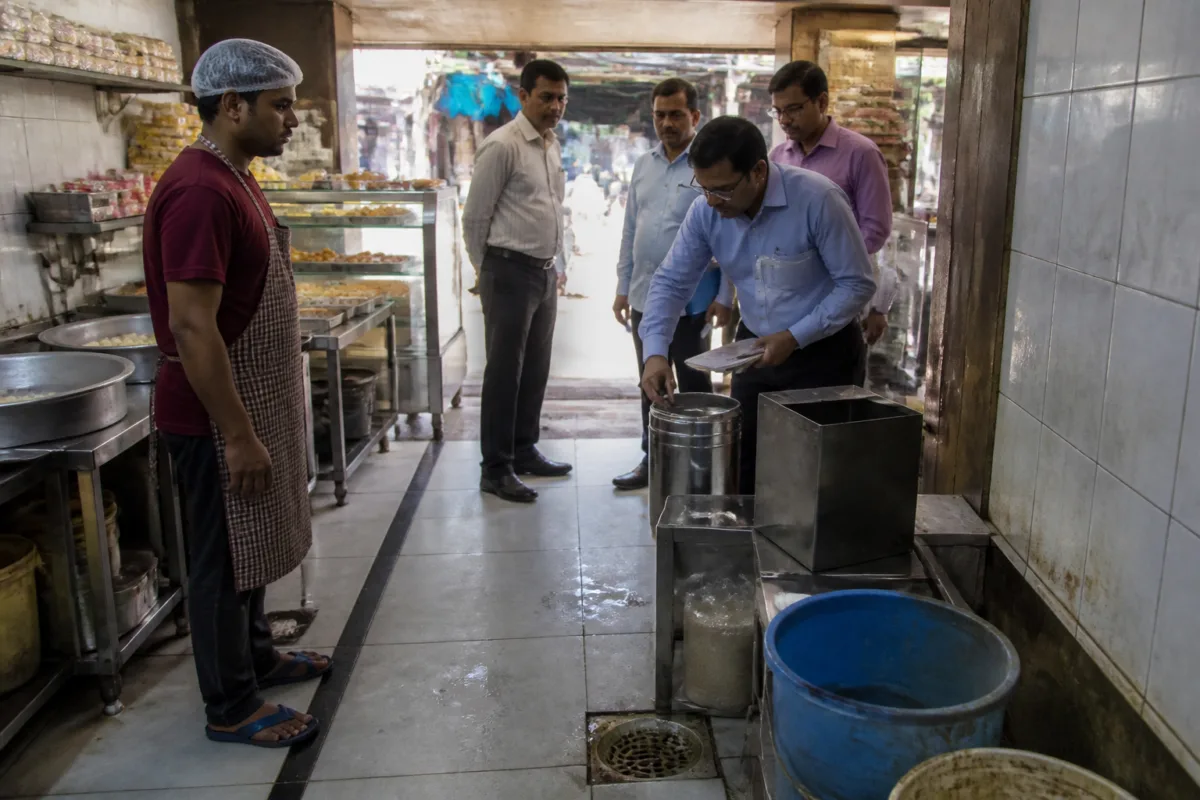
Lucknow food safety inspections ahead of Diwali resulted in one sweet shop being shut, four licences being suspended across Uttar Pradesh and improvement notices being issued to 71 establishments, according to the Uttar Pradesh Food Safety and Drug Administration (FSDA).
The inspections were conducted under the ‘Shuddh Hi Shubh Hai’ campaign at 86 sweet and namkeen establishments in Lucknow, Agra and Varanasi. Officials assessed manufacturing and retail premises for cleanliness, ingredient handling, food colours and additives, pest control, drinking water, worker hygiene, licensing, records and compliance with packaging rules.
In Lucknow, FSDA teams inspected 29 establishments and issued 24 improvement notices. One sweet shop was closed after officials found dirt, cobwebs on walls, disorder within the food premises and lapses in the personal hygiene of food handlers.
Varanasi accounted for 30 inspections, with improvement notices served on 28 establishments. The licence of one sweet shop was suspended after officials identified waterlogging, inadequate waste management, improper storage of edible and non-edible materials, and failures in pest control and water quality.
In Agra, officials inspected 27 establishments and issued 19 improvement notices. Serious objections were recorded at three units, where teams found waterlogging, inadequate waste-management arrangements, dirty utensils, unhygienic conditions and poor-quality packing material. Borax powder was also found at one sweet shop. The FSDA said it was suspected to have been mixed with milk to extend its shelf life.
The inspection criteria cover more than the finished product displayed for sale. They also examine the premises, water supply, storage systems, waste handling, equipment and the hygiene practices of food workers. These conditions affect how food is produced and handled before it reaches consumers, particularly during the seasonal increase in demand for sweets and namkeen.
Improvement notices require establishments to address the shortcomings identified by the regulator. Licence suspension and closure represent stronger enforcement action where the inspection findings are considered serious. The FSDA’s action therefore combines compliance directions with immediate restrictions at establishments where officials recorded major deficiencies.
The findings also show that food-safety enforcement during the festive period involves several linked urban systems, including drainage, waste management, water quality, storage and workplace hygiene. In the reported inspections, waterlogging and waste-management failures were recorded alongside food-handling and cleanliness concerns.
The FSDA campaign is continuing across the three cities, with establishments being assessed against regulatory requirements before Diwali. Further action will depend on the compliance steps taken by the inspected shops and the regulator’s follow-up process.

