


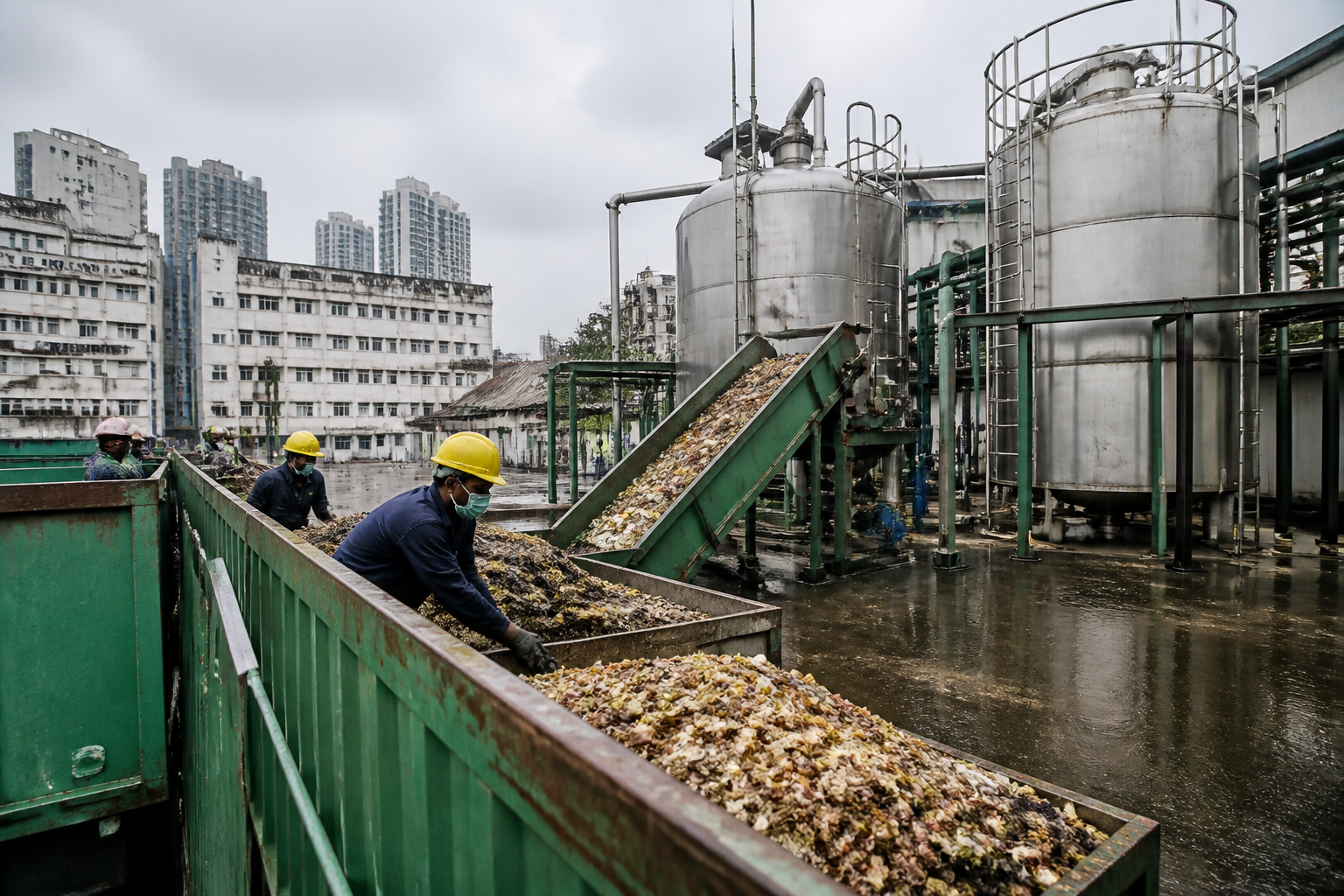
Mumbai civic authorities have diverted nearly 39 tonnes of food waste from Lalbaugcha Raja’s 12-day Ganpati festival to biomethanation plants, generating biogas for Sewri TB Hospital and electricity for a hospital ward with 90 patients.
The initiative, called Prasad to Power, was carried out by the Brihanmumbai Municipal Corporation in partnership with the Lalbaugcha Raja mandal. It was the first time the civic body and the mandal had worked together on processing food waste from the festival’s prasad kaksh and annachhatra instead of sending the leftovers to landfill.
According to civic officials, the wet waste processed at the Sewri biomethanation plant produced 3,645 cubic metres of biogas and 4,382 kWh of electricity. The biogas will be used at Sewri TB Hospital, while the electricity is intended for ward 9, which has 90 patients. Officials from the BMC’s mechanical and electrical department said arrangements were being made to supply the generated power to the ward.
The waste was segregated through coordination between the BMC and the mandal’s kitchen committee. Forty-five trips were made to collect the organic waste and transport it to civic biomethanation facilities. The Sewri plant, located on the premises of the TB Hospital, processed part of the material, while surplus waste was sent to plants at Sion, Kasturba Hospital and Nair Hospital.
The Sewri facility has been operating since 2024 and can process up to two tonnes of waste a day. Because the festival generated more wet waste than the plant could handle on its own, the BMC distributed the remaining material across its other biomethanation units. These facilities also process organic waste collected from hotels in nearby localities.
Kiran Dighavkar, deputy municipal commissioner of the BMC’s solid waste management department, said the initiative had been planned in advance. “The wet waste generated daily from the mandal’s prasad kaksh and annachhatra was segregated and transported to biomethanation plants at civic hospitals,” he said, according to the Times of India report.
The arrangement also reduced the need to transport the festival leftovers to the Kanjurmarg dumping ground, officials said. That saved the civic body the time and cost associated with moving the waste over a longer distance, while keeping the organic material within a treatment cycle that produced fuel and power.
The operation illustrates the role of decentralised waste-processing capacity in handling temporary surges linked to large public gatherings. However, the Sewri plant’s two-tonne daily limit meant that managing the festival waste required coordination across several hospital-based facilities. The BMC’s next step is to use the generated biogas at Sewri TB Hospital and provide the electricity to ward 9 after the required arrangements are completed.
