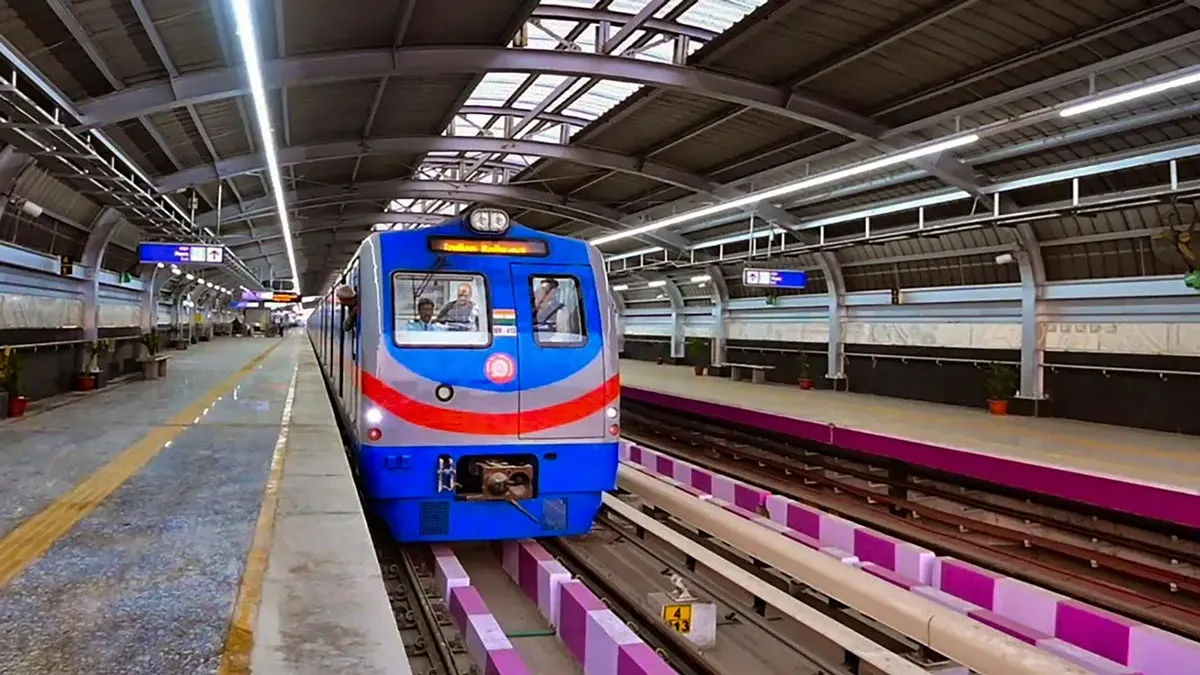
Kolkata Rail Link Moves Towards Service Restoration
Rail connectivity between Kolkata and North Bengal is moving towards restoration after emergency work on a rain-damaged railway section near New Farakka in Murshidabad. The trackbed was weakened by prolonged heavy rainfall and soil erosion, disrupting one of eastern India’s key passenger and freight corridors. The repair and safety-testing phase now becomes crucial for determining when normal train movement can resume.
The damage occurred between Tildanga and New Farakka in Eastern Railway’s Malda division, where soil beneath the tracks subsided after sustained rain. The affected section lies on an important route connecting Kolkata with Malda, North Bengal and the Northeast.The disruption quickly became a wider mobility issue. Several long-distance services were cancelled, diverted or delayed, leaving passengers dependent on already stretched road and other transport options. The impact was particularly significant because the corridor carries both inter-city passengers and movement linked to regional commerce.Repair teams worked on stabilising the affected formation before railway engineers could consider testing the restored track. Recent reports indicate that a trial movement is being undertaken following completion of the immediate restoration work, with safety certification remaining central to the return of regular operations.
For Kolkata, the episode highlights how disruptions outside the metropolitan boundary can quickly affect the city’s wider economic geography. Kolkata functions as a major gateway for North Bengal and the Northeast, making dependable rail infrastructure important not only for commuters but also for tourism, agricultural supply chains, small businesses and freight movement.The incident also raises a broader infrastructure question. Heavy rainfall is increasingly exposing weaknesses in transport embankments, drainage systems and soil foundations. In this case, railway sources indicated that rainwater had penetrated the embankment while erosion contributed to the weakening of the track foundation.Urban planners and infrastructure specialists have increasingly stressed that climate resilience cannot stop at city limits. Transport corridors serving metropolitan economies need stronger drainage, regular inspection of vulnerable embankments and engineering standards that account for more intense rainfall events.
The immediate priority is therefore not simply restoring train schedules, but ensuring that the repaired section remains stable under continued wet-weather conditions. For passengers and businesses dependent on the Kolkata–North Bengal corridor, a safe and durable reopening will matter more than a rapid return to service.Reporting note: The story is framed around Kolkata’s connectivity and wider urban-economic implications while the physical incident occurred near New Farakka in Murshidabad.