


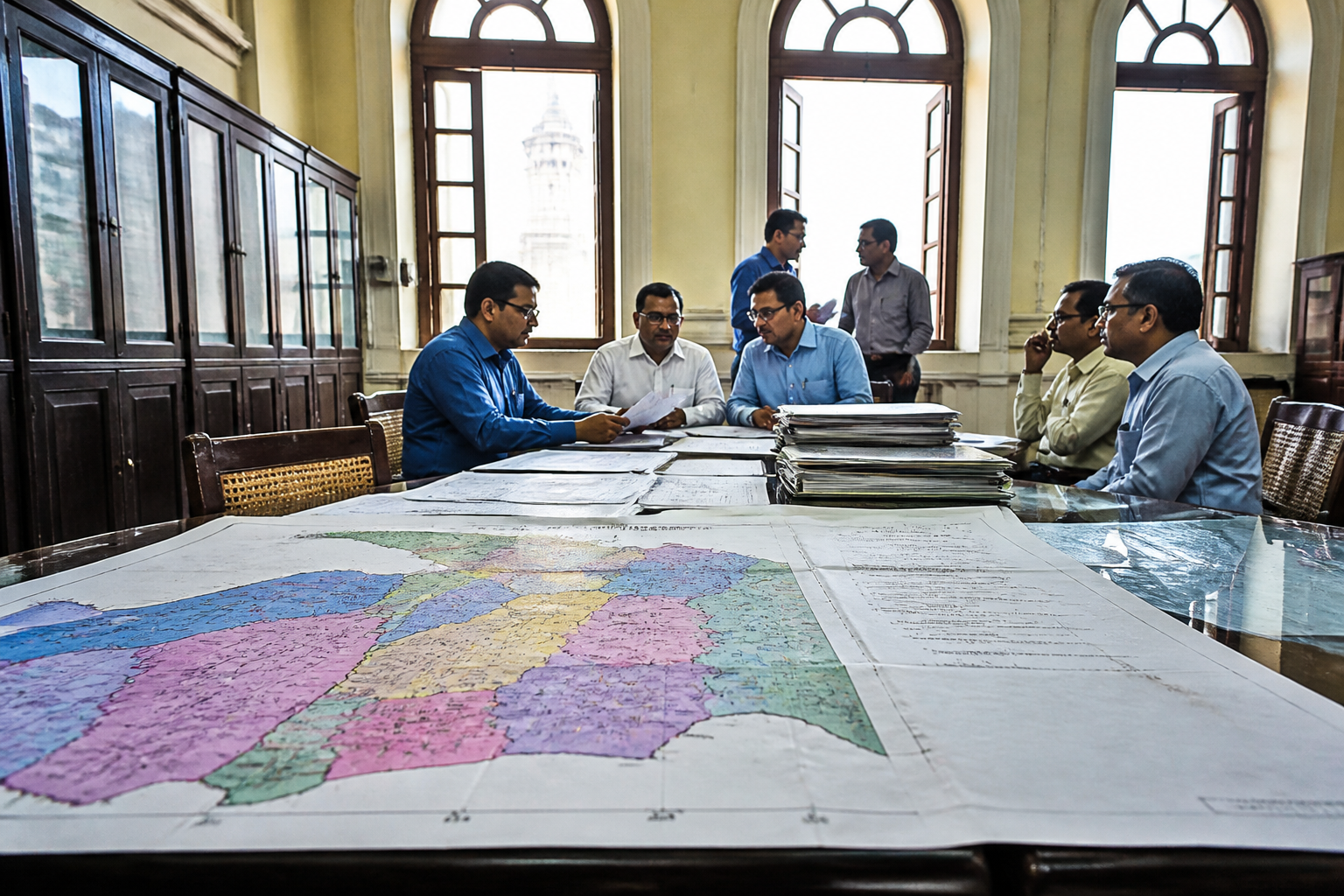
The hearings on Kolkata Municipal Corporation’s draft revised ward boundaries have ended, with around 300 suggestions and objections received from political parties and individuals. The delimitation exercise will increase the number of KMC wards from 144 to 209.
The objections were submitted during hearings conducted after the Kolkata Municipal Corporation published the draft revised ward boundaries. Several political functionaries filed multiple complaints and appeared before hearing officers more than once to raise separate grievances, according to a civic official.
“We treated each complaint individually and sent out invitations to appear before hearing officers,” the KMC official said.
Ten state officials were deputed as hearing officers for the process. They will prepare reports on the objections and suggestions received during the hearings and submit them to the state municipal affairs and urban development department.
A state official said the department would decide how many changes, if any, should be incorporated into the draft boundaries after considering the hearing reports. The final ward-wise boundary plan will then be published as a public document and sent to the State Election Commission.
“The final ward-wise boundary, after factoring in the objections and suggestions, will be published. It will be a public document,” the official said.
The revised delimitation will reorganise Kolkata’s municipal electoral map and expand the number of wards by 65. The material provided by the civic and state officials does not specify the locations of individual boundary changes or indicate which objections are likely to be accepted.
After receiving the final ward-wise boundaries, the State Election Commission will publish the parts included in each ward and decide which wards will be reserved for women, Scheduled Caste and Scheduled Tribe candidates. Officials said the reservation exercise would follow the publication of the final boundaries.
“The state or the KMC is not the authority to decide on the wards to be reserved for SC, ST and woman candidates. It is the prerogative of the SEC,” an official said.
The process therefore involves separate responsibilities for the civic administration, the state government and the election commission. The hearing officers and the municipal affairs and urban development department will deal with objections and final boundary changes, while the State Election Commission will determine the ward-wise reservation arrangements.
The next formal milestones are the submission of the hearing officers’ reports, the state government’s decision on amendments to the draft, publication of the final boundaries and their transmission to the State Election Commission. The commission will then release the ward composition and reservation details.
