


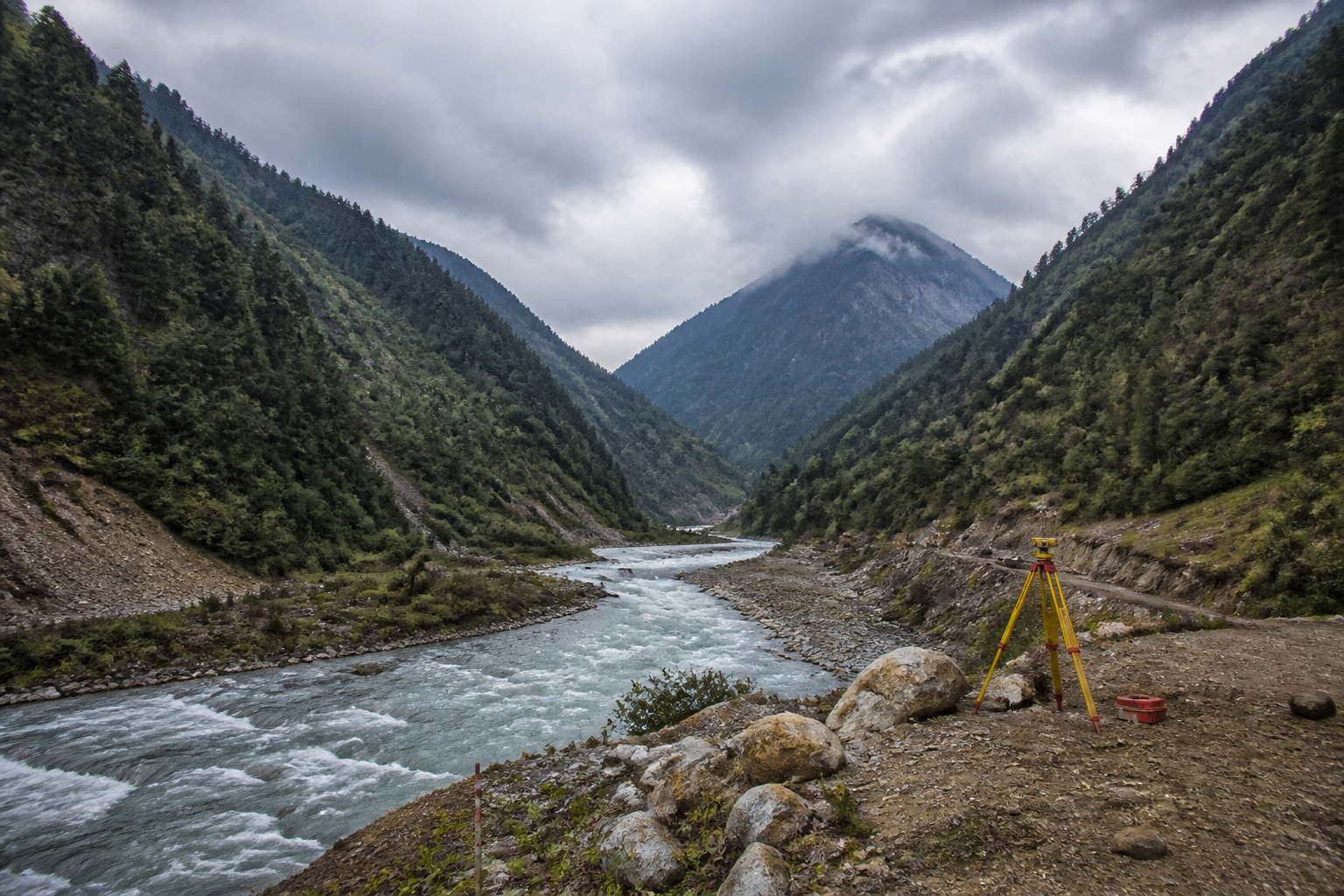
The Kishau Dam project has crossed its longest-standing hurdle after six states signed an agreement to move ahead with a 13,000-crore multipurpose project on the Tons river. The agreement resolves a dispute that has persisted for decades, but it also exposes the difficult administrative bargain now required over water, power, forest land, rehabilitation and project financing.
The agreement was signed in the presence of Union Home Minister Amit Shah and Union Jal Shakti Minister C R Patil by the chief ministers of Uttarakhand, Uttar Pradesh, Himachal Pradesh, Haryana, Rajasthan and Delhi. The project has been declared a national project, with nearly 90 per cent of its financial burden to be borne by the Union government and the remaining 10 per cent by the participating states. It is scheduled for completion by 2035, subject to approvals and preparatory work that are still pending.
That distinction is important. The agreement is a political and administrative breakthrough, but it is not the same as construction beginning. The final Detailed Project Report is yet to be approved, and the report says the Union Cabinet will have to approve the DPR. Forest land transfer and rehabilitation-related matters also remain to be resolved. The project therefore moves from an inter-state negotiation phase into an implementation phase where clearances, funding and local consent will determine whether the new timetable holds.
The scale of the proposed structure explains both its potential and its complexity. The dam is planned as a 232.6-metre-high concrete gravity dam, with a length of 680 metres. It is expected to create a reservoir stretching for about 32 kilometres and store 1,562 million cubic metres of water. The project is expected to generate 1,457 million units of electricity and irrigate 97,000 hectares of land.
The electricity allocation described in the report is principally between Uttarakhand and Himachal Pradesh. Uttarakhand is expected to receive 728 million units. The project’s benefits, however, are being presented as wider than power generation. Statements made at the signing described possible gains for all six states through water availability, irrigation, drinking water, energy and the rejuvenation of the Yamuna. These claims remain linked to the project’s eventual completion and operation rather than to the agreement itself.
The project’s history shows why the agreement has taken so long. The first idea for the dam emerged in 1940, when the then Punjab government considered its construction. The Uttar Pradesh irrigation department prepared a Detailed Project Report in 1964. Progress continued intermittently, while the distribution of benefits and responsibilities across the Yamuna basin remained an issue.
A major institutional step came in 2014, when Uttarakhand and Himachal Pradesh entered into an agreement and formed a joint venture. The corporation’s chairmanship is to rotate between the chief secretaries of the two states, with each serving for two and a half years. This arrangement created a formal mechanism between the two states, but it did not by itself settle the wider questions involving the other basin states or the project’s financial and environmental obligations.
The report links the latest progress to earlier settlements involving the Lakhwar and Renukaji projects. In 2019, disputes related to those projects were resolved, allowing work on the Kishau project to move forward. It also refers to a 12 May 1994 agreement under which separate agreements were to be reached for each storage project in the basin. The Kishau agreement is therefore not an isolated decision; it is the latest step in a longer process of negotiating storage projects individually within the Upper Yamuna basin.
The financial structure is designed to reduce the burden on the participating states. The estimated project cost is 13,000 crore, including about 2,000 crore for forest land transfer and rehabilitation. Civil works are expected to account for 9,000 crore, while electrical and mechanical works are estimated at about 1,500 crore. The figures indicate that the project’s cost is not limited to the dam and power infrastructure. Land, forests and the resettlement of affected families form a significant part of the financial and administrative task.
Uttarakhand has requested 1,500 crore from the Union government to accelerate land identification and rehabilitation-related work in areas likely to be affected. According to the report, this amount is expected to be provided as a soft loan. The request shows that the immediate challenge is not only raising the construction cost but also financing the preparatory work required before construction can begin.
The environmental and social implications are particularly concentrated in Uttarakhand. Chief Minister Pushkar Singh Dhami said that around 2,500 hectares of forest land would need to be transferred for the project. He also pointed to the requirement for compensatory afforestation land, describing the availability of such land as a challenge for a heavily forested and mountainous state.
This is one of the project’s central governance questions. Forest diversion and compensatory afforestation are often treated as clearance-related steps, but in a mountain state they also involve competing land uses, difficult terrain and the needs of communities living in the affected region. The source report does not provide the number of families or villages expected to be displaced, nor does it specify the final rehabilitation package. It does, however, record Dhami’s assurance that the rehabilitation of affected families would be a priority and would be handled in a fair, sensitive and dignified manner.
That commitment will need to be translated into a formal rehabilitation framework. The report says work has begun on identifying affected land and developing a rehabilitation model, but it does not establish whether the model has been approved, how compensation will be calculated or what arrangements will be made for livelihoods and public services after relocation. These details will be central to the project’s legitimacy at the ground level.
The agreement also illustrates the institutional complexity of water infrastructure that crosses state boundaries. The dam is located on the Tons river on the border of Uttarakhand and Himachal Pradesh, while the stated benefits extend across the Upper Yamuna basin. Six chief ministers have signed the agreement, but implementation will involve the Union government, state departments, the joint venture, forest authorities, rehabilitation agencies and the bodies responsible for power and irrigation.
The Union government’s 90 per cent share as a national project changes the financial equation, but it does not remove the need for coordination. The remaining 10 per cent will still be borne by the partner states, and the project will require decisions on cost allocation, construction sequencing, land transfer, rehabilitation and benefit sharing. The 1994 framework and the 2014 joint venture provide institutional precedents, but the source does not specify the full operational structure for the new agreement.
The project’s timeline also needs to be read against its approval status. The target is completion by 2035, but the final DPR, Union Cabinet approval, forest land transfer and rehabilitation settlements are still pending. The report says construction will take time to begin. This means the 2035 date currently functions as an announced completion target rather than evidence that the physical works are already under way.
The numbers attached to the project describe a substantial addition to the basin’s storage and infrastructure capacity: 1,562 million cubic metres of storage, 1,457 million units of electricity and irrigation potential covering 97,000 hectares. They also describe the scale of the trade-offs: 2,500 hectares of forest land requiring transfer, 2,000 crore earmarked within the estimated cost for forest and rehabilitation work, and a reservoir extending for about 32 kilometres.
The Kishau Dam project therefore represents two different stories at once. At the inter-governmental level, it is a rare agreement among six states and the Centre after decades of delay. At the local level, it is a proposed intervention that will alter land, forests, river flows and settlement patterns in a mountainous region. The success of the first story will not automatically guarantee the success of the second.
The next milestones are clearly defined in the available account: approval of the final DPR, Union Cabinet clearance, completion of forest land transfer and settlement of rehabilitation issues. The project’s 2035 completion target, the requested 1,500-crore soft loan and the proposed rehabilitation model will show whether the agreement can move from political consensus to an implementable public infrastructure programme. Until those steps are completed, the Kishau Dam remains an approved direction of travel rather than a construction-ready project.
