


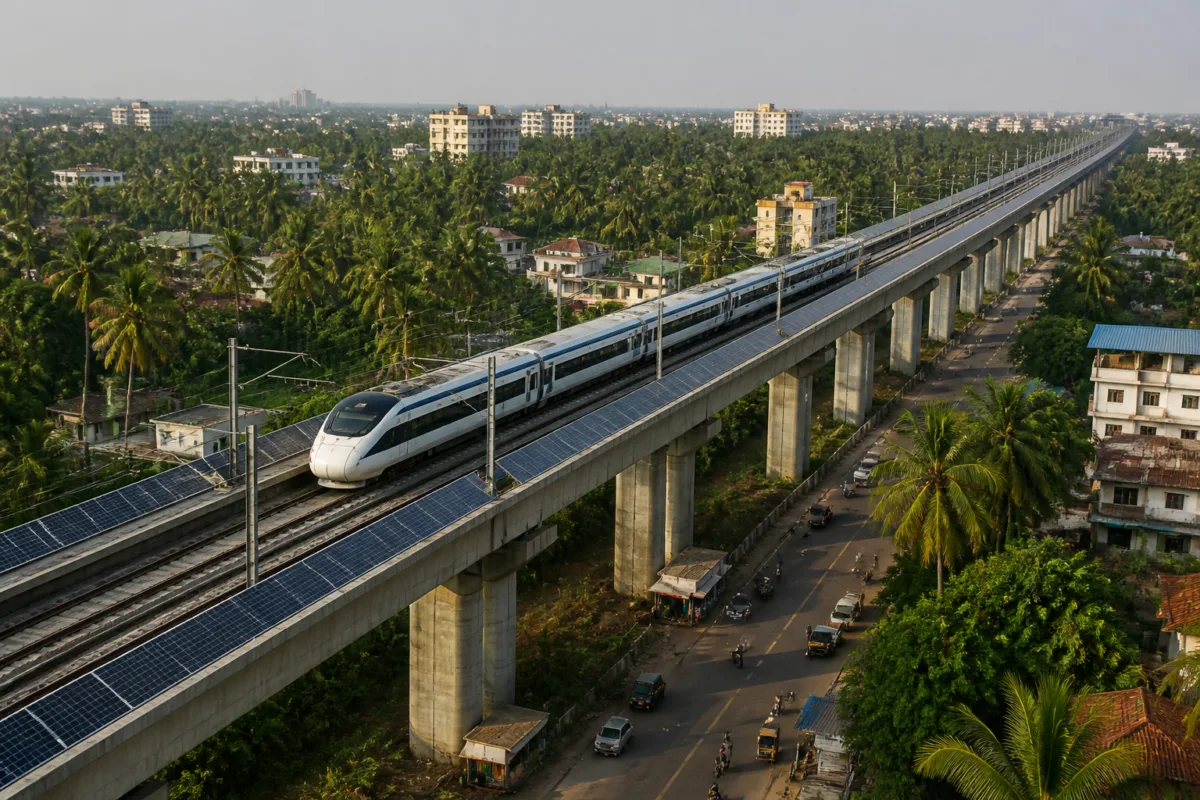
A proposed 472-km semi-high-speed rail corridor between Thiruvananthapuram and Kannur could cost about ₹60,000 crore and take three hours and 30 minutes to cover, according to technocrat E. Sreedharan.
Speaking after a lecture titled “High-speed rail for Keralam”, organised by the Kochi centre of the Institution of Engineers (India), Sreedharan said the project would require less investment than building third and fourth railway tracks alongside Kerala’s existing railway network. He attributed the lower estimate mainly to the proposed elevated design, which he said would reduce land acquisition requirements.
The proposal is not yet an approved project. Sreedharan said the Kerala government had not formally responded to the interim report he submitted in May.
The corridor has been proposed for a design speed of 200 kmph. It would use standard-gauge tracks and a viaduct designed for a 15-tonne axle load, compared with the 25-tonne axle load associated with broad-gauge tracks used by Indian Railways. These specifications, according to Sreedharan, would allow a lighter and narrower elevated structure.
The proposed line would also be powered entirely by solar panels installed along both sides of the elevated viaduct, he said. Sreedharan estimated that this arrangement could reduce operating and maintenance expenses by nearly one-third. He said that, once operational, spending would largely be concentrated on infrastructure maintenance and employee salaries.
The funding model remains a major unresolved issue. Sreedharan suggested that the state and central governments jointly contribute 60% of the project’s capital cost, with the remaining 40% mobilised through crowdfunding. The report does not indicate that either government has accepted this arrangement or committed funds.
Sreedharan estimated that a full-length journey could cost ₹800. He said around 30% of the existing one lakh daily rail passengers could shift to the proposed service at that fare, while faster travel could also attract people who currently depend on road transport. These are projections presented by Sreedharan, rather than confirmed ridership estimates.
The proposed station spacing reflects Kerala’s dense settlement pattern. Stations would be located approximately every 25 km, compared with the 40-50 km spacing typically associated with conventional high-speed rail systems designed for speeds of about 350 kmph.
The service would initially run 12-coach trains at 30-minute intervals. Sreedharan said the frequency could eventually rise to one train every five minutes if passenger demand justified it. The report does not provide an operating plan, capacity assessment or timetable from a government or railway authority.
Ernakulam district is expected to receive four stations under the proposal, including one near the international airport. That connection could improve access between the airport, major urban centres and the wider rail network, although the report does not specify the station locations or the proposed interchange arrangements.
For residents, the corridor’s potential benefits would depend on more than its elevated construction and headline travel time. Fare affordability, station access, integration with local transport and the viability of the proposed funding model would determine whether it could attract existing rail passengers and road users. At present, the project remains a proposal awaiting a formal response from the state government.

