


Kerala’s promise to support new medical device parks is more than an industrial announcement. It is an attempt to turn the State’s skilled workforce, healthcare base and existing manufacturing capability into a larger production ecosystem—one that can attract investment, reduce the entry costs faced by smaller firms and move local companies into higher-value technologies.
The proposal, announced by Chief Minister V.D. Satheesan at the inauguration of the Kerala Medical Device Industry Association, is tied to a much larger ambition. A strategic roadmap released by Industries Minister P.K. Kunhalikutty seeks to increase Kerala’s medical device manufacturing output from the present ₹6,500-7,500 crore to more than ₹25,000 crore by 2031. It also aims to raise the State’s share of India’s medical device production from around 15-18% to more than 25%.
Those targets place the proposed parks at the centre of Kerala’s industrial strategy. The question is not whether the State has identified a promising sector. It has. The more consequential question is whether the proposed institutional and physical infrastructure can convert a policy commitment into a functioning manufacturing network.
Why Kerala is targeting medical devices
Medical device manufacturing sits at the intersection of healthcare, engineering, research and industrial production. The Chief Minister said rapid advances in artificial intelligence and nanotechnology were changing diagnosis and treatment, making continuous technology and knowledge upgrades essential for companies in the sector.
That combination gives the industry a different profile from conventional manufacturing. Medical device firms require more than factory space. They need skilled personnel, quality-control systems, specialised production environments, regulatory capability, testing facilities and access to technology. The government’s argument is that Kerala’s knowledge-based economy and skilled talent pool make the State particularly suited to this sector.
The State also has an existing base from which to expand. Satheesan said Kerala already had companies of international standards operating in medical device manufacturing. The stated policy direction is therefore not to create an industry from scratch, but to broaden its product range, support new enterprises and help existing capabilities reach global markets.
The formation of KMDIA is important in this context because it creates an industry-level platform rather than leaving individual companies to address common constraints alone. According to the Chief Minister, bringing companies together could help them pursue ideas, technologies and opportunities that would be difficult to develop individually.
Kerala medical device parks and the shared-infrastructure problem
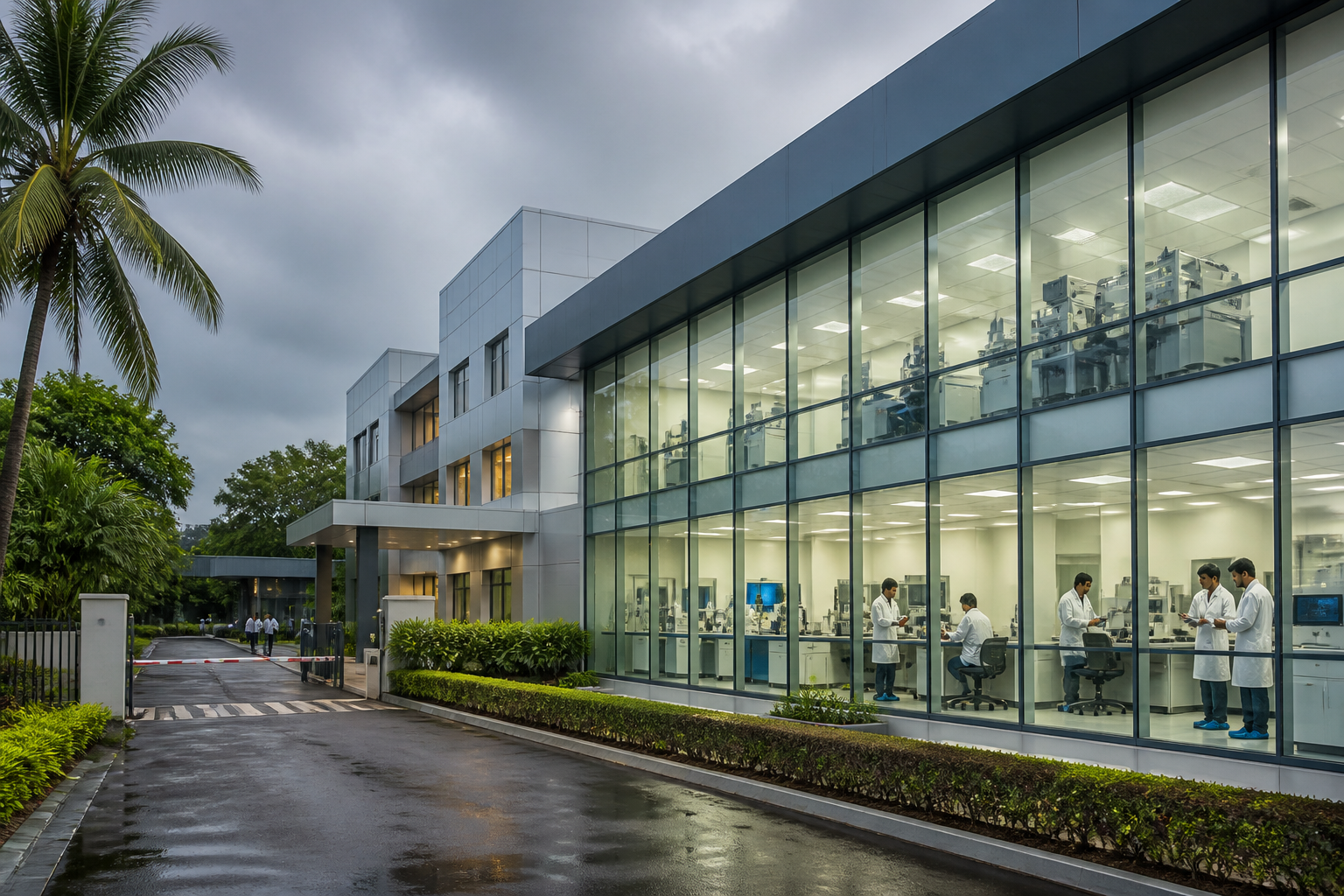
The proposed Medical Devices City is designed around a public-private partnership model. The roadmap envisages plug-and-play manufacturing facilities, ISO Class 5-8 cleanrooms, accredited quality-control laboratories and shared sterilisation facilities.
These components point to a central constraint in medical-device manufacturing: the high initial cost of meeting production and quality requirements. Cleanrooms, laboratories and sterilisation facilities are not ordinary industrial amenities. They can require substantial capital before a startup or small manufacturer has generated sufficient revenue to justify the investment.
Shared facilities could therefore change the economics of entry for micro, small and medium enterprises and startups. Instead of each company building every specialised facility independently, a common industrial platform could allow firms to access infrastructure on a shared basis. The roadmap describes this as a way to reduce the heavy initial investment burden on smaller businesses.
However, the value of such infrastructure will depend on how it is governed and used. The supplied announcement does not specify the proposed locations, project cost, implementation schedule, land arrangements, operating agency or terms under which companies would access the facilities. Those details will determine whether the Medical Devices City becomes an active production cluster or remains primarily a planned industrial site.
A medical device park also has to do more than provide buildings. Its effectiveness will depend on whether the laboratories, cleanrooms and sterilisation facilities are available at the scale and quality required by manufacturers, and whether smaller companies can afford to use them. The policy challenge is therefore both physical and institutional: build the infrastructure, then create a system that allows firms to use it efficiently.
The approval system is part of the industrial infrastructure
The government’s proposed “single door, single document, single approval” system is intended to address another form of industrial friction. Satheesan said amendments were being made to 19 laws, with the objective of ending prolonged delays and ensuring approvals within a defined timeframe.
For a sector that depends on specialised facilities and regulated production, approval delays can have a direct financial impact. Land, equipment, technical staff and contracts may need to be arranged before a project becomes operational. If permissions move slowly or require repeated submissions to different departments, the cost of establishing a plant rises even before production begins.
The proposed Investment Promotion Council is intended to provide an administrative mechanism for dealing with such bottlenecks. Headed by the Chief Minister, with the Industries Minister as vice-chairman, the council would monitor investment projects and intervene when obstacles arise.
This structure signals that the State is treating investment facilitation as a coordination problem rather than only a departmental function. Medical device manufacturing can involve industrial approvals, health-related requirements, environmental permissions, local administration and infrastructure connections. A central monitoring body may help coordinate those processes, but its effectiveness will depend on whether it has clear authority, transparent timelines and a system for tracking decisions.
The announcement establishes the intended direction but does not yet provide evidence on how the new approval system will operate in practice. The proposed amendments to 19 laws and the council’s intervention role are therefore important implementation milestones to watch.
The numbers reveal the scale of the ambition
The roadmap’s targets indicate a substantial expansion. Increasing output from ₹6,500-7,500 crore to more than ₹25,000 crore by 2031 would require Kerala’s medical device manufacturing economy to grow several times over its current level within five years of the roadmap’s release.
The target for national share is similarly ambitious. Kerala currently accounts for around 15-18% of India’s medical device production, according to the figures presented at the event. The roadmap aims to take that share beyond 25%. This would require not only new investment, but also growth in the number, scale and technological range of enterprises operating in the State.
The planned move into active medical electronics, in-vitro diagnostics and orthopaedic implants is significant because it identifies higher-value segments rather than focusing only on expanding existing production. These areas require different kinds of technical capabilities and production systems. The roadmap therefore implies an effort to deepen the industrial base, not simply increase the volume of current products.
At the same time, the figures are targets rather than confirmed outcomes. The supplied report does not provide a year-wise investment plan, company-level commitments, employment projections or a detailed breakdown of how much output each product segment is expected to contribute. It also does not establish whether the proposed Medical Devices City has received land, funding or a formal implementation schedule.
That distinction matters. Industrial roadmaps are useful for setting direction, but their credibility is tested through measurable milestones. For Kerala, the next stage will involve translating aggregate targets into projects, facilities, approvals and operating companies.
From industrial park to production ecosystem
The broader urban question raised by the announcement is how Kerala wants to use its limited industrial land and skilled workforce. The State is positioning medical devices as a sector compatible with a knowledge-based economy. That makes the proposed parks part of a wider development model in which value is created through technical expertise, research, precision manufacturing and healthcare-linked innovation.
Such a model can also distribute industrial activity beyond conventional large factories. A park with shared facilities may support startups, MSMEs, suppliers and specialised service providers alongside larger manufacturers. If the ecosystem develops as planned, the physical site could become a platform connecting production, testing, sterilisation, technology development and market access.
But clustering does not happen automatically because companies are placed in the same location. It requires reliable infrastructure, a skilled labour pipeline, predictable approvals and institutions capable of maintaining common facilities. The KMDIA roadmap and the proposed Investment Promotion Council address parts of that challenge, while the Medical Devices City addresses the physical infrastructure question.
The remaining issue is execution. The government has stated that it will support new parks and enterprises, and the roadmap has defined output, market-share and product ambitions. The supplied announcement does not yet establish how those commitments will be funded, sequenced or evaluated.
Kerala’s medical device strategy therefore offers a clear industrial opportunity, but its success will be measured less by the announcement than by the operating system built around it. The next developments to monitor are the implementation of the single-approval framework, the structure and authority of the Investment Promotion Council, the location and financing of the Medical Devices City, and the conversion of the 2026-2031 roadmap into specific projects and timelines.
