


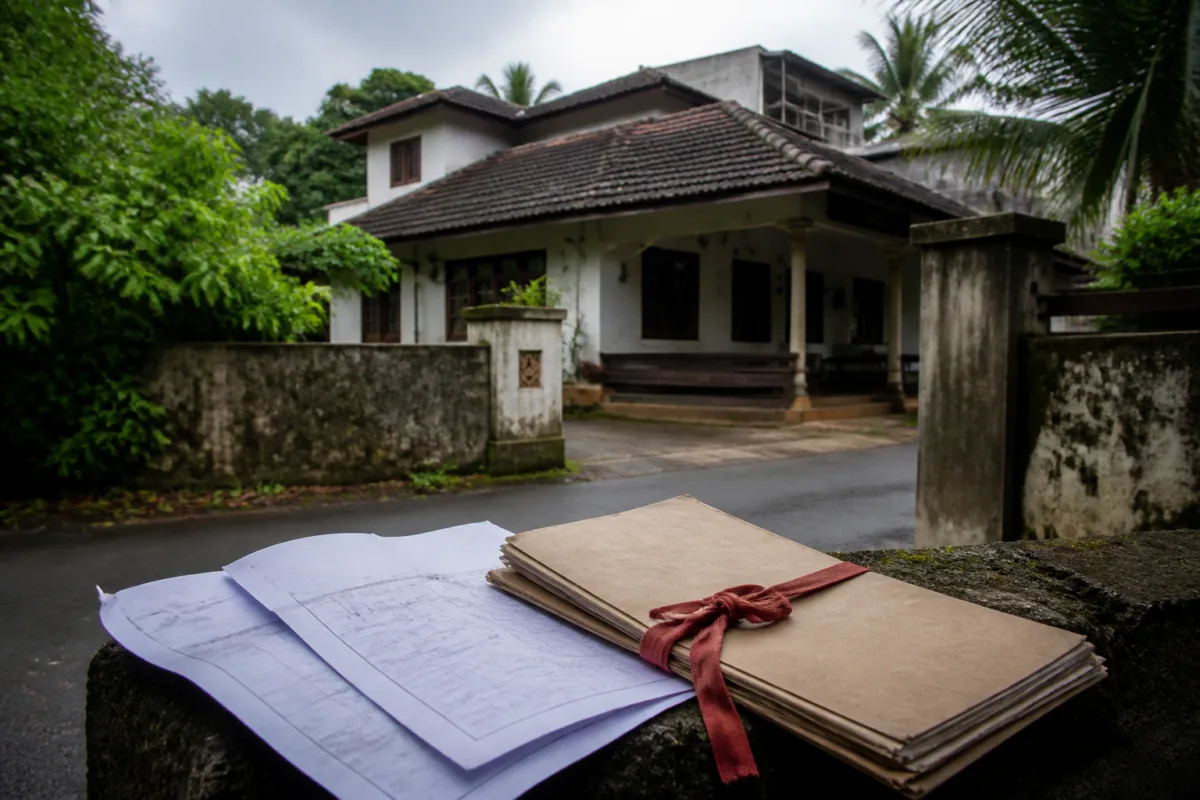
The Kerala High Court has declared a house registered in the joint names of a husband and wife to be the wife’s exclusive property after finding that her father had funded the entire purchase, and directed the husband to vacate the property within three months.
The dispute involved a couple who married in 2012 and later lived abroad before returning to India. As their relationship deteriorated, the woman sought the return of her gold ornaments and argued that a residential property in Manjeri, in Kerala’s Malappuram district, belonged solely to her because her father had paid for it.
The property consisted of a seven-cent plot and a residential building purchased in 2015. Although the sale deed recorded both spouses as owners, the woman told the court that her father had provided Rs 30 lakh to buy the house for her future security. She maintained that her husband had made no financial contribution towards the purchase and therefore could not claim an independent share.
The Malappuram Family Court accepted that the woman’s father had funded the purchase but did not grant her exclusive ownership. Instead, it directed the husband to pay her Rs 15 lakh, representing the value of his half share. Both sides challenged aspects of that decision before the High Court. The woman sought a declaration that she was the sole owner and an order requiring her husband to leave the property. The husband argued that he had paid for the property himself.
The High Court examined the evidence relating to the source of the sale consideration. The woman’s father testified that he had raised funds through a loan. His bank statement showed a credit of Rs 25 lakh followed by a debit for the same amount on November 9, the date of the sale deed. The court found that this evidence supported his claim that he had financed the transaction.
The husband, however, did not produce evidence showing that he had paid any part of the purchase price. During cross-examination, he acknowledged that he had not withdrawn the money from a bank account. He said that his brother-in-law, who was working abroad with him, had provided the funds, but the brother-in-law was not examined and no supporting documents were produced.
The court concluded that the husband had failed to establish any contribution towards the sale consideration and held that “the entire sale consideration was paid by the father of the petitioner”. It referred to Section 45 of the Transfer of Property Act, which deals with the respective interests of people who jointly acquire property using separate funds.
The provision was central to the court’s assessment of the spouses’ respective interests. The court found that the money had been provided by the woman’s father for her benefit and that the husband had not demonstrated a financial contribution of his own. It therefore declared the wife to be the exclusive owner and permitted her to obtain vacant possession of the property.
Asha Kiran Sharma, Partner at King Stubb and Kasiva, told ET that the ruling placed emphasis on the actual source of the purchase money rather than only on the names appearing on the title deed. She said that arrangements involving parental financial support should be documented clearly as a gift or loan, while unequal contributions between co-owners should be recorded in the title deed or a separate written declaration.
The High Court’s order requires the husband to vacate the house within three months. The case shows how bank records, loan documents, witness testimony and evidence about the source of sale consideration can become decisive when joint ownership is disputed.

