


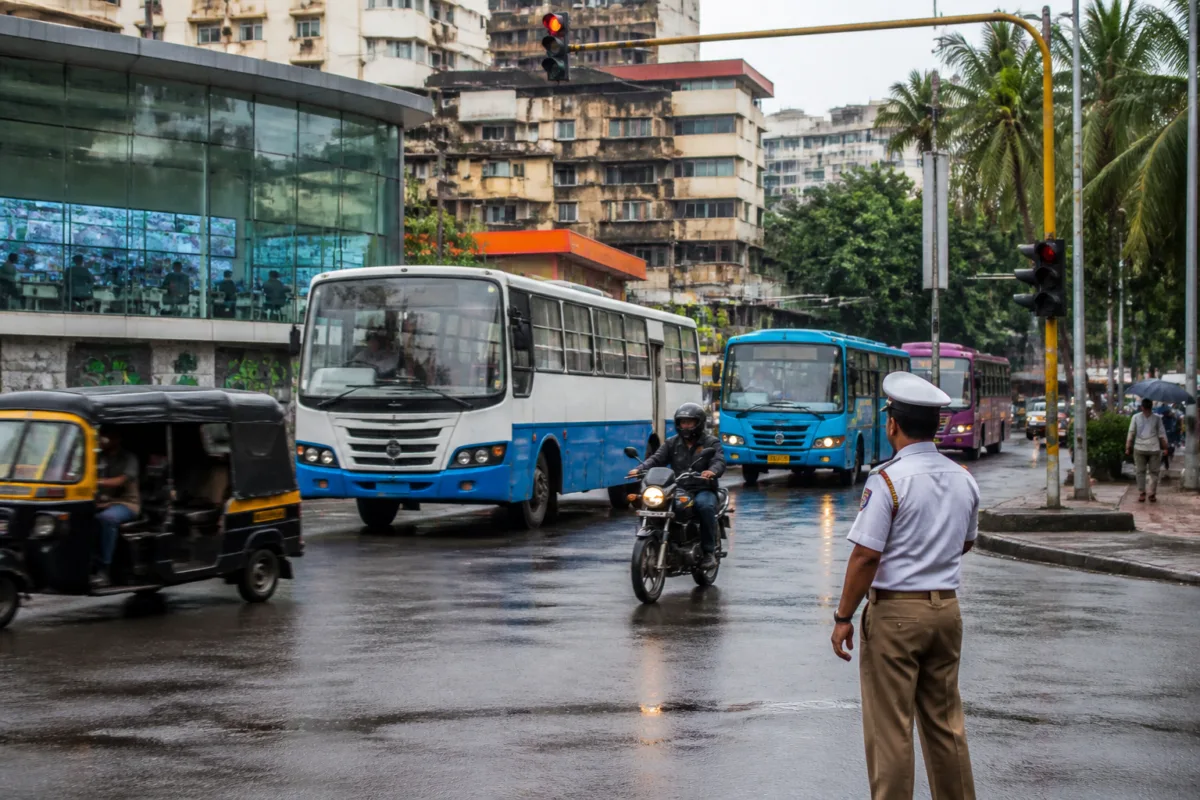
Kerala Busz, a proposed integrated digital platform for regulating private buses, places a long-standing weakness in public transport administration at the centre of Kerala’s road-safety debate: the state has information on routes, vehicles, speeds and violations, but has not yet fully connected that information into one operating system. The Motor Vehicles Department told the Kerala High Court that the platform would use traffic intensity, vehicle speeds, permissible speed limits, existing schedules, GPS movement, travel times and actual demand to rationalise routes and timings.
The proposal was presented in proceedings initiated suo motu by the high court on road safety. That setting matters because Kerala Busz is not merely a technology project described as a way to make bus operations more efficient. It is part of a wider institutional response to accidents, unsafe road conditions, overloaded vehicles, weak monitoring and uneven enforcement. The court has asked government departments to move beyond general statements and provide concrete proposals and status reports.
The platform’s immediate purpose is to address overlapping private-bus services and inefficient deployment of stage carriages. In a system where multiple services may operate on similar routes while other demand patterns remain less adequately served, the proposed analysis could help authorities determine where buses should operate, how frequently they should run and how schedules should be coordinated. The information supplied to the court does not establish the extent of current route duplication or identify specific corridors where services would change. It does, however, show that the department intends to base future decisions on a combination of operational and safety data rather than on isolated route applications or administrative records.
That distinction is important for public transport governance. Route planning, vehicle regulation and road safety are often handled through separate administrative processes. Kerala Busz is intended to bring all regional transport offices and the state transport authority into a centralised repository. The proposed repository would give the state a common information base for regulating and managing public transport across Kerala.
The platform’s design also indicates that route planning and safety enforcement are being treated as connected questions. GPS-based vehicle movement can show where buses travel and how long trips take. Traffic intensity and actual demand can indicate where services are needed. Speed data and permissible speed limits can identify operational behaviour that may require intervention. None of these inputs, by themselves, explains why an accident occurred. Together, they can give regulators a more detailed view of how public transport operates on the road network.
The court proceedings show why this integration is being sought. The transport commissioner informed the bench that electronic monitoring and automated enforcement systems were operational across the state under the Safe Kerala Project. In the month preceding the report, 391 vehicles were booked for overloading, with fines totalling Rs 95.60 lakh. As of October 30, authorities had issued 1.56 crore e-challans for traffic violations, involving aggregate fines of Rs 1,017.46 crore.
These figures demonstrate the scale of enforcement activity, but they do not by themselves show whether violations are declining or whether roads are becoming safer. They measure cases recorded and fines imposed, not the full outcome of enforcement. That distinction is central to the court’s wider concern. A digital system can improve detection and record-keeping, but the public-safety result depends on what follows: whether violations are acted upon, whether dangerous locations are corrected and whether agencies use the data to change operations.
The state’s proposed Road Safety Mission, scheduled for launch on November 15, is expected to focus on three pillars: education, enforcement and engineering. The structure recognises that road safety cannot be addressed only through penalties imposed on drivers. Education concerns behaviour and awareness. Enforcement concerns compliance and accountability. Engineering concerns the physical road environment, including design and maintenance. The court’s observations suggest that the third pillar remains a significant institutional challenge.
The bench noted that only four speed-violation detection systems had been installed across the state and said the existing infrastructure required further augmentation. This creates a clear gap between the stated goal of electronic monitoring and the physical capacity available to detect speeding. A state may have a large volume of digital violation records while still lacking sufficient coverage of the road network. The figures on e-challans therefore need to be read alongside the court’s concern about the limited number of speed-detection systems.
The high court also criticised the Public Works Department for failing to address concerns raised in a Comptroller and Auditor General report on road quality. It directed the department to file a detailed affidavit and noted that records had not been produced despite specific directions. The court said the proceedings were intended to identify the root causes of accidents and ensure public safety, requiring a comprehensive and constructive response rather than general statements.
This brings the road-safety question beyond transport regulation. A private bus can be monitored, its route can be studied and its speed can be recorded, but those measures cannot correct a damaged road, an unsafe junction or an unaddressed black spot. The court’s demand for a more complete response indicates that road safety is being examined as a system involving vehicles, drivers, enforcement agencies, road-owning departments and physical infrastructure.
The court further stressed the need for a GIS-enabled integrated road-safety monitoring platform. The proposed components include hazard reporting, black-spot tracking, automatic number-plate recognition and engineer-accountability modules. These are not interchangeable features. Hazard reporting would create a mechanism to record unsafe conditions. Black-spot tracking would focus attention on locations associated with repeated risk. Automatic number-plate recognition would support enforcement and identification. Engineer-accountability modules would connect road conditions and corrective action to responsible officials or agencies.
The significance of such a platform lies in the chain it could create between evidence and responsibility. A complaint or accident record would need to be linked to a location, the relevant authority and the action required. The supplied report does not establish whether this system has been approved, funded or implemented. The court’s request for concrete proposals and status reports shows that the institutional architecture remains under examination.
Other initiatives cited before the court include the Suraksha Mitr vehicle-tracking system, which covers 2.35 lakh public transport vehicles, and the establishment of three registered vehicle-scrapping facilities. These measures address different parts of the transport system. Vehicle tracking concerns visibility and movement. Scrapping facilities concern the removal of vehicles from service through an organised process. Kerala Busz would add a planning and regulatory layer by bringing route, schedule, demand and safety information into a common system.
The challenge is therefore not simply whether Kerala can introduce another digital platform. It is whether the state can make its existing data systems work together across institutional boundaries. Kerala Busz, Safe Kerala monitoring, e-challans, vehicle tracking and GIS-based road-safety proposals each generate or use information. Their public value will depend on whether officials can connect that information to decisions about routes, enforcement, road repairs and accountability.
The numbers presented in court also show why this question has administrative urgency. The state has recorded 1.56 crore e-challans and fines of Rs 1,017.46 crore, while only four speed-violation detection systems were identified as installed. It has tracking coverage for 2.35 lakh public transport vehicles, but the court is still seeking a more integrated approach to hazards, black spots and engineering responsibility. The issue is not an absence of data alone. It is the uneven relationship between data collection, infrastructure coverage and corrective action.
For commuters, the practical consequences of the proposed system would be felt through route availability, service frequency, travel times and safety rather than through the platform itself. A rationalised route plan could alter how private buses are deployed, but the report does not specify which routes or services would change. Similarly, stronger monitoring could affect operators and drivers, but no implementation schedule for Kerala Busz has been provided in the supplied material.
What the court record establishes is that Kerala’s road-safety response is moving towards a more integrated model, while also revealing gaps in detection infrastructure, road-quality responses and departmental record-keeping. The next test is institutional: whether the transport department, the Public Works Department and other authorities can turn separate programmes and proposed platforms into a coordinated system with measurable follow-through.
The respondents have been given three more weeks to submit concrete proposals and status reports, and the matter has been posted after November 30. Those filings are expected to clarify the status of Kerala Busz, the expansion of speed-detection infrastructure, the Public Works Department’s response to road-quality concerns and the proposed GIS-enabled monitoring framework.

