


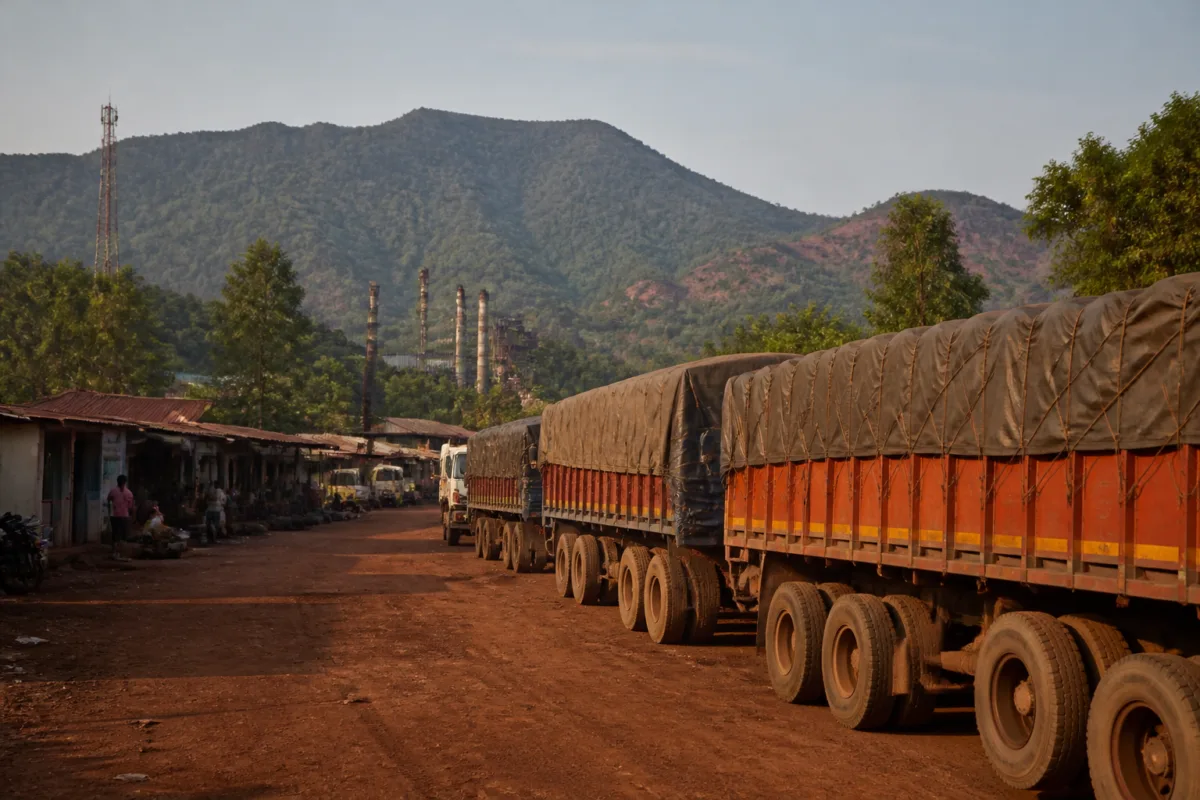
More than 4,000 truck owners in Odisha’s Anandapur subdivision are facing financial pressure after iron-ore loading from mines in Keonjhar district declined sharply for more than six months, Sambad reported.
According to the report, most trucks are parked outside their owners’ homes, while some owners have sold their vehicles after struggling to repay loan instalments. The disruption has also affected drivers, tyre-repair shops and other businesses linked to mineral transport.
Truck owners told Sambad that loading has remained largely suspended across several sectors in Keonjhar. With limited work available locally, many vehicles have turned to the Koida sector in neighbouring Sundargarh district. Freight from Koida to Paradip is reportedly being paid at ₹1,200–₹1,250 per tonne, while transport to Dhamra port is fetching ₹1,000–₹1,050 per tonne.
These rates are substantially below the earlier reported rate of about ₹3,000 per tonne for transporting iron ore from Joda to Paradip. Truck owners said the lower freight rates do not cover operating costs, particularly as diesel, tyres and spare parts have become more expensive.
Sambad reported that the price of a pair of truck tyres has increased from about ₹35,000 in 2018 to approximately ₹55,000 now. For operators whose vehicles are financed, the combination of lower utilisation, reduced freight earnings and higher maintenance costs has increased the risk of missed loan payments and pressure from finance companies.
The impact extends beyond vehicle owners. A truck owner from Ghasipura, Bishwaranjan Maharana, told the newspaper that alleged political interference in iron-ore transport was preventing operators from receiving what he described as fair freight rates. He also said that paying drivers regularly had become difficult. The allegation was not accompanied in the report by a response from the state government, mining companies or any other authority.
Tyre-repair businesses are also seeing less work. Ajabul Ansari, who runs a tyre-repair shop, told Sambad that although he continues to open his shop, he had handled only one vehicle’s tyre replacement in four days.
Devadatta Nayak, vice-president of the Keonjhar Truck Owners’ Association, attributed the decline in road-based loading to mining companies giving greater importance to transporting iron ore by rail. He also said iron-ore exports had fallen. The report did not provide official rail and road freight data, mine-wise loading figures or export statistics to quantify these changes.
The reported shift has implications for the local freight economy. When trucks remain idle, the effects are felt not only by owners but also by drivers, workshops, tyre retailers, fuel outlets and businesses that service mining-linked transport. At the same time, a move towards rail may alter how mineral traffic reaches Paradip and Dhamra ports, although the available report does not establish the scale or permanence of that shift.
Truck owners have appealed to the Odisha government to intervene. The association warned that continued disruption could lead to protests, but Sambad reported no confirmed government decision, relief measure or timetable for restoring loading activity.
The immediate issue for operators is the gap between freight rates and the cost of running heavy vehicles. The wider concern is whether the mineral-transport system has adequate mechanisms to manage changes in mine loading, rail use, export demand and the financial exposure of small fleet owners. Those questions remain unresolved in the reported account.

