


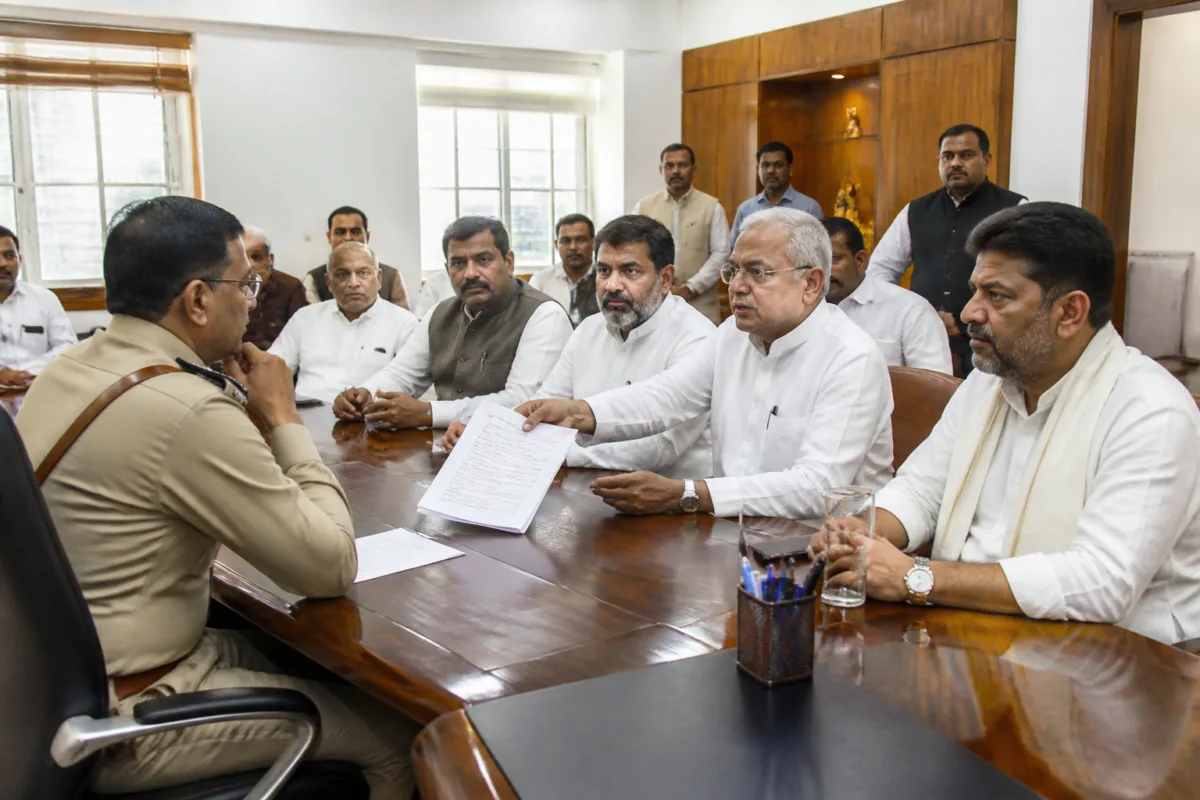
Opposition leaders in Karnataka have complained to Director General of Police M.A. Salim, alleging that police are registering cases and issuing notices to people who criticise the state government on social media.
Speaking after submitting the complaint, Karnataka Legislative Council Opposition Leader Chalavadi Narayanaswamy alleged that people were being called to police stations, intimidated and made to sign undertakings promising not to publish social-media posts for a year. He claimed that several Bharatiya Janata Party workers in Bagalkot had faced first information reports in connection with social-media activity.
Narayanaswamy also alleged that notices were being issued to farmers’ children and that students who responded to posts circulating on social media were being summoned to police stations and threatened. The allegations were reported by Prajavani in a report published on November 17.
According to Narayanaswamy, similar incidents had been reported in Mangaluru, Kolar, Raichur, Vijayapura and Bidar. He described the alleged action as a “systematic conspiracy” and said the delegation expected the police chief to respond positively to its representation.
The opposition leader further claimed that police stations had been directed not to register first information reports against people who merely shared or responded to posts written by others. The supplied report does not include a response from the Karnataka police or the Director General of Police to the allegations.
The complaint was submitted by a delegation that included Legislative Council Opposition Chief Whip N. Ravi Kumar and council members Hemalatha Naik, S.V. Sankanoor and Keshav Prasad, among others. The delegation’s intervention places the use of police powers in social-media disputes at the centre of a wider governance question: how complaints over online speech are being handled at the local police-station level.
The allegations cover several districts and involve different categories of people, including political workers, students and members of farming families. However, the report does not provide the case numbers, sections of law, dates of notices or copies of the undertakings allegedly signed by those summoned.
The immediate next step cited in the report is the response expected from the Director General of Police after receiving the opposition delegation’s complaint. No further action or formal police clarification was included in the source material.

