


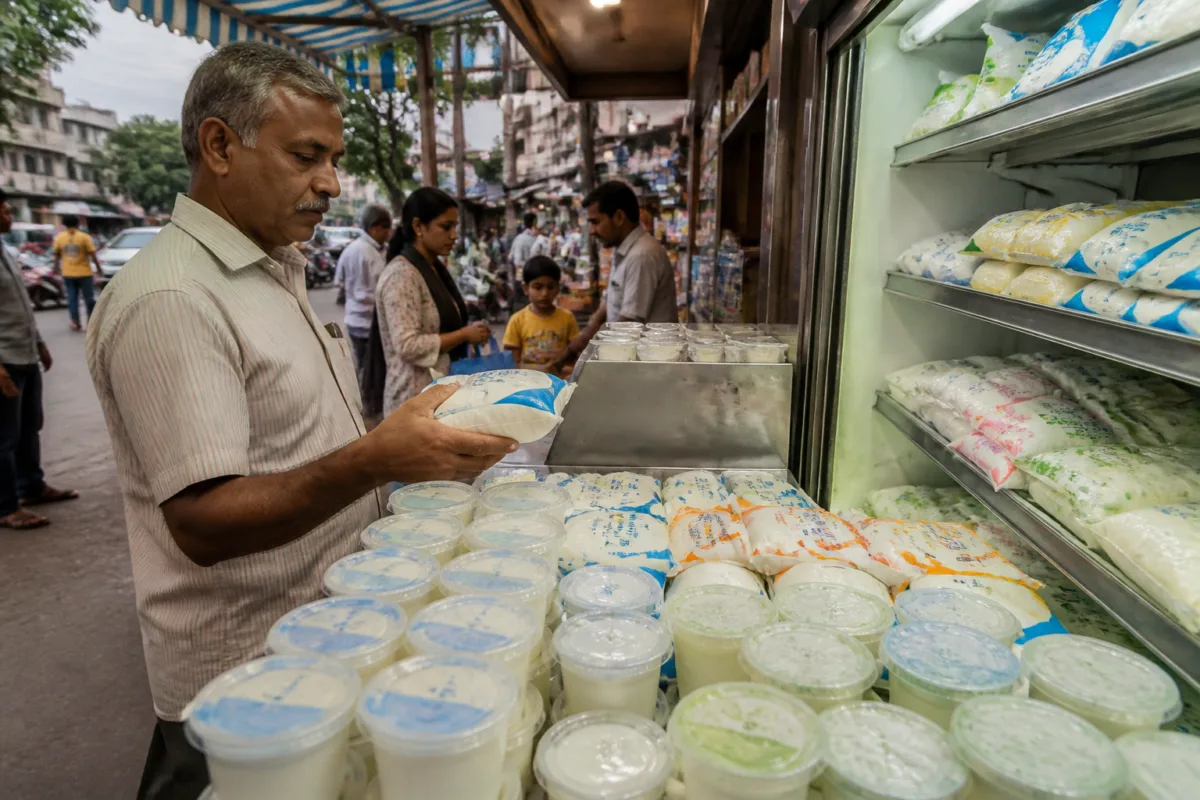
Karnataka Chief Minister DK Shivakumar has said the state government was responsible only for the recent milk price increase, while the decision to raise curd prices was taken by the Karnataka Milk Federation (KMF) according to the product’s fat content. The clarification comes as the revised prices affect household dairy budgets and intensify scrutiny of how the state cooperative sets rates for consumers and remunerates farmers.
Shivakumar said the government intervened in the price of milk but not in other KMF products. “As far as other factors are concerned, if the fat content is higher, a corresponding rate is fixed and the price goes up accordingly,” he told mediapersons, according to the Times of India report.
The chief minister defended the milk price increase by linking it to farmer payments, fodder costs and declining production during drought conditions. He said producers had sought an increase of Rs 12 a litre, while the cabinet approved an increase of Rs 8. Toned milk will now cost Rs 54 a litre and Shubham milk Rs 60, according to the report.
Shivakumar said Karnataka was facing pressure on milk availability because production had fallen during the drought. He also said farmers were moving milk to neighbouring states, where prices were higher. The government’s stated rationale is that better returns are needed to help farmers purchase fodder and maintain cattle, linking consumer prices to the financial viability of milk production.
Data cited by the chief minister’s office showed that Nandini products remained cheaper than comparable private brands as of September 12. Nandini curd was priced at Rs 54 a litre, compared with a private-brand average of Rs 68.4. Toned milk was priced at Rs 46 against a private average of Rs 52.8, while full-cream Samruddhi milk at Rs 55 was as much as Rs 19 cheaper than rival products.
The figures place the price dispute within a wider question about how a cooperative balances affordable urban consumption with income support for producers. The KMF system serves 28.8 lakh dairy farmers, of whom 67% of its members are small and marginal farmers, according to the data cited by the chief minister. Any change in procurement or retail pricing therefore has consequences on both sides of the supply chain.
The government’s study has proposed periodically revising prices based on fat and solid-not-fat content, as private dairies do. It said such a system could prevent cooperative unions from bearing losses. The proposal would make product composition a more direct factor in retail pricing, although the supplied report does not specify when such revisions would be introduced or how consumers would be notified.
Union minister Pralhad Joshi criticised the increase, alleging that the government was using KMF to address fiscal difficulties and warning that higher prices would affect poor and middle-class families. The state government, however, said it was seeking to protect farmer interests while maintaining the supply of quality milk at affordable prices. The immediate policy question is how KMF will implement the revised prices while preserving that balance.

