


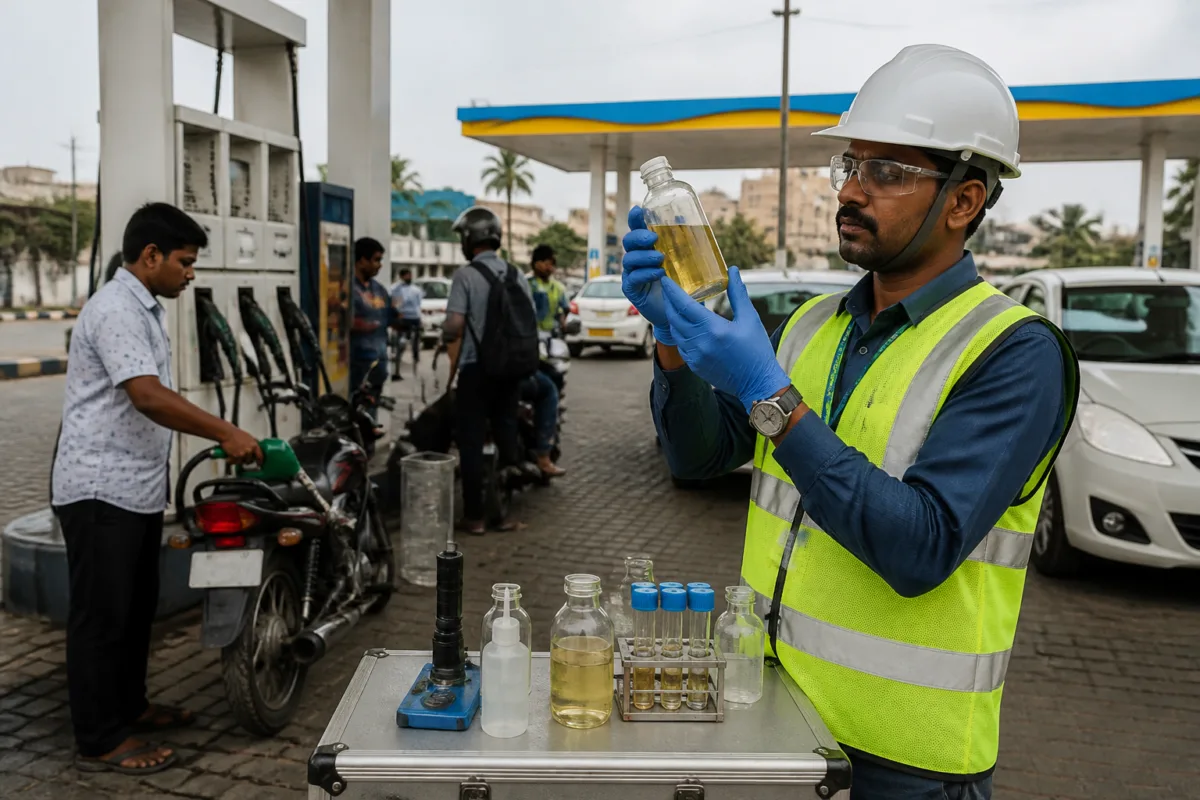
Karnataka ethanol blending claims have triggered a sharp dispute between the state government and India’s three public-sector oil marketing companies, with the companies rejecting allegations that petrol sold at outlets in the state exceeded the prescribed 20% ethanol limit.
Karnataka Food, Civil Supplies and Legal Metrology Minister Rizwan Arshad had said tests conducted by laboratories authorised by the state found ethanol levels as high as 31.2% in petrol samples collected across Karnataka. The minister described the findings as alarming and said samples from 14 of 63 petrol outlets showed levels above the prescribed limit.
The claim included outlets operated by Indian Oil Corporation, Bharat Petroleum Corporation, Hindustan Petroleum Corporation, Nayara, Shell and MRPL. According to the state government, some Indian Oil and Hindustan Petroleum outlets recorded ethanol levels of 31.2% and 30.5%, respectively. It also said blending at some Bharat Petroleum, Nayara and Shell outlets exceeded the stipulated level.
The three public-sector oil retailers rejected the findings late on Friday, questioning the sampling and testing process used during an exercise conducted by the Karnataka government in October. Indian Oil, Bharat Petroleum and Hindustan Petroleum said the procedure did not comply with requirements under the Motor Spirit and High Speed Diesel Control Order, 2005, and the Marketing Discipline Guidelines, 2024.
The companies said samples had been collected without the participation of their representatives. They also sought complete sampling documentation, outlet-wise laboratory reports, details of the testing methodology and access to counterpart samples for independent testing at an authorised laboratory in the presence of both state officials and company representatives.
The oil marketing companies cited a separate quality-monitoring exercise conducted by the petroleum ministry’s Centre for High Technology. They said all 893 samples collected from depots and retail outlets across 27 states and Union Territories contained ethanol within the 19% to 21% range. The 56 samples collected in Karnataka from different locations and outlets operated by all three companies recorded ethanol levels between 19% and 20%, with an average of 19.3%, they said.
The dispute has placed the focus on how fuel quality is sampled, tested and documented at retail outlets. Karnataka said samples were initially sent to Indian Oil and Hindustan Petroleum laboratories, but alleged that the laboratories did not disclose the ethanol content. The state government said this raised questions about transparency in the testing process.
The companies said they were willing to cooperate with the Karnataka government in a joint sampling and testing exercise conducted under the prescribed procedures. The next step will depend on whether the state and the oil marketing companies agree to undertake that exercise and share the underlying laboratory and sampling records.

