


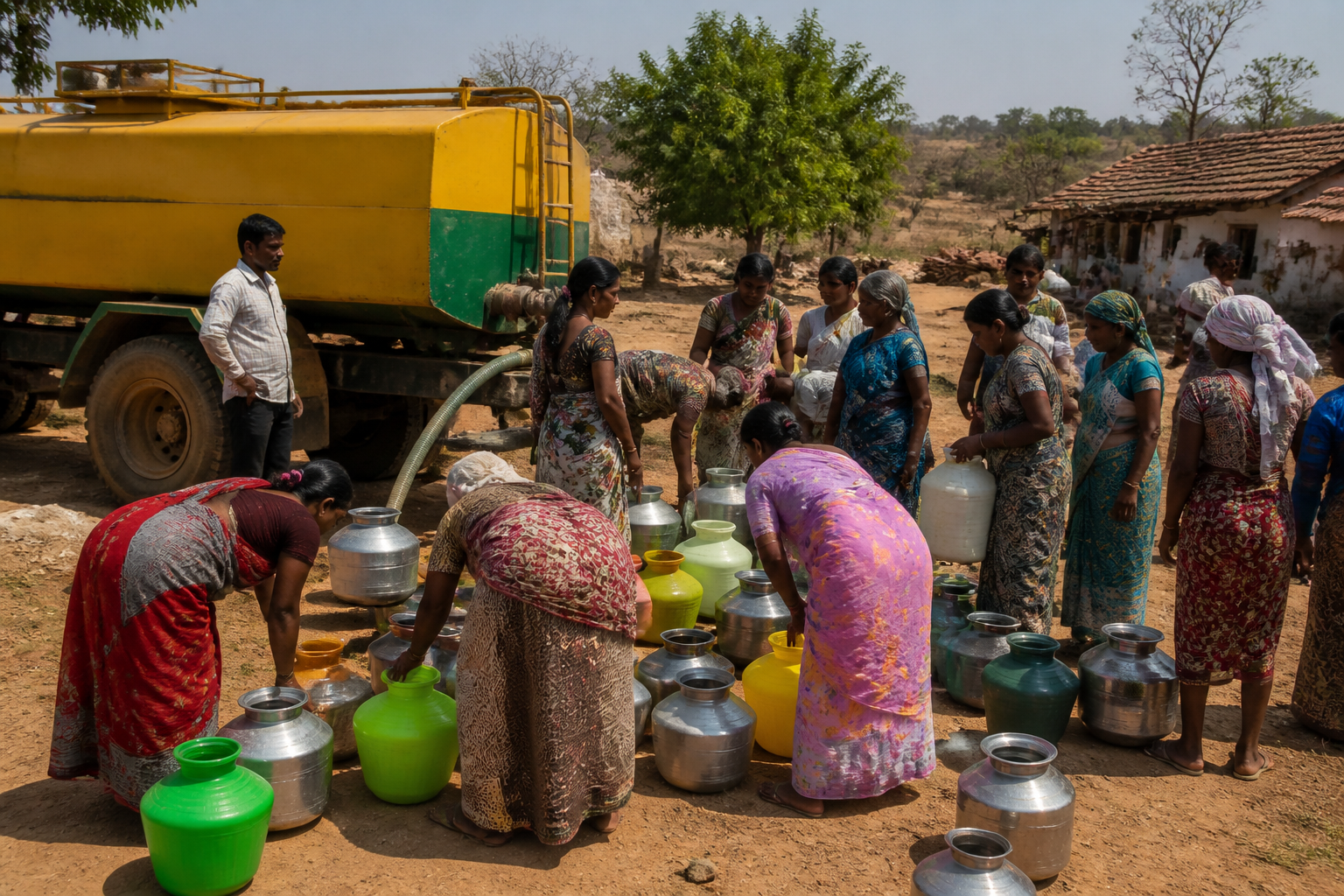
Water scarcity has worsened across Karnataka, with 710 villages in 112 taluks currently facing drinking-water problems as drought conditions persist, according to sources in the Rural Drinking Water and Sanitation Department. The affected settlements are being supplied through tankers and privately owned borewells leased by the administration.
Bengaluru | September 8, 2026
Of the affected villages, 149 are receiving water through tankers, while 561 are being supplied from private borewells, the department sources told Prajavani. The number of villages reporting shortages has risen steadily from 230 at the beginning of the year to 500 by June, the sources said.
The department has linked the worsening situation to drought and falling groundwater levels. Officials said the number of affected villages was continuing to increase each month. They also cited weather department information indicating that the likelihood of rainfall in September and October remained low, raising concerns about further pressure on drinking-water supplies.
The districts reporting larger numbers of affected villages include Kalaburagi, Tumakuru, Chikkamagaluru, Chikkaballapur, Koppal, Haveri, Davanagere, Mysuru, Uttara Kannada, Dakshina Kannada, Belagavi, Chamarajanagar and Bengaluru South. Tumakuru was listed separately among the districts facing a significant increase in affected villages in the departmental account.
Officials said falling groundwater levels were making it difficult to rely on new borewells. In some cases, water is reportedly unavailable by the time a newly drilled borewell is fitted with a pump. As an immediate measure, the administration is leasing borewells owned by farmers through agreements and paying up to ₹10,000 a month, a senior official said.
The official described leasing existing private borewells as a quicker solution than drilling new ones in locations where groundwater levels have declined. The arrangement is being used alongside tanker supplies to address immediate drinking-water requirements in the affected villages.
The department said district-level officers were being briefed through weekly video conferences to review the situation. An official said districts had been instructed to give priority to drinking-water complaints and claimed that no taluk was facing a shortage of funds for emergency response.
The state released ₹117 crore for drinking-water arrangements in April, of which ₹64.87 crore had been spent, according to the department. A further ₹52.13 crore remained in the accounts of deputy commissioners. The department also allocated ₹189 crore in a second phase for drinking-water and related works, though that amount had not yet been used, the official said.
Department sources also referred to a weather forecast indicating the possibility of below-normal rainfall until 2027 because of the projected impact of a “super El Niño”. They cautioned that such a pattern, if realised, could make drought management more difficult. The administration’s immediate response remains focused on tanker operations, borewell leasing and district-level monitoring.
