


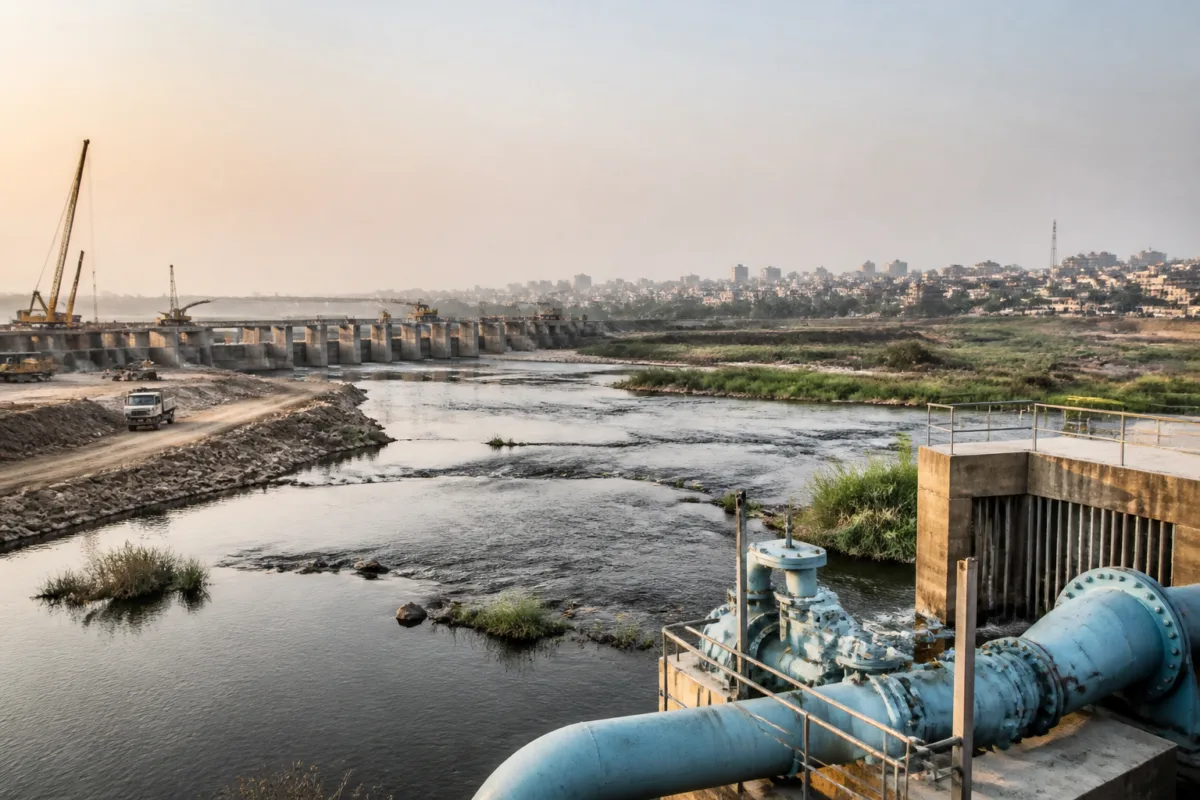
The proposed Rs250 crore allocation for the Kanhan-Kolar barrage is more than an initial funding signal for Nagpur’s water supply. It is the first visible step in moving a nearly Rs950 crore project from proposal to a formal state budget structure, while the city’s projected annual drinking-water requirement is expected to rise sharply over the next three decades.
The arrangement is unusual in its immediate mechanics. Nagpur Municipal Corporation will deposit a token Rs1,000 so that the urban development department can create a separate budget head for the project. The proposed allocation is expected to appear in the Maharashtra state budget for 2027-28, with the initial provision likely to be made in March 2027. That provision would authorise a budgetary allocation; it would not represent an immediate release of funds to the civic body.
The distinction matters because large urban water projects do not move from announcement to construction through a single financial decision. The budget head creates an administrative route for the project, but the release and use of funds will still depend on prescribed administrative and financial procedures. The reported process therefore marks institutional preparation rather than the completion of project financing.
The development followed a meeting in Mumbai convened by revenue minister Chandrashekhar Bawankule, who also serves as Nagpur’s guardian minister. Officials from the urban development department, Nagpur Municipal Corporation and the water resources department reviewed the project. Bawankule directed officials to begin the process of creating the separate budget head, according to the report.
That interdepartmental involvement reflects the project’s structure. The proposed barrage falls within the water resources system, while the urban development department is expected to create the budget head and the municipal corporation will be responsible for the city-side requirements. The project consequently depends on coordination between the state’s water infrastructure machinery and the civic agency that supplies water to Nagpur’s residents.
The urban challenge behind the proposal is straightforward: Nagpur’s water demand is rising faster than the city’s existing arrangements can comfortably accommodate. The municipal corporation currently supplies around 786 million litres per day. Its annual drinking-water requirement is estimated at 246.01 million cubic metres at present, and is projected to reach 313.89 million cubic metres by 2038 and 446.78 million cubic metres by 2053.
These figures show why the barrage is being presented as a long-term source augmentation project rather than a short-term response to a seasonal shortage. On the estimates supplied in the report, annual demand would rise by about 27.88% between the current level and 2038. By 2053, it would be approximately 81.6% higher than the current requirement. The project’s stated purpose is to meet drinking-water demand over the next 30 years, making the adequacy and timing of new supply infrastructure central to its relevance.
The proposal has also emerged amid concerns about declining reservoir storage and below-normal rainfall. Those conditions add pressure to existing sources, but the report does not establish that the proposed barrage will by itself resolve seasonal shortages or guarantee future supply. Its immediate significance lies in creating another source and the associated infrastructure needed to bring raw water into the municipal system.
The project envisages lifting raw water from the proposed barrage and constructing pumping stations and water treatment facilities. The associated infrastructure is estimated to cost around Rs400 crore, separate from the estimated Rs950 crore cost of the barrage project. This split is important: securing the barrage does not complete the water-supply chain. Water must still be lifted, treated and conveyed before it can serve the city’s distribution network.
Nagpur Municipal Corporation’s standing committee has approved the appointment of a technical consultant to prepare a detailed project report for the pumping and treatment infrastructure. The consultant is expected to assess technical requirements and prepare an implementation blueprint. The DPR stage will therefore determine how the city-side system is designed and how the estimated Rs400 crore requirement is translated into specific works.
The water resources department has already submitted the barrage proposal. The separate budget head and proposed initial allocation are intended to facilitate its next stage. However, the supplied information does not establish a final construction schedule, the source of the full project funding, the land requirements, the proposed capacity of the barrage, or the expected commissioning date. These gaps are significant because the city’s projected demand is tied to specific future years, while the project’s implementation timeline remains unspecified.
The funding sequence also illustrates how urban water security is shaped by administrative architecture. A token payment of Rs1,000 can have significance not because of its financial value, but because it enables the creation of a formal budget line. That line can give the project an institutional location within the state budget and allow subsequent financial and administrative processing. The process shows that infrastructure delivery begins with permissions, budget classification and interdepartmental responsibility before visible construction starts.
At the same time, a budgetary provision should not be confused with expenditure. The proposed Rs250 crore would be an initial allocation against a project estimated at Rs950 crore, leaving the remaining funding and release schedule to be determined through later decisions. The associated pumping and treatment works add another estimated Rs400 crore in city-side infrastructure. Taken together, the figures indicate that the urban water system will require investment beyond the barrage itself, although the report does not state whether these components will be financed through the same mechanism.
For residents, the practical outcome will depend on whether the project moves through these stages quickly enough to match the demand estimates. The city currently supplies around 786 MLD, but the reported annual requirement projections show a widening long-term requirement. The proposed project is therefore not simply a new structure on the Kanhan-Kolar system; it is a planned expansion of the source, treatment and pumping network on which future municipal supply would depend.
The next measurable milestones are administrative and technical. The state is expected to create the separate budget head and make the proposed initial provision in the 2027-28 budget. Meanwhile, the technical consultant appointed by the municipal corporation will prepare the DPR for pumping and treatment infrastructure. Those steps will clarify the project’s engineering scope, implementation blueprint and future financing requirements. Until then, the Kanhan-Kolar barrage has cleared an important procedural hurdle, but Nagpur’s long-term water security will depend on what follows the budget announcement.

