


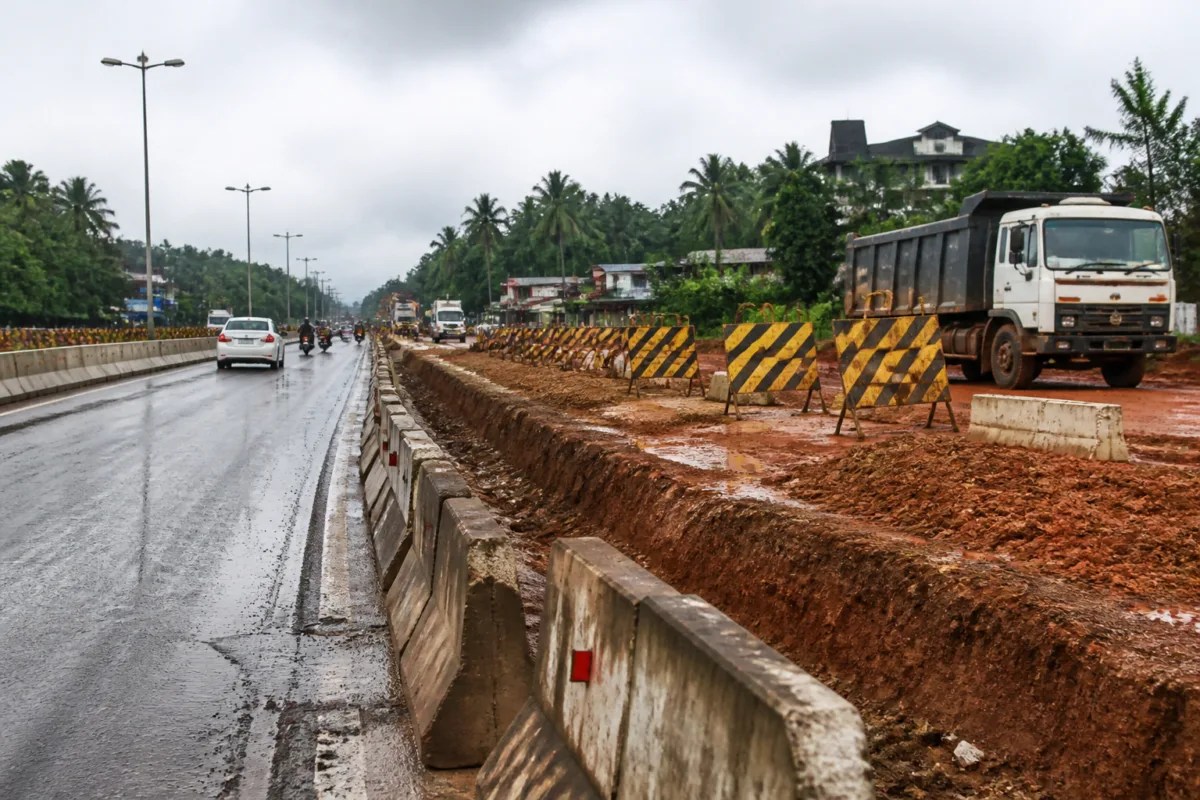
The Kaipamangalam accident has moved from a fatal road crash to a formal question of public accountability after the National Human Rights Commission (NHRC) directed Thrissur Rural Police to submit an action taken report within four weeks. Eight engineering students from Tamil Nadu died when the car in which they were travelling rammed into a truck parked on a stretch of NH 66 that was under construction.
The commission’s intervention does not establish negligence or assign liability. Its immediate significance is procedural: it requires the district police leadership to respond to a complaint that has raised specific questions about the safety conditions surrounding the roadworks. Those questions concern the positioning of the truck, traffic management, barricading and the availability of warning signs.
That distinction matters in road-safety cases. A fatal crash can be described through the immediate collision, but the conditions that made the collision possible may involve several layers of responsibility. In this case, the supplied account identifies an under-construction highway, a truck parked on the road and concerns about whether road users were adequately warned. The NHRC’s direction creates a formal channel through which those issues can be examined, evidence can be preserved and the response of the authorities can be recorded.
The complaint was filed by Delhi-based social activist Krishna Rajput. It sought an impartial inquiry into the circumstances leading to the accident and asked that responsibility be fixed wherever negligence is established. It also called for the preservation of CCTV footage and other relevant evidence, as well as appropriate compensation for the families of the deceased under the applicable rules.
The complaint therefore extends beyond the question of how the vehicle struck the truck. It asks whether the road environment around the construction site met the level of protection required for people using a live highway. Barricades, warning signs and traffic management are not secondary details on a road under construction. They are the mechanisms through which a construction zone is separated from moving traffic and communicated to drivers.
The available account does not establish whether those measures were absent, inadequate or improperly maintained. It records them as concerns raised in the complaint. That is why the police report will be important: it is expected to set out what action has been taken and what the inquiry has found, rather than merely repeat the fact of the collision.
The institutional path is also significant. The NHRC has referred the complaint to the Thrissur Rural Police, and Thrissur Rural Police will respond through the office of the rural superintendent of police. When contacted by the Times of India, SP Mohammad Nadeemuddin confirmed that he had received the commission’s communication and would submit the action taken report within the stipulated period.
This arrangement places the first formal response with the district police authority. That does not mean the police are the only institution whose conduct or decisions may become relevant. The complaint’s reference to road construction, a parked truck, traffic management, barricading and warning signs points to a chain of responsibilities around a live infrastructure project. The supplied report, however, does not identify which agency controlled the construction site, who owned or operated the truck, or which authority was responsible for the specific safety arrangements at the location. Those are matters the inquiry may need to clarify.
The case also shows how construction-related risk can become difficult to assign after a crash. A road under construction is neither a normal finished carriageway nor a closed worksite. Vehicles and workers may share a changing environment, while traffic routes, lane arrangements and roadside obstructions can change during the project. In such conditions, the safety system depends on visible and timely communication to road users, as well as on the controlled placement of equipment and vehicles. The complaint specifically places those questions before the authorities.
The number of deaths gives the incident a substantial public-interest dimension. Eight engineering students, all from Tamil Nadu, were killed in one crash on September 4. The fact that the victims were travelling across state lines also illustrates how national and state highway corridors connect communities that may have no direct role in the management of the road infrastructure they use. For families, the consequences extend beyond the crash site and into questions of evidence, compensation and the official determination of responsibility.
The four-week deadline is the clearest procedural milestone currently available. It gives the police a defined period to report to the NHRC. The report may clarify what evidence has been collected, whether CCTV footage and other material have been preserved, what inquiries have been conducted and whether any lapses have been identified. At present, the supplied material does not provide those findings.
That absence is central to understanding the case. The NHRC’s communication is not a finding that the parked truck caused the deaths through negligence, nor is it a finding that the road contractor, traffic authorities or police failed in their duties. The commission has expressly clarified that referring the complaint to the district police chief does not establish negligence or fix liability. The distinction protects the integrity of the inquiry while keeping the safety questions open.
For highway users, however, the unresolved questions are not abstract. A warning sign that cannot be seen in time, a barricade that does not clearly guide traffic or a vehicle left in a dangerous position can alter the risk faced by every driver approaching a work zone. The supplied report does not say which of these conditions existed at Kaipamangalam. It records that the complaint has asked the authorities to examine them.
The case consequently places evidence at the centre of accountability. CCTV footage, road-site conditions, traffic arrangements and the position of the truck may help establish what drivers could see and how the road was being managed. The complaint’s request to preserve such material recognises that physical conditions at a construction site can change quickly, making contemporaneous evidence important to any later assessment.
It also places compensation within the same institutional conversation as safety and responsibility. The complaint has sought appropriate compensation for the families under applicable rules, but the supplied report does not state whether compensation has been awarded or identify the rules that may apply. That remains an unresolved part of the case, alongside the inquiry into possible safety lapses.
The larger urban and infrastructure question is whether road construction is being treated as a temporary technical activity or as a public environment requiring continuous risk management. The Kaipamangalam complaint does not, by itself, establish a broader pattern across NH 66. It does show how a single fatal collision can expose the need to examine the interface between construction work, highway traffic and institutional oversight.
The next stage will depend on the action taken report and the findings of the police inquiry. Those findings are expected to indicate what happened at the site, what evidence was available, whether safety arrangements were in place and whether responsibility can be established under the applicable rules. Until that response is submitted, the NHRC’s action should be understood as an order for examination, not a final determination of negligence.

