


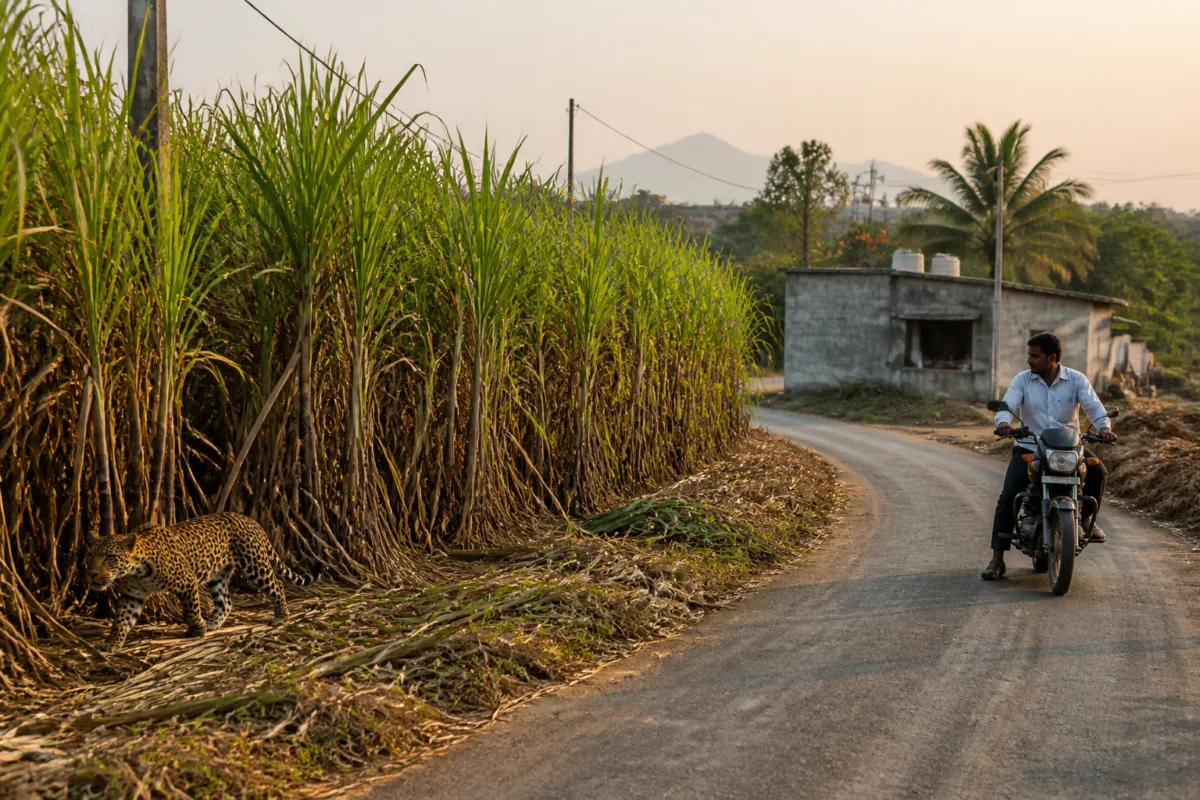
Junnar has recorded six leopard attacks on motorcycle riders in the past two weeks, with forest officials linking the incidents to increased animal movement during the sugarcane harvesting season. The encounters were reported mainly in the Otur and Shirur forest ranges, where agricultural fields, village roads and leopard habitats overlap.
The incidents have largely taken place during evening hours, when leopards are active and move between sugarcane fields and adjoining areas. According to forest officials, the animals appear to have reacted defensively when motorcycles suddenly approached them, particularly while they were crossing roads. None of the six incidents resulted in a fatality.
Smita Rajhans, assistant conservator of forests, said the reported attacks did not involve leopards chasing motorcycles. “Most incidents have occurred during evening hours. These attacks happen when motorcycles suddenly appear while leopards are moving or crossing roads. The animals get startled and react defensively. In none of these incidents did the leopard chase the motorcycle,” she said.
Rajhans said the beginning of the sugarcane crushing season had disturbed plantations that provide cover for leopards. As standing sugarcane is harvested, animals sheltering inside the fields may move towards neighbouring agricultural areas, irrigation channels and other patches of vegetation. This can bring them closer to village roads and increase the possibility of sudden encounters after dusk.
Forest officials have advised farmers and villagers to avoid travelling at night, particularly through stretches where leopard movement has been reported. They have also asked residents to report sightings to the forest department instead of approaching or provoking the animals.
The reported encounters have raised concerns over the safety of people using narrow agricultural roads during the harvesting period. Motorcycles travelling at speed may leave riders and leopards with little time to react when an animal emerges from a field or crosses a road. Wildlife observers have said that the circumstances of each incident, including road visibility, vehicle speed and the distance between the rider and the animal, need to be considered before the behaviour is classified as deliberate aggression.
Naresh Dhome, former sarpanch of Pimparkhed village, said vulnerable road stretches near sugarcane plantations should be identified and marked. He also called for warning boards, greater awareness among villagers and coordination between harvesting operations and forest officials in areas with frequent leopard movement. Pimparkhed reported two fatal attacks last year, according to Dhome.
The forest department’s immediate focus is on reducing sudden encounters during the ongoing harvest. Officials have urged residents to exercise caution during evening and night travel and to pass information about leopard sightings to authorities so that movement hotspots can be monitored.

