


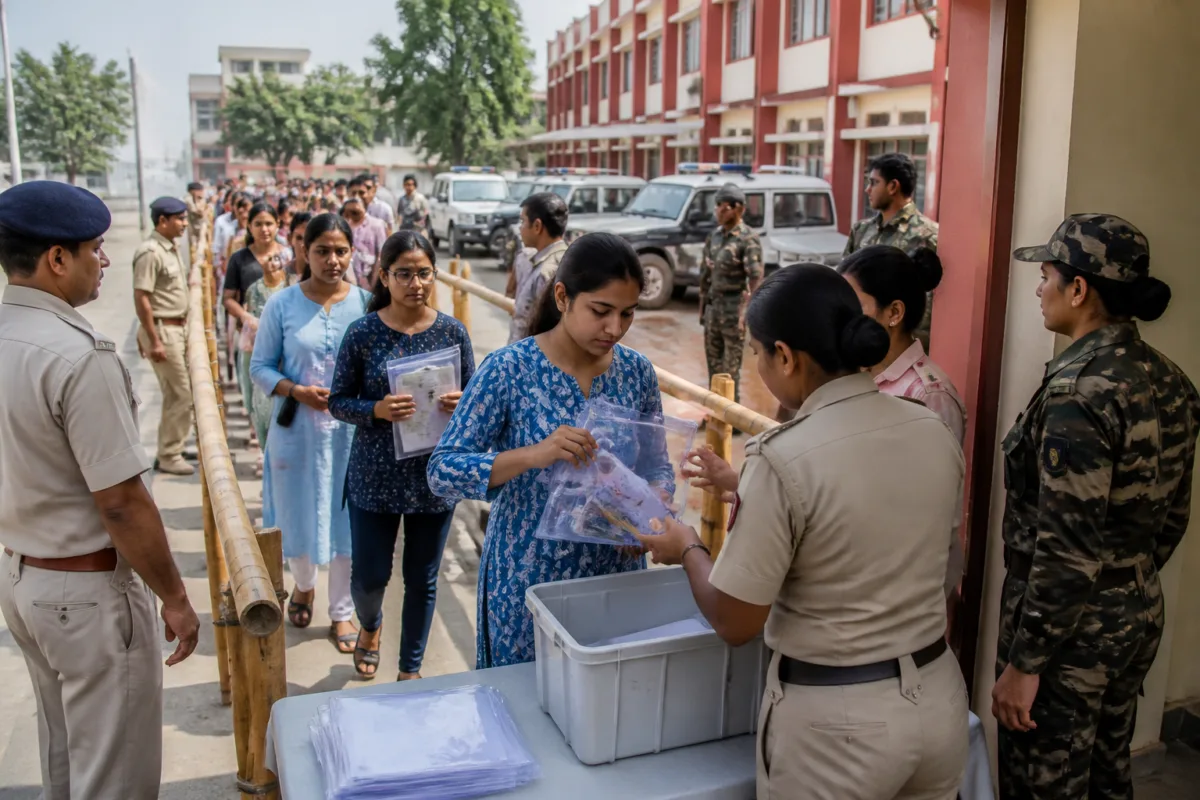
Bokaro district administration has announced elaborate security and monitoring arrangements for the Jharkhand Teachers Eligibility Test (JTET), with 46,181 candidates scheduled to appear at 72 examination centres on November 1.
Deputy commissioner Ajay Nath Jha and superintendent of police Nathu Singh Meena outlined the arrangements during a joint briefing attended by centre superintendents, magistrates and police officers. The officials said the measures were intended to protect the integrity of the examination and prevent question-paper leaks, impersonation, cheating and the circulation of fake papers.
“Maintaining the integrity and transparency of the examination is the key priority and anyone showing laxity will be taken to task,” Jha said. He asked officials to remain vigilant against attempts to compromise the examination or mislead candidates.
The examination will be conducted in two shifts. The first shift, scheduled from 9.30 am to noon, will be attended by 31,326 candidates seeking eligibility to teach Classes VI to VIII. A second shift will run from 2 pm to 4.30 pm for 14,855 candidates seeking eligibility for Classes I to V.
Security arrangements include mandatory screening of candidates and restrictions on electronic devices and other prohibited items at examination centres. Invigilators will be required to deposit their mobile phones before entering examination rooms. Only centre superintendents and static magistrates will be permitted to use mobile phones, subject to prescribed guidelines.
The district administration has also assigned a role to its cyber cell and social media monitoring team. Meena said the teams would monitor misleading information and other material that could create confusion around the examination. The administration’s briefing did not provide details of the number of personnel assigned to the monitoring operation.
Question-paper transportation will take place under police escort, with the vehicles carrying the papers monitored through GPS. The arrangement places the movement of examination material under a traceable security system from dispatch to the examination centres.
The scale of the examination creates a substantial coordination requirement for the district administration. The arrangements cover 72 centres, two shifts, candidate screening, restrictions on devices, invigilator compliance, police deployment, cyber monitoring and the secure movement of question papers. Centre superintendents, magistrates and police officers have been briefed as part of the district’s preparation.
The administration has said that the measures are designed to ensure a free and fair examination. Candidates will appear according to their eligibility level and assigned shift, while centre officials will implement the screening and device restrictions on examination day.

