


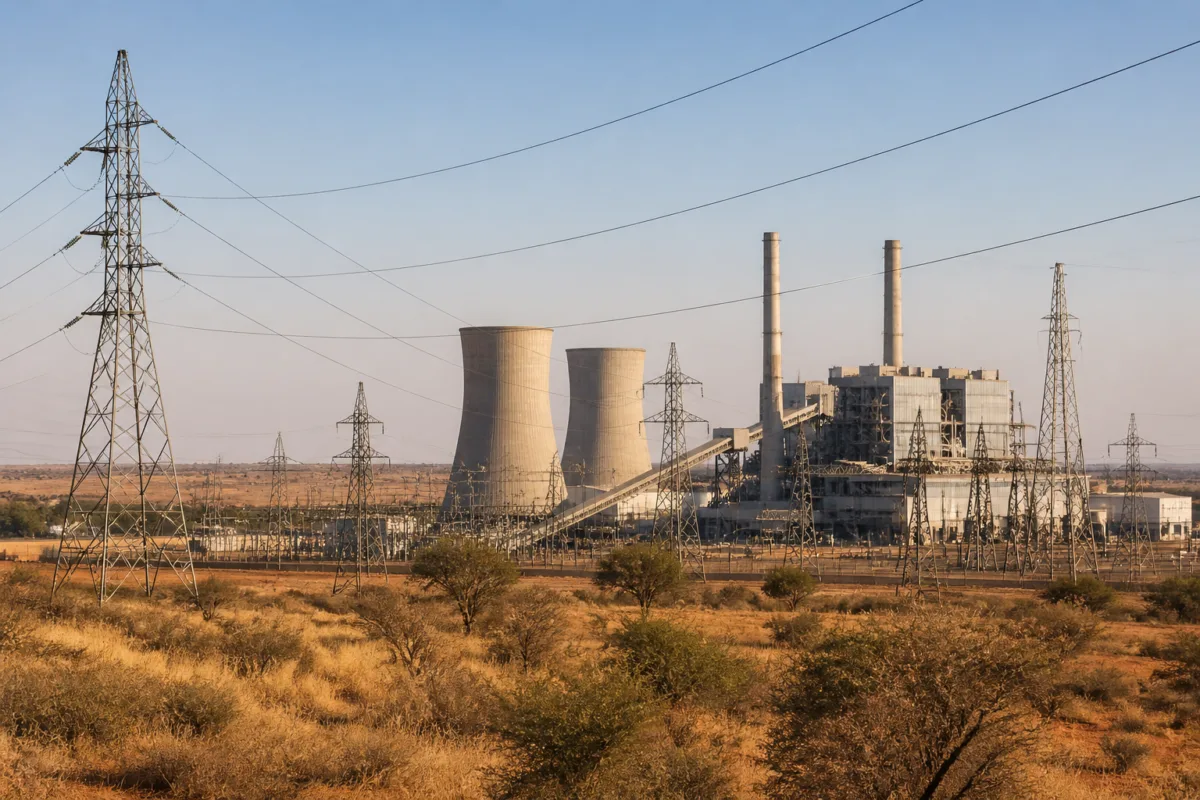
Jindal Power is reported to have secured a $470 million offshore loan from three Indian lenders for a coal-fired power project in Botswana, but the financing has not been publicly confirmed by the company or the banks involved.
Business Standard, citing people familiar with the matter, reported that Axis Bank, ICICI Bank and Export-Import Bank of India provided the nine-year, door-to-door facility to Jindal Power. The information was described as private, and the lenders were reportedly arranging the financing as a syndicated loan, with global institutional lenders expected to join.
Jindal Power, Axis Bank, ICICI Bank and Export-Import Bank of India did not respond to requests for comment, according to the report. This leaves the reported size, structure and completion status of the facility subject to confirmation from the parties to the transaction or supporting financing documents.
The reported loan is linked to Jindal Power’s expansion in Botswana, where the company has built a 700-megawatt coal power plant. The company’s website says the plant is scheduled for commissioning next month, although the supplied report does not provide an independently verified commissioning date or details of the project’s construction and operating arrangements.
The financing would represent another major overseas borrowing by Jindal Power. The company reportedly raised about $500 million in an earlier financing round in February for international expansion. The reported facility is priced at approximately 300 to 325 basis points over the Secured Overnight Financing Rate, or SOFR. The borrowing cost is expected to decline after commissioning, according to the people cited in the report.
The project sits within Botswana’s broader effort to use its coal resources to expand domestic energy and industrial capacity. The country’s mining operations are significant electricity consumers, while the government has been seeking to develop a petroleum fuels industry and reduce dependence on imports from South Africa and Namibia. The report estimates Botswana’s coal resources at more than 200 billion tonnes, but it does not establish how much of that resource is economically recoverable or directly connected to the Jindal project.
For Indian lenders, the transaction would extend financing activity into overseas power infrastructure at a time when foreign-currency borrowing by Indian companies has faced higher hedging costs. Data cited in the report showed that Indian borrowers raised $24.2 billion through foreign-currency loans during the year, about 8% below the comparable period a year earlier.
The reported project may also have a natural hedge because revenues from the Botswana operation are expected to be denominated in, or linked to, foreign currency. That could reduce the project’s exposure to exchange-rate movements, although the supplied information does not disclose the revenue currency, power-purchase arrangements, tariff structure or sovereign and offtaker protections.
The immediate verification questions concern whether the $470 million facility has reached financial close, which lenders are committed, whether the loan is fully syndicated and how the debt is secured. Confirmation of the plant’s commissioning schedule and its expected role in Botswana’s electricity system will also be important before the financing can be assessed as an operational infrastructure milestone rather than a reported transaction.

