


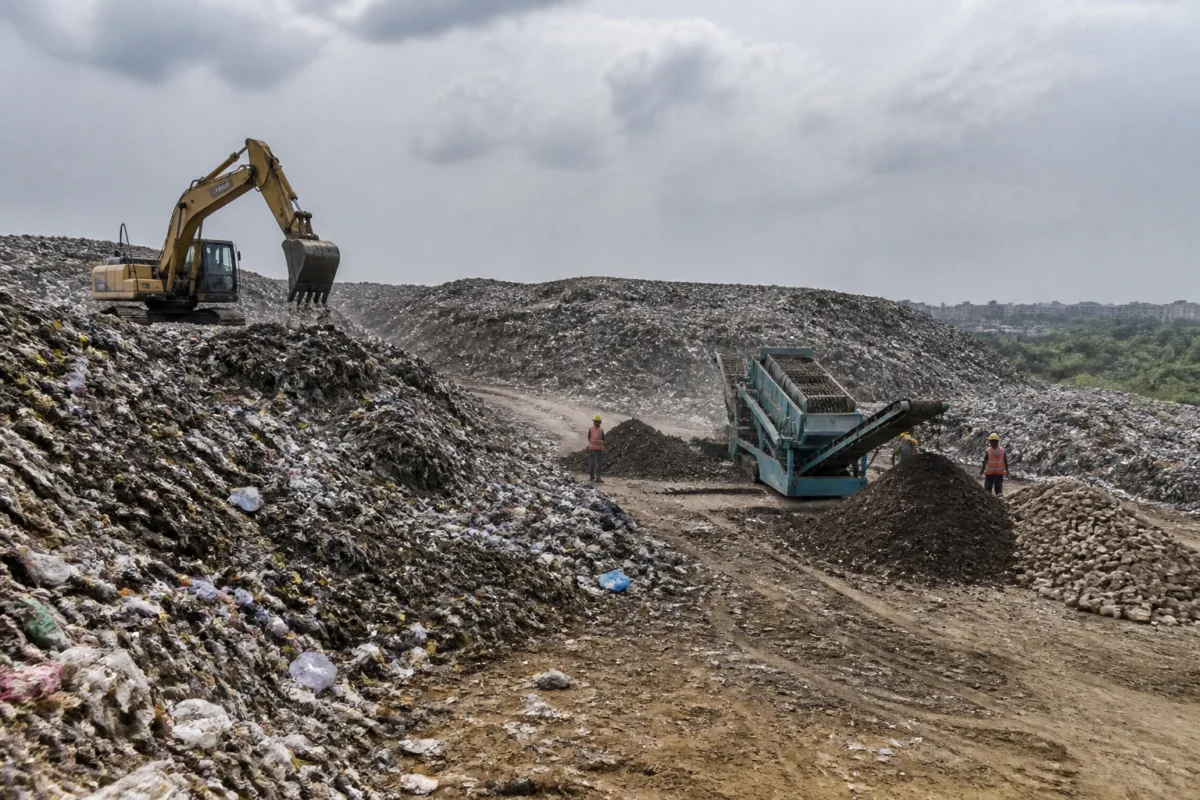
Ranchi Municipal Corporation has floated a Rs 17.72-crore tender to remove 8.6 lakh metric tonnes of legacy waste from the Jhiri dumpsite, with the first phase targeted for completion within three months of operations beginning.
The proposed work will cover 20.32 acres at Jhiri, Ranchi’s primary dumping ground, and use biomining and bioremediation to process compacted mixed garbage. The first phase will address 3.24 lakh MT of waste, while the second phase will cover the remaining 5.46 lakh MT. The current tender is for the first phase.
The last date for submitting proposals is November 12, and the technical bids are scheduled to be opened on November 13. The selected agency will be responsible for setting up and operating processing infrastructure, excavating the waste and mechanically sieving the material.
According to the tender scope, the work will include recovering recyclable materials, separating usable fractions and ensuring the scientific disposal of residual waste. The civic body has specified a three-month execution period from the commencement of operations.
The latest tender follows a larger waste-clearance project undertaken in 2024 at a cost of Rs 92 crore. That drive removed approximately 18 lakh MT of legacy waste from Jhiri. Additional municipal commissioner Sanjay Kumar said the new tender was intended to clear waste accumulated at the site over the past few years.
RMC officials said the proposed bioremediation process would involve placing mixed waste in windrows and applying microbial sprays to accelerate aerobic composting. The waste would be mechanically turned during processing. Officials said this method eliminates methane production and leachate generation during regular turning, while reducing the volume of waste by up to 40% after four turnings.
The same process is expected to reduce the methane-generation potential of the waste by nearly 90% compared with unprocessed dumping, according to the civic body. These figures relate to the treatment process described by RMC officials and will depend on execution at the site.
After stabilisation, the processed waste will be screened into different fractions. Organic material may be recovered as manure, while recyclables will be separated for recovery. High-calorific materials, including textiles and timber, are intended for conversion into refuse-derived fuel for co-combustion in cement kilns and industrial boilers.
The remaining inert material is proposed for use as landfill cover or filler material. The immediate administrative milestone is the November 12 deadline for proposal submissions, followed by the technical bid opening on November 13.

