


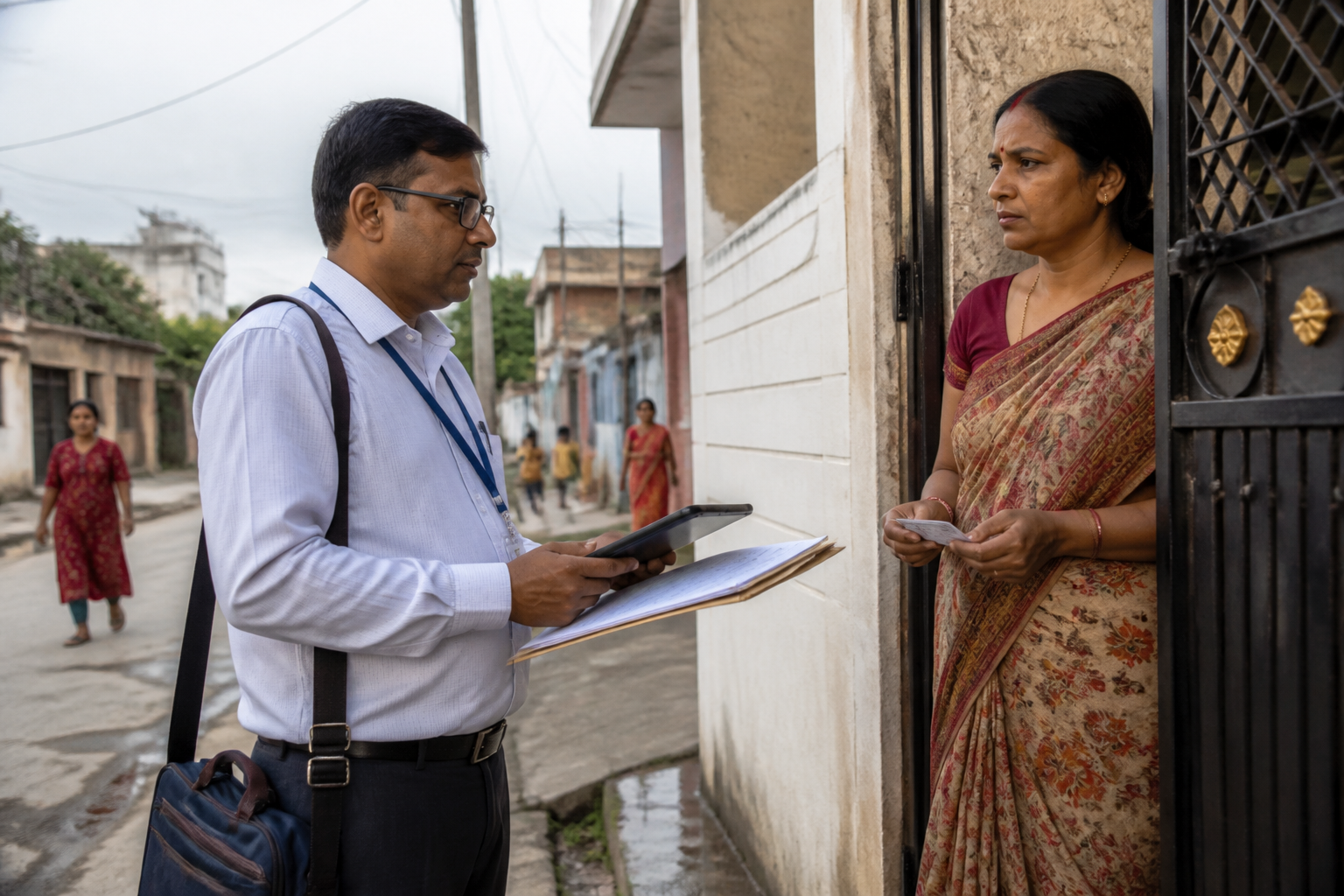
Jharkhand’s Special Intensive Revision (SIR) of electoral rolls has entered its final phase with 10,52,647 claims, objections and applications received, prompting election officials to shift several hearings to voters’ homes. Booth-level officers (BLOs) will visit applicants in cases involving unmapped electors or logical discrepancies, collect documents and upload them on the ECINET platform for disposal by electoral registration officers.
The revised process means such voters will ordinarily not have to visit the offices of electoral registration officers or assistant electoral registration officers. Chief electoral officer K Ravi Kumar has directed BLOs to conduct the home-based verification, while BLO supervisors will support door-to-door work. District election officials have also been asked to arrange volunteers and technical assistance as the claims and objections window approaches its September 30 closing date.
The total includes applications received under Forms 6, 6A, 7 and 8. Form 6, used for inclusion in the electoral roll, accounts for 6,22,522 applications. Form 8 applications, which cover corrections and other changes, total 4,18,536. Officials have received 11,487 Form 7 applications and objections, along with 102 Form 6A applications from overseas electors.
The intake increased sharply over the weekend. Officials received 18,698 applications on Sunday, comprising 9,603 Form 6 applications, 8,936 Form 8 applications, 157 Form 7 applications and two Form 6A applications. This was higher than the 14,359 applications recorded on Saturday. The figures are expected to rise further when applications received on Monday, Tuesday and Wednesday are added before the window closes.
Hearings will be held only in exceptional cases under the revised arrangement and may be conducted online where necessary. Voters can also authorise an adult family member to appear on their behalf. Officials, however, must remain available at designated hearing venues for applicants who choose to attend in person.
Electoral registration officers have been instructed to issue clear and reasoned orders after verifying an applicant’s citizenship, age and ordinary residence. The administration may arrange help desks and special camps for vulnerable groups, including labourers, homeless persons and people living in night shelters. These measures place the verification workload at the level of BLOs and district election teams while allowing formal decisions to remain with the electoral registration officers.
The immediate operational deadline is September 30, when the claims and objections period ends. Officials then have less than three weeks to scrutinise and dispose of the applications before the final electoral roll is scheduled to be published on October 19.
