As heatwaves intensify across Indian cities, Jaipur is piloting a low-energy urban cooling solution that challenges conventional dependence on air conditioning. A recently operational net-zero cooling station in the city offers a glimpse into how public infrastructure can respond to extreme heat without adding to energy demand or carbon emissions. Located along a high-footfall urban corridor, the facility has been designed as an open-access cooling space for pedestrians, street vendors, and informal workers—groups most exposed to rising temperatures.
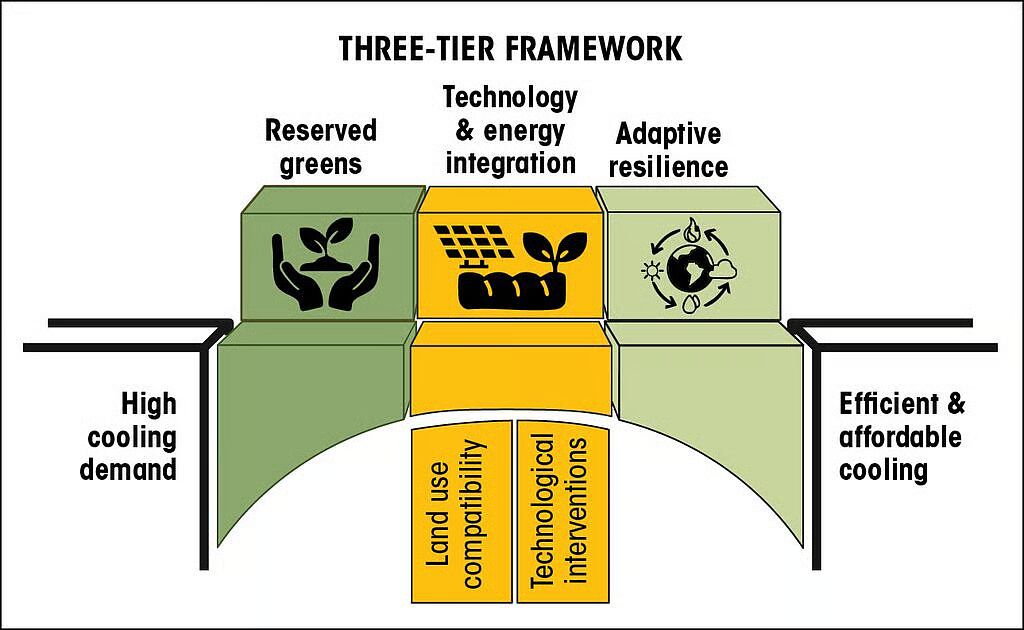
The initiative comes at a time when cities like Jaipur are witnessing a steady increase in heat stress days, driven by dense construction patterns and declining green cover. What distinguishes the project is its reliance on passive and climate-responsive design rather than mechanical cooling. The structure uses solar panels to power basic systems such as fans and lighting, while evaporative cooling techniques—like mist sprays and water-based air circulation—help lower ambient temperatures. Traditional materials such as khus (vetiver grass) panels are used to naturally cool incoming air, demonstrating how vernacular knowledge can be integrated into modern urban infrastructure. The net zero cooling station also incorporates architectural features like a wind tower, which enhances ventilation by allowing hot air to rise and escape, creating a continuous flow of cooler air inside the structure. In addition to thermal comfort, the facility provides drinking water, oral rehydration solutions, and first-aid support—elements that position it as both a cooling and public health intervention.
Urban climate experts see this as a critical step towards addressing “cooling equity”—the idea that access to thermal comfort should not be limited by income. With air conditioning still unaffordable for large sections of the population, especially informal workers, such decentralised solutions offer immediate relief without increasing electricity consumption or emissions. The need for such interventions is becoming more urgent. Studies indicate that Jaipur’s cooling energy demand could nearly triple over the next decade if current trends continue, placing enormous pressure on power infrastructure and worsening urban emissions. The net zero cooling station model, by contrast, demonstrates how cities can reduce reliance on energy-intensive systems by combining passive design, renewable energy, and localised infrastructure. From a planning perspective, the project aligns with a broader shift towards microclimate interventions—targeting specific urban hotspots such as transit nodes, markets, and public spaces where heat exposure is highest. By embedding cooling infrastructure into everyday urban life, cities can improve liveability without resorting to large-scale, resource-intensive solutions.
However, experts caution that pilot projects alone will not be sufficient. Scaling such models requires integration into city planning frameworks, sustained funding, and coordination across municipal agencies. The success of the net zero cooling station will ultimately depend on replication across neighbourhoods, particularly in areas with high population density and limited access to green spaces. As climate risks intensify, Jaipur’s experiment signals a broader shift in how cities approach heat management. Moving away from energy-heavy cooling towards nature-based and passive solutions could redefine urban resilience—ensuring that public spaces remain accessible, inclusive, and habitable even under extreme climatic conditions.