


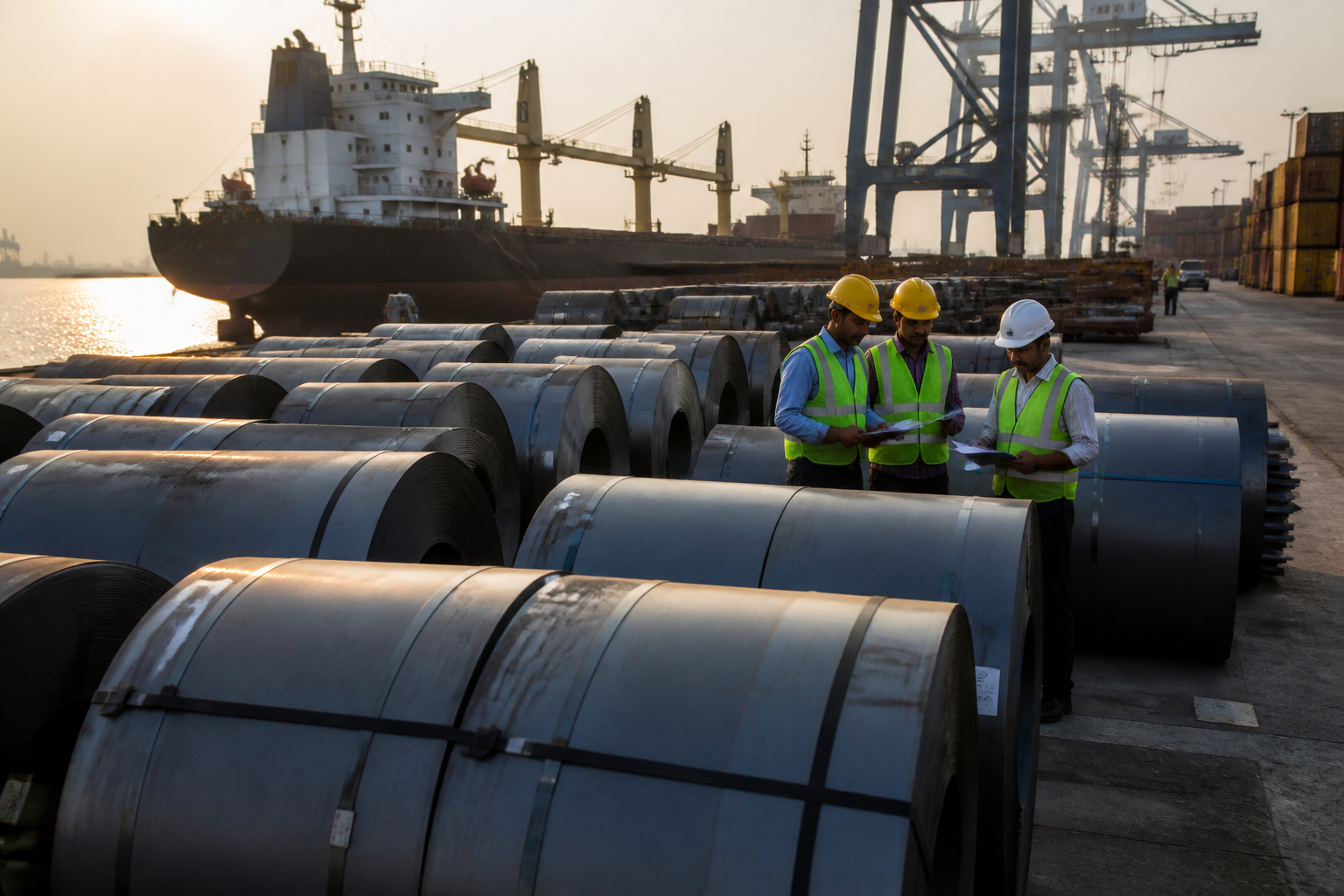
India has secured a country-specific tariff-rate quota of 1.9 million tonnes a year for steel exports to the European Union, with the government expecting exporters to access another 0.9 million tonnes through residual quotas. The combined 2.8 million tonnes could keep more than 80% of India’s steel shipments to the bloc under the free trade agreement, according to an official cited by Economic Times.
Indian steel exports to the EU stood at 3.0 million tonnes in the last fiscal. The quota arrangement comes as the European Union has tightened restrictions on steel imports through its Steel Overcapacity Regulation, which took effect on July 1. Indian exporters began using the country-specific quota from the same date, the official said.
The arrangement gives Indian producers a defined route into one of their largest overseas markets while limiting the volume that may face tighter trade restrictions. The secured 1.9 million-tonne allocation is based on a country-specific tariff-rate quota. The additional 0.9 million tonnes would have to be obtained through residual quotas, which are available within the broader EU import framework.
The government’s estimate that the total could reach 2.8 million tonnes is therefore dependent on exporters securing access to the residual quota. If achieved, that volume would cover more than four-fifths of the 3.0 million tonnes shipped by India to the EU in the previous fiscal year. The official did not provide details in the report on how the residual allocation would be distributed among exporters.
The development is relevant to the wider construction-material supply chain because steel is a core input for buildings, infrastructure, engineering and manufacturing. Continued access to the European market affects the operating environment for Indian steel producers and the export demand supporting their production. The report did not specify the effect of the quota on domestic steel prices or production levels.
The government is also discussing carbon pricing and verification requirements with the EU under the Carbon Border Adjustment Mechanism, or CBAM. The mechanism is expected to make emissions data and verification an important part of future steel trade with the bloc. The official said talks with the EU are continuing on these issues.
For exporters, the quota and the carbon-related discussions are linked parts of the market-access framework. The quota determines how much steel can enter under the applicable trade arrangement, while carbon pricing and verification requirements affect the documentation and compliance processes associated with those shipments. The government has not disclosed the outcome or timeline of the ongoing CBAM discussions.
The next operational milestone is the continued use of the quota and residual access after the EU’s Steel Overcapacity Regulation came into effect on July 1. The government’s expected total of 2.8 million tonnes will depend on exporters obtaining the additional residual allocation and meeting the EU’s carbon-pricing and verification requirements.

