


India’s consumer inflation is forecast to rise to 4.80% in August, according to a Reuters poll of 44 economists reported by the Economic Times. If confirmed by the official data due on September 14, the increase would take inflation to a 20-month high and mark the third consecutive month above the Reserve Bank of India’s 4% medium-term target.
The forecast is not itself an official inflation reading. It is an estimate based on economists’ expectations, with projections ranging from 4.40% to 5.05%. But the factors behind the expected increase—food prices, cooking gas and global crude—are closely connected to the everyday economics of cities. They affect household spending, transport costs, food services, delivery networks and the operating expenses of businesses that depend on energy and logistics.
The central question is whether August represents a temporary food-supply shock or the beginning of broader price pressure. The available evidence points primarily to food and fuel rather than a generalised demand surge. Core inflation, which excludes volatile food and fuel components, was expected to rise to 4.1% in August. India does not publish an official core inflation measure, so the figure is also an estimate rather than a government statistic.
That distinction matters for urban policy and household finances. When inflation is concentrated in food and fuel, residents may experience a sharp increase in essential expenses even if the broader economy is not overheating. Urban households that depend on purchased food, public or private transport, cooking gas and electricity-linked services can face pressure in several categories at the same time. The supplied material does not quantify the impact on particular cities or income groups, but it identifies the national price pressures likely to shape those expenses.
Food is the largest immediate driver in the August forecast. An erratic monsoon disrupted supplies and pushed up prices of sugar, cereals, milk, edible oils, eggs and meat, according to the report. Sugar prices reached a record high during the month and were estimated to have added at least 15 basis points to headline inflation, or 0.15 percentage points.
The effect was partly limited by continuing year-on-year declines in potato and pea prices. That offset illustrates why food inflation can change quickly even when the overall direction is upward: different staples respond differently to weather, supply conditions and policy intervention. For consumers, however, the relief from lower prices in selected items may not fully offset increases in other frequently purchased goods.
The government’s response to sugar prices has included a ban on sugar exports that began in May and is scheduled to remain in place until the end of September. The measure is intended to cool domestic prices. Its presence also shows how food inflation can lead to interventions that extend beyond monetary policy, particularly when price movements are linked to domestic availability and agricultural conditions.
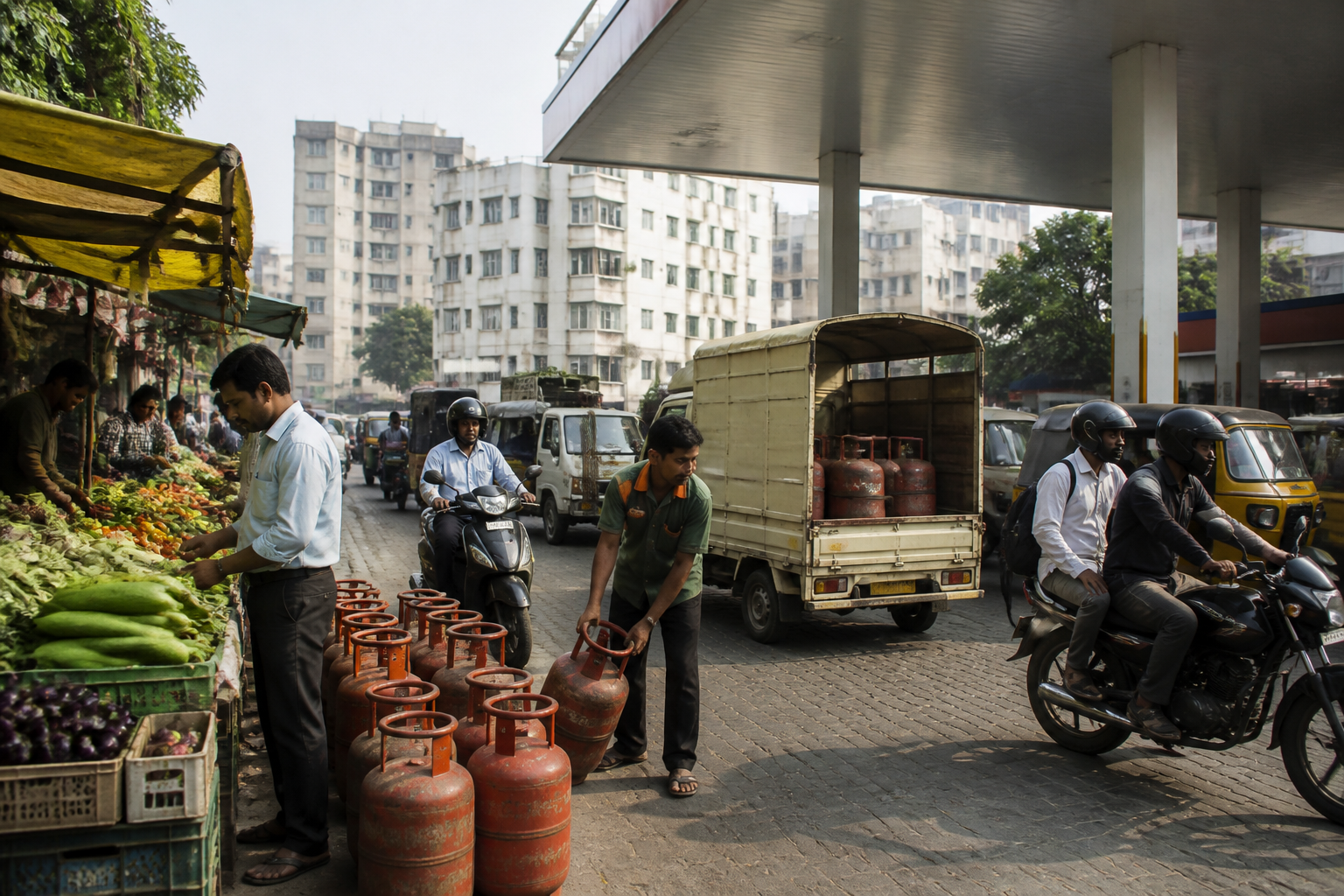
Fuel adds a second layer of pressure. Global crude prices were nearing $100 a barrel, while cooking gas prices were also contributing to inflation. The report does not provide a city-by-city breakdown of fuel costs or specify how much of the projected increase is attributable to each energy component. It does, however, identify fuel as a further source of pressure alongside elevated food prices.
For cities, fuel costs operate through more than the price paid at a petrol pump. They can affect the cost of moving people and goods, including food from wholesale markets to neighbourhood retailers. They can also influence the operating costs of businesses and service providers. The source material does not establish the size of those pass-through effects, but the combination of food and fuel inflation places pressure on the systems that connect urban consumers with supplies and services.
The inflation forecast also presents a policy dilemma for the RBI. Headline inflation is expected to remain within the central bank’s 2%-6% target band, even while staying above its 4% medium-term target. The RBI held interest rates last month. Minutes from its latest meeting indicated that the central bank was prepared to tighten policy if price pressures broadened, although economists polled by Reuters did not expect a rate increase until next year.
That stance separates the current episode from an immediate interest-rate response. The reported inflation pressures are concentrated in categories that monetary policy cannot directly produce or remove. Higher interest rates may restrain demand, but they cannot repair a disrupted food supply or directly lower global crude prices. At the same time, the RBI must assess whether temporary increases are spreading into other prices and influencing expectations.
The forecast for core inflation provides one indicator of that risk, although it remains modestly below the projected headline rate. At 4.1%, estimated core inflation would be close to the RBI’s medium-term target, while headline inflation would be higher because of food and fuel. This difference suggests that the report’s central concern is not yet an across-the-board acceleration in prices. It is the interaction between volatile essentials and the cost of keeping urban economies supplied and mobile.
Wholesale inflation adds another dimension. It was forecast to rise to 9.89% in August from 9.78% in July and remain around 10% for a fourth consecutive month. The supplied material does not explain how much of this increase would eventually reach retail consumers, but the persistence of high wholesale inflation indicates that price pressure is not limited to a single month’s consumer basket. It also highlights the difference between the prices faced by producers and distributors and those recorded at the consumer level.
The timing of the official release will be important. The August consumer inflation data is due on September 14, after the economists’ poll was conducted between September 3 and 9. That release will determine whether the forecasted 4.80% increase materialised and where the figure falls within the poll’s 4.40%-5.05% range. It will also provide a clearer basis for assessing whether food and fuel were the dominant contributors.
The available evidence supports a cautious reading. August inflation is expected to reach a 20-month high, but the forecast remains within the RBI’s formal target band. Food supply disruptions, record sugar prices, higher cooking gas costs and crude prices near $100 a barrel explain much of the anticipated rise. Potato and pea prices provided some offset, while estimated core inflation remained close to the central bank’s medium-term target.
For urban India, the broader issue is the sensitivity of household and city economies to movements in essential commodities. The report does not establish how costs changed in individual metropolitan areas, nor does it provide evidence on wages, rents, public transport fares or electricity tariffs. Those questions cannot be answered from the supplied material. What it does establish is that food and fuel pressures are strong enough to push national inflation higher even while policymakers continue to distinguish between temporary volatility and broader inflation.
The next confirmed data release will show whether the expected August increase occurred. The RBI’s response will depend not only on the headline number but also on whether price pressures broaden beyond food and fuel. For cities, the developments to monitor are the official consumer inflation reading, the persistence of wholesale inflation, the September deadline for the sugar export restriction and any evidence that energy and food costs are moving into wider categories of urban expenditure.
