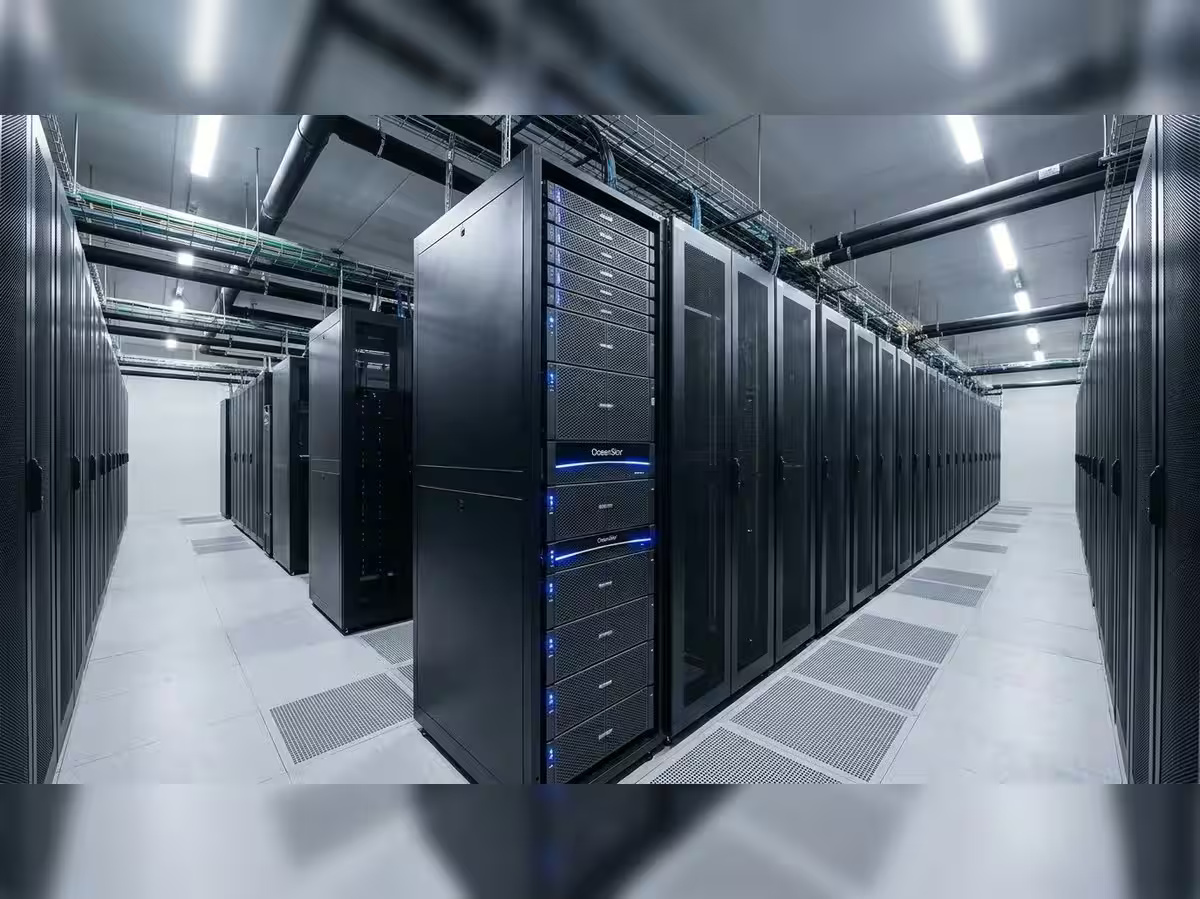
India Data Centres Enter A New Infrastructure Race
India’s data-centre industry is entering a major expansion cycle, with installed capacity projected to reach 5–6 GW by 2030 from about 1.65 GW in 2025. The growth is being driven by artificial intelligence, cloud adoption, rising digital consumption and data-residency requirements. But the next phase will depend as much on electricity, land, connectivity and cooling infrastructure as on demand from technology companies. The projected increase would require India to add several times its existing capacity within five years. Redseer estimates that 5–6 GW of IT load could translate into roughly 7–9 GW of grid demand once cooling, backup systems and other operational requirements are included. Around 5 GW of additional grid capacity would still need to be secured, contracted and energised beyond the capacity currently available to the sector.
That makes electricity one of the biggest constraints facing India data centres. Unlike many conventional commercial buildings, these facilities operate continuously and require highly reliable power. As AI workloads become more intensive, higher-density computing also increases cooling requirements, adding further pressure on electricity and water systems. Geography is likely to change as the industry expands. Mumbai currently accounts for about half of India’s installed data-centre capacity, while Mumbai and Chennai together represent roughly two-thirds, according to Redseer. Mumbai’s advantages include submarine cable connectivity, financial-sector demand and established digital infrastructure. However, not every computing workload needs to remain close to established metropolitan markets. AI inference, which involves responding to real-time requests, is more sensitive to network delay and is therefore likely to remain concentrated around major hubs. Training large AI models and other batch-processing workloads can be located farther away if sites offer sufficient power, land and connectivity. Redseer identifies emerging opportunities beyond the traditional centres, including Hyderabad, the Andhra coast, Gujarat and Rajasthan.
This shift could have significant implications for real estate. Large data-centre campuses require substantial land parcels, high-capacity electricity connections and resilient fibre networks. As development moves into new regions, local planning authorities will need to consider transmission infrastructure, water availability, environmental impact and surrounding land use before approving large projects. The sector’s expansion also presents an opportunity to connect digital infrastructure with India’s clean-energy transition. Data centres can become large, predictable electricity consumers, but their environmental footprint will depend on how much of that demand is met through renewable generation, storage and efficient cooling.
For India data centres, the next five years will therefore be less about simply adding megawatts and more about securing the infrastructure that makes those megawatts viable. The country’s ability to coordinate power, land, connectivity and environmental planning will determine whether the projected AI-driven expansion becomes operational capacity or remains a pipeline of announcements.