


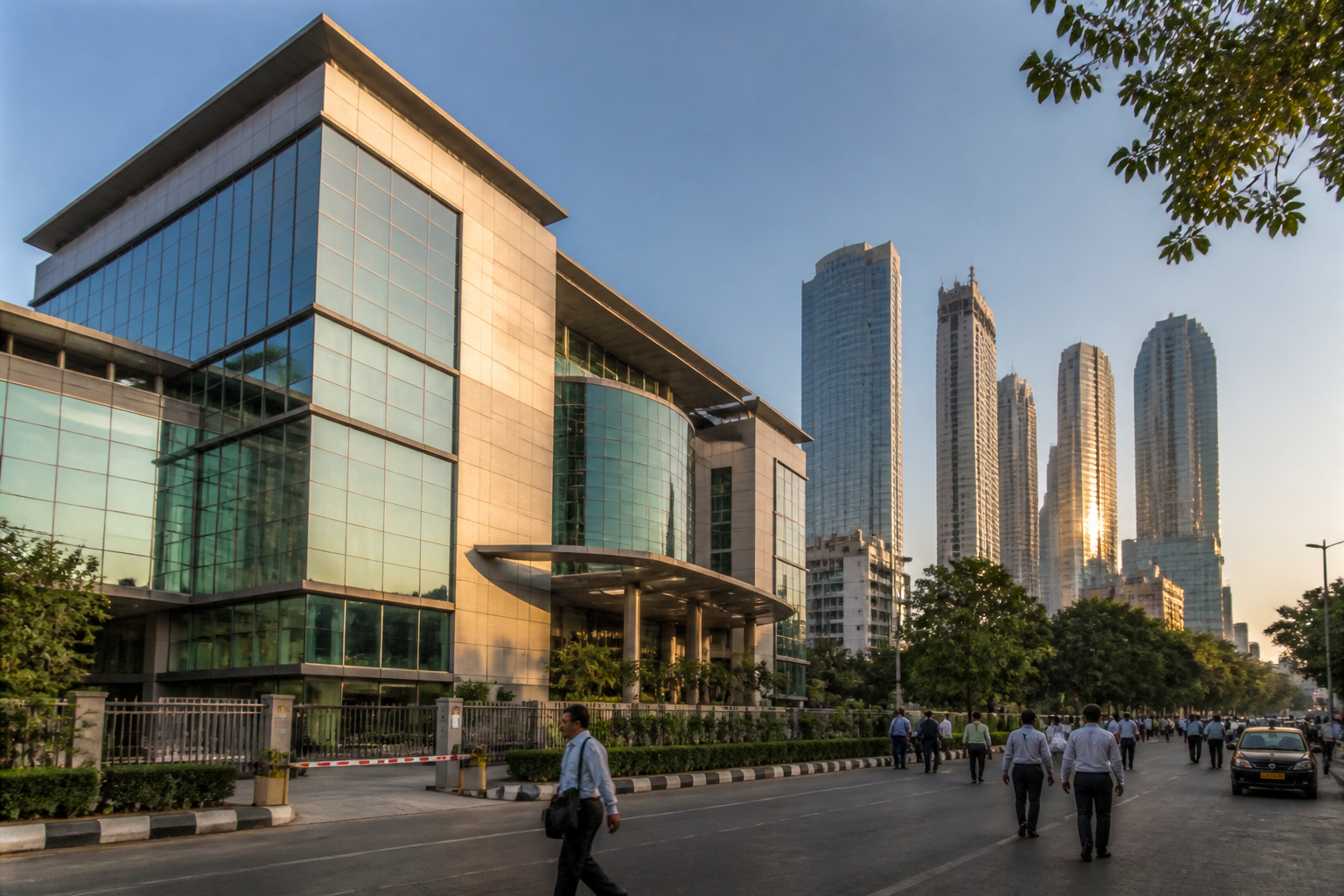
The proposed IDBI Bank sale to Fairfax Financial Holdings is more than a large foreign investment. It is a test of whether India can use private management and long-term overseas capital to revive a bank with a difficult past while retaining public-sector participation in its future.
The Union Cabinet has approved Fairfax’s proposed acquisition of a 60.72 per cent stake in IDBI Bank for Rs 52,878 crore, according to the report by NDTV Business. Fairfax, led by Indian-born Canadian investor Prem Watsa, would gain management control, while the government and Life Insurance Corporation of India would remain shareholders. Their holdings are expected to fall to 15 per cent and 19 per cent respectively.
That structure places the transaction within India’s wider attempt to reduce government ownership in selected public-sector businesses without withdrawing entirely from their outcomes. It also makes IDBI Bank an important case study in how ownership, management control and public interest can be separated within a strategic financial institution.
The central question is not simply whether Fairfax can complete the acquisition. It is whether a bank that has already undergone financial stress can expand responsibly while rebuilding its competitive position, maintaining customer confidence and supporting the wider economy’s demand for credit.
A bank’s urban significance is easy to miss when an acquisition is discussed mainly through its valuation. Banks sit behind the construction of homes, the expansion of businesses, the purchase of vehicles and the financing of infrastructure. Their lending decisions influence which projects move forward, which enterprises receive working capital and how households access financial services. A change in ownership can therefore affect the financial machinery that supports cities, even when the transaction itself takes place at the corporate level.
IDBI Bank’s history explains why the deal carries both opportunity and risk. The lender faced financial stress after its asset quality deteriorated. It was placed under restrictions affecting lending and expansion, before the Reserve Bank of India later lifted those restrictions after the bank’s financial position improved.
In 2019, LIC became IDBI Bank’s largest shareholder as part of efforts to stabilise the institution. The proposed Fairfax transaction would now create a different ownership arrangement: a private foreign investor would hold management control, while the government and LIC would retain sizeable minority interests. The model is intended to bring in capital and expertise without making the state an immediate bystander to the bank’s future.
Manish Aggarwal, Partner and Leader for Financial Services and Infrastructure Transactions at Deloitte India, described the arrangement to NDTV as a significant structural reform. He said the foreign investor would receive management control and bring capital and expertise, while the government would retain an opportunity to benefit through its residual stake.
That residual stake is important institutionally. It means the public shareholders would not be responsible for running the bank, but they would still have a financial interest in whether the turnaround produces sustainable value. The arrangement also creates a clear test for the government’s disinvestment strategy: reducing direct control is not the same as eliminating public accountability or public exposure.
The proposed buyer brings a distinctive investment history. Watsa moved from Hyderabad to Canada in 1972 with $8, later completing an MBA at the University of Western Ontario. He began his career as a research analyst at Canadian insurer Confederation Life, where he was introduced to the value-investing philosophy associated with Benjamin Graham.
In 1984, he co-founded Hamblin Watsa Investment Counsel. A year later, he assembled investors to take control of Markel Financial, a struggling Canadian insurance company. The company became the foundation of Fairfax Financial Holdings, which was renamed Fairfax in 1987. Watsa has served as its chairman and chief executive since 1985, according to Fairfax’s official website.
Fairfax’s insurance business is relevant to the IDBI Bank proposal because insurers collect premiums before the full cost of claims is known. The capital held during that period, commonly called insurance float, can be invested subject to obligations and regulatory requirements. Fairfax’s experience has therefore been built around combining insurance operations with long-term investment decisions.
The company has also developed an established India strategy. Fairfax was a partner in the creation of ICICI Lombard General Insurance in 2001 and has invested in businesses including Thomas Cook India, CSB Bank and Bengaluru International Airport. In 2014, it established Fairfax India Holdings, a Toronto-listed investment company focused on Indian opportunities.
The IDBI Bank proposal is consequently not an isolated entry into the country. It is the latest and one of the largest additions to a portfolio that already spans financial services and infrastructure. The report says India is now Fairfax’s largest country exposure and that the group spent more than four years pursuing the IDBI Bank deal.
That time frame indicates that the transaction is being presented as a long-term strategic decision rather than a short-term acquisition. Watsa has said the group expects India’s expanding economy and financial requirements to create opportunities for businesses prepared to invest over an extended period. His investment argument is that a growing economy requires banks capable of financing businesses, households and infrastructure.
The argument also exposes the scale of the challenge. Growth in lending can create economic value, but a bank that expands too quickly can weaken its financial position. IDBI Bank’s previous restrictions were linked to the deterioration of asset quality, making the balance between expansion and prudence central to the proposed ownership transition.
For Fairfax, the immediate challenge is therefore not only to increase the bank’s size. It must establish that the institution can grow without repeating the conditions that produced its earlier stress. The report does not provide a detailed post-acquisition business plan, lending target or implementation timetable, so the evidence does not yet establish how the proposed strategy would be executed.
Regulatory requirements will remain important. The transaction still needs to meet applicable regulatory and other conditions. Fairfax’s existing interest in CSB Bank also raises questions about how the group will structure its banking interests under regulatory rules. Those questions are not peripheral: they will help determine the form and operational boundaries of Fairfax’s presence in India’s banking system.
The IDBI Bank sale also marks a shift in the meaning of public-sector banking reform. Earlier models often focused on state ownership and government-led stabilisation. This transaction proposes a more mixed structure, with private management, foreign capital and continuing public shareholding. Its success would depend on whether that combination creates clearer accountability rather than simply dividing it among multiple shareholders.
The numbers show why the deal has attracted attention. Fairfax is proposing to acquire 60.72 per cent of IDBI Bank for Rs 52,878 crore. The government and LIC would retain 15 per cent and 19 per cent respectively, leaving Fairfax with control but not eliminating public ownership. The transaction is described in the supplied report as one of the biggest foreign investments in India’s banking sector.
The proposed ownership percentages also show how the state’s role would change. The government and LIC would move from control and stabilisation towards minority participation, while Fairfax would assume responsibility for management. That transition makes performance after completion more significant than the headline acquisition value alone.
For cities and the built environment, the important issue is the availability and quality of finance. Infrastructure projects, real estate activity, household purchases and business expansion all rely on functioning financial institutions, although the supplied material does not specify which sectors or regions IDBI Bank would prioritise under Fairfax. What it does establish is the broader connection between banking capacity and an economy’s ability to finance businesses, households and infrastructure.
The transaction therefore deserves attention as a financial-sector reform with consequences beyond the banking industry. It brings together foreign investment, public-sector disinvestment, regulatory oversight and the difficult task of repairing an institution while pursuing growth.
What the evidence confirms is that Fairfax has received Union Cabinet approval for a proposed controlling acquisition and that the transaction is designed to combine private management with continuing government and LIC ownership. What remains unresolved is how regulatory conditions will be met, how Fairfax will organise its banking interests and whether IDBI Bank can expand while preserving the financial improvements that led to the lifting of earlier restrictions. Those milestones will determine whether the deal becomes a durable banking reform or only a change in ownership.

