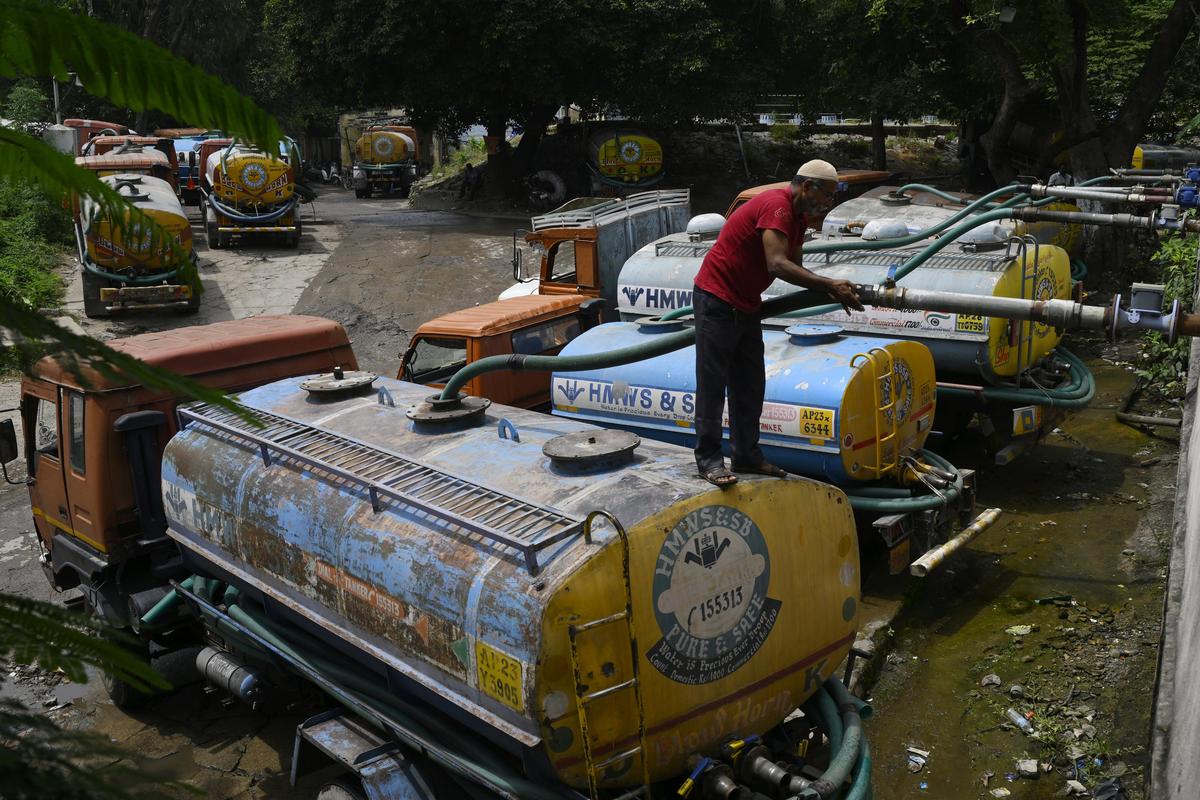
Hyderabad’s water utility is moving its revenue recovery efforts closer to the ground as mounting financial pressure prompts a tighter focus on unpaid water and sewerage bills. The new approach assigns collection responsibilities to field officials and targets sustained monthly revenue growth, while also seeking to address billing problems that can complicate payments for consumers.
The Hyderabad Metropolitan Water Supply and Sewerage Board has prepared a six-month collection strategy that aims to increase revenue by at least 10% each month. Rather than relying mainly on office-level monitoring, the utility plans to track collections at the circle, division and field levels. Under the revised system, officers and employees will receive area-specific targets covering water and sewerage connections. Performance will be reviewed periodically, creating a direct link between local collection outcomes and administrative accountability. A major focus will be consumers with prolonged outstanding dues. Officials have reportedly been asked to act against persistent non-payment after notices are issued. Water disconnections could follow where defaulters fail to respond, making the drive more consequential for households and establishments carrying substantial arrears. However, stronger enforcement alone may not resolve the utility’s revenue problem. Billing accuracy remains an important part of the equation. Complaints involving incorrect meter readings and disputed bills can discourage timely payment and create avoidable conflicts between consumers and the utility.
The Board is therefore also working on measures to improve billing delivery and address cases where collection has been affected by errors. Ensuring that bills reach every connection regularly could help reduce disputes and give consumers clearer payment timelines. From an urban services perspective, the revenue push reflects a broader challenge facing water utilities in rapidly expanding cities. Reliable water supply and sewerage networks require continuous spending on treatment, pumping, maintenance, pipelines and upgrades. Weak collections can eventually limit the ability of utilities to maintain and expand these systems. At the same time, aggressive recovery measures need to distinguish between deliberate non-payment and genuine billing or affordability issues. A transparent grievance process and timely correction of disputed bills can help ensure that enforcement does not disproportionately affect households facing administrative errors.
The field-level strategy could improve Hyderabad’s financial discipline if collection data becomes more transparent and operational problems are addressed alongside arrears. The longer-term test, however, will be whether stronger revenues translate into more reliable water and sewerage services for residents. As the six-month programme progresses, monthly collection performance, disconnection numbers, billing corrections and service improvements will provide a clearer measure of whether the new approach is strengthening the utility’s finances without weakening consumer trust.