Hyderabad Real Estate Faces High Value Home Slowdown
Hyderabad’s housing market is entering a phase of recalibration as a growing pipeline of high-value apartments raises concerns about affordability, infrastructure readiness, and long-term market stability. With a sharp rise in homes priced above ₹2 crore, the city’s real estate sector is increasingly being shaped by premium demand, even as a majority of buyers struggle to keep pace.
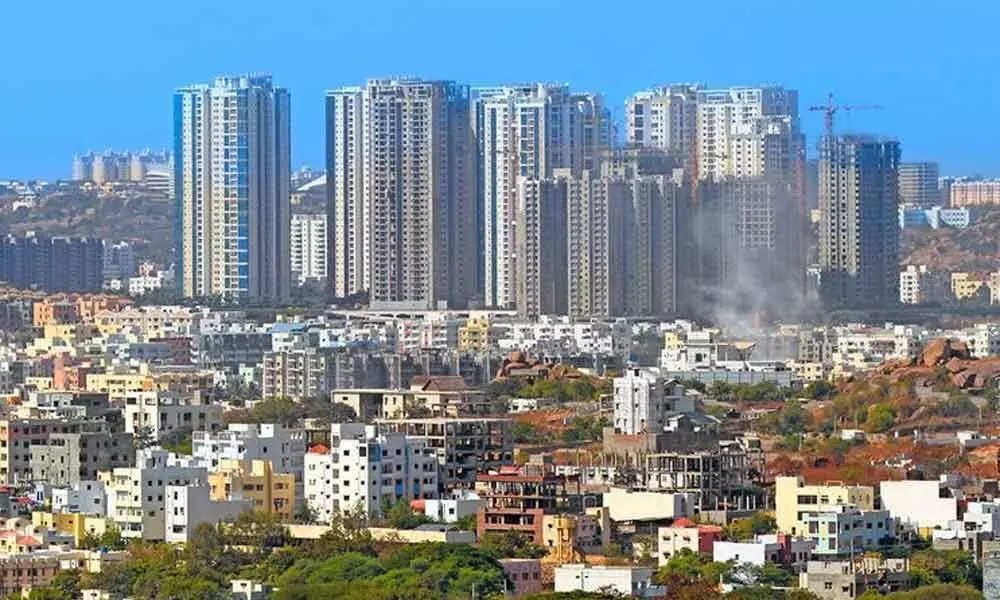
The expansion of Hyderabad real estate has been most visible across the western corridor, where proximity to major employment hubs has fuelled the construction of high-rise residential clusters. These developments, enabled by liberal floor space regulations, have allowed developers to build vertically and maximise land use. However, this rapid densification is outpacing the development of supporting civic infrastructure such as roads, water supply, and drainage systems. Urban planners warn that the mismatch between housing density and infrastructure capacity could lead to long-term liveability challenges. Areas witnessing concentrated high-rise growth are already reporting pressure on basic services, raising questions about whether planning frameworks are keeping up with construction trends.
At the same time, the demand driving Hyderabad real estate appears increasingly concentrated among a narrow segment of high-income professionals. Senior executives, technology sector employees, and returning global investors are contributing to demand for larger, amenity-rich homes. These properties often feature expansive layouts and integrated lifestyle infrastructure, pushing entry-level prices well beyond ₹1.5 crore.This shift towards larger units has created a structural imbalance in the market. Industry assessments indicate that a significant portion of new supply consists of three-bedroom apartments or larger, leaving limited options for mid-income buyers. As a result, affordability stress is becoming more pronounced, particularly for households with budgets under ₹1 crore.The consequences are beginning to reflect in transaction patterns. While new project launches continue to attract initial interest, the secondary or resale market remains subdued. Market observers note that properties purchased at peak valuations are seeing limited price appreciation, and in some cases, stagnation. This raises concerns about liquidity risks for investors who entered the market expecting steady capital gains. Infrastructure expansion remains a key variable in determining whether current pricing levels are sustainable.
Ongoing projects, including transport connectivity upgrades and urban mobility improvements, are expected to support future growth. However, experts caution that without synchronised planning between housing supply and infrastructure delivery, the benefits may not reach all segments of the population.From a sustainability perspective, the current trajectory of Hyderabad real estate also raises questions about resource efficiency and environmental impact. High-density developments require robust systems for water management, waste handling, and energy use areas where gaps could undermine long-term urban resilience. As the market evolves, policymakers and developers may need to recalibrate strategies to ensure a more balanced housing mix. Expanding access to mid-range housing, improving infrastructure alignment, and integrating climate-sensitive planning could be critical in shaping a more inclusive and stable urban future.