


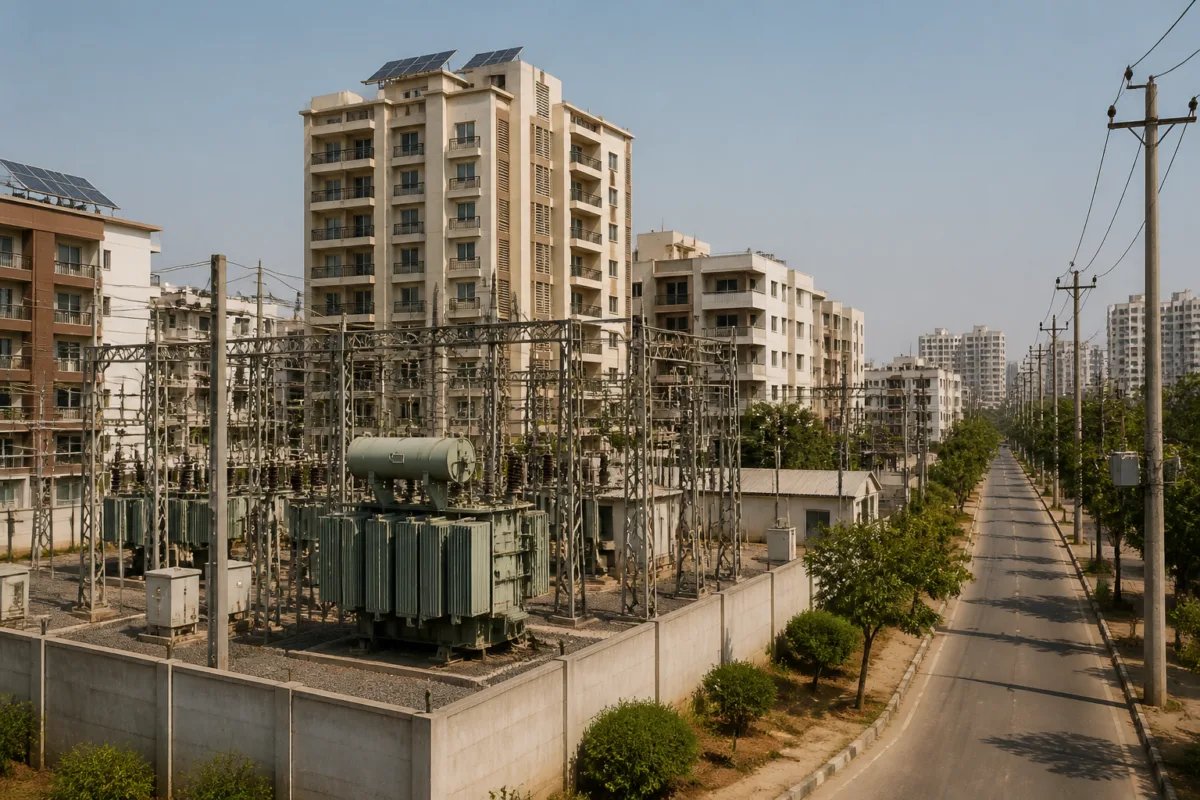
Hyderabad’s electricity distribution utility is preparing measures to manage higher summer demand, with a focus on overloaded transformers, evening residential consumption, voltage stability and better planning for new apartment complexes.
Jitesh V. Patil, chairman and managing director of the Telangana Southern Power Distribution Company Limited (TGSPDCL), asked officials to prepare advance action plans during a review meeting with the company’s directors and chief engineers at its corporate office in Hyderabad, according to a Deccan Chronicle report.
The review covered the summer action plan, Battery Energy Storage Systems (BESS), reactive power management, voltage regulation, geographic information system (GIS)-based network mapping and future load forecasting. Patil directed officials to strengthen the distribution network ahead of demand increases instead of relying only on measures taken after the system comes under pressure.
The utility is expected to examine the rise in residential electricity use during evening hours in urban areas, while also assessing agricultural demand in rural areas. Patil asked officials to study whether small battery-storage systems could be installed near overloaded distribution transformers, or DTRs.
The proposed battery approach would use solar power available during the day to charge storage systems. The stored electricity could then be used during evening peak periods, reducing pressure on power transformers, the report said. The source report does not specify the number, location or capacity of any proposed systems, nor does it record a final decision to deploy them.
The review also considered the use of solar inverters for reactive power management. Patil suggested exploring whether the inverters could supply or absorb reactive power according to the requirements of the electricity system. He asked officials to consult experts from MRT and Protection Engineering and coordinate with the relevant directors to develop technical solutions.
Reactive power affects the efficient operation and voltage performance of a power network. In practical terms, the utility’s proposal links rooftop or other solar installations with broader grid management rather than treating them only as sources of electricity generation. The report does not provide technical specifications or identify projects where this approach will be tested.
Voltage regulation was another focus of the review. Patil instructed officials to consider modern technologies to reduce fluctuations and maintain appropriate voltage levels. He also asked the company to implement automatic switching of capacitor banks instead of relying entirely on manual intervention. Officials were directed to evaluate available alternatives on technical and financial grounds before submitting proposals.
For future network planning, Patil asked TGSPDCL to move away from a conventional approach in which infrastructure is planned mainly after consumers apply for new connections. Officials were instead told to assess expected development in different areas and estimate future electricity requirements in advance.
A key proposal is the preparation of comprehensive GIS-based maps that reflect actual geographical conditions. Patil also asked officials to create an internal calculator to estimate the future power requirements of apartment complexes while they are still at the construction stage. The proposed tool would consider factors including floor space area, the number of floors and consumer category.
This approach could give the utility earlier visibility of the load that large residential developments may place on local distribution infrastructure. It also indicates that planning for housing growth would need to account for more than the availability of a high-capacity substation. The report does not state whether the calculator has been developed or when it will become operational.
Patil said that establishing substations with capacities of around 100 MW would not be sufficient by itself. The associated distribution network would also need to be strengthened. Officials were asked to study the feasibility of reinforcing switching stations, taking up projects through the Solar Energy Corporation of India and funding infrastructure works through TGSPDCL’s internal investments.
The measures remain at the planning and evaluation stage in the available report. No implementation schedule, expenditure estimate, identified neighbourhoods or confirmed storage installations were provided. Their significance for Hyderabad will therefore depend on whether the proposed forecasting, mapping and network upgrades lead to completed projects before summer demand peaks.

