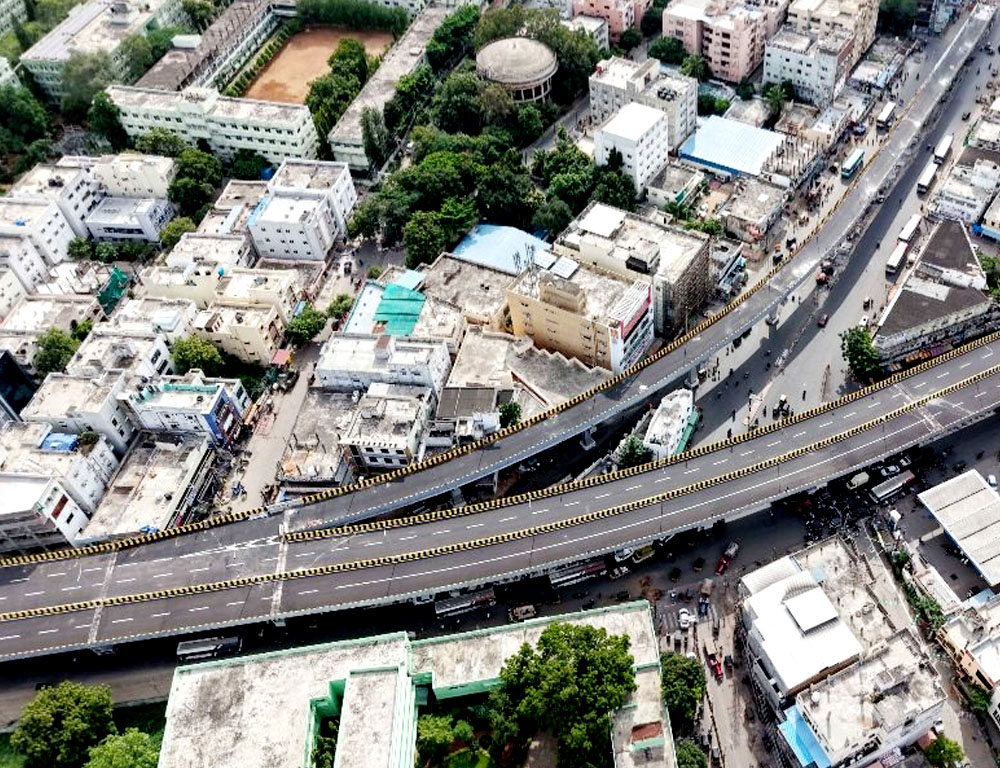
Hyderabad has added a major elevated road link between Chanchalguda and Santosh Nagar, with the new four-lane steel flyover opening to traffic after its inauguration on Thursday. Built at an estimated cost of ₹620 crore, the 3.2-km corridor is expected to improve movement through one of the city’s busy urban stretches and reduce pressure on surface roads.
The flyover is 16.6 metres wide and provides four lanes for vehicular movement. Its alignment connects Chanchalguda with Santosh Nagar, creating a faster alternative for traffic travelling through the corridor. The project comes as Hyderabad continues to expand its road infrastructure in response to rising vehicle volumes. Congestion on major surface routes has increasingly affected journey times, particularly in densely developed parts of the city where widening existing roads can be difficult because of built-up areas and limited right-of-way. For commuters, the new elevated connection could reduce delays on the affected route by allowing through traffic to bypass several surface-level intersections. This may also create additional capacity on adjoining roads, although the overall benefit will depend on how traffic redistributes once motorists adjust to the new route.
The investment also has implications beyond travel times. Better road connectivity can improve access between residential neighbourhoods, commercial areas and employment centres. For local businesses, more predictable movement of customers and goods can support day-to-day economic activity. However, elevated infrastructure needs to be assessed as part of the wider transport network rather than as an isolated congestion solution. New road capacity can attract additional vehicle movement over time, particularly in rapidly growing urban areas. Complementary improvements to public transport, pedestrian infrastructure and junction management can help ensure that mobility gains are not limited to private vehicles. The project also raises the importance of pedestrian access around flyover approaches. Surface roads beneath and alongside elevated structures remain important for local trips, walking and access to shops and services. Safe crossings, footpaths and junction design will therefore influence how effectively surrounding communities benefit from the investment.
From a climate-resilience perspective, major transport infrastructure also needs to account for drainage, heat exposure and long-term maintenance. Hyderabad’s increasingly intense rainfall events make drainage around large road structures particularly important, while durable construction and regular upkeep can protect the value of public investment. The Chanchalguda Santosh Nagar flyover marks another step in Hyderabad’s ongoing effort to strengthen its urban road network. Its long-term success will depend not only on faster vehicle movement but also on how well the corridor integrates with public transport, walking routes and surrounding neighbourhoods