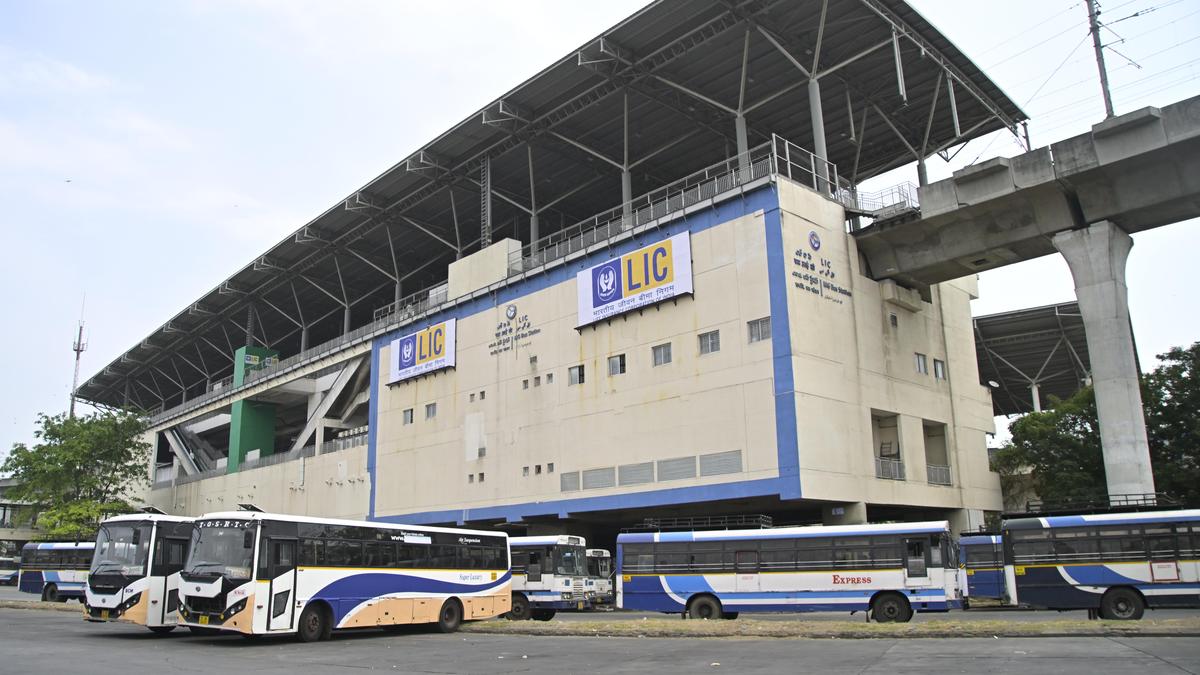
As Hyderabad’s buses remained off the roads, the city’s metro rail network did something unusual: it stopped behaving like a profit-maximising enterprise and started acting like a public utility. Hyderabad Metro Rail Limited announced it would operate 56 trains throughout the day — during both peak and non-peak hours — for the entire duration of the bus strike. The move effectively collapsed the usual distinction between rush hour and idle hour, offering commuters a rare glimpse of what a truly responsive transit system could look like.
A metro rail official confirmed the revised frequency. On the Miyapur–LB Nagar corridor, trains will now run every four minutes and 20 seconds throughout the day — faster than the usual non-peak gap of nearly five minutes. On the Nagole–Raidurg corridor, the frequency has been tightened to three minutes and 40 seconds, matching what used to be reserved for peak hours only. For context, a normal weekday sees reduced frequencies once morning rush ends. The strike changed that calculation overnight. Urban mobility analysts point out that this response reveals two truths. First, metro systems have spare capacity that remains deliberately unused during non-peak hours — a choice driven by operational costs rather than commuter need. Second, when a crisis removes that choice, the system adapts quickly. The question is why such adaptation cannot become permanent. Running 56 trains daily instead of a variable schedule would cost more. But the cost of not doing so — measured in stranded commuters, auto fare gouging, and lost wages — is already being paid by citizens.
The metro’s intervention is particularly significant for women and low-wage workers who bore the brunt of the bus strike. With free bus travel suspended under the Mahalaxmi scheme, the metro becomes the only subsidised, climate-friendly alternative. However, last-mile connectivity remains a gap. Metro stations cannot reach every neighbourhood. Without feeder buses — which are also part of the struck transport system — the metro solves only half the problem. For Hyderabad, the strike has become a stress test. The metro has passed by running more trains. But the real exam begins when buses return: will the system remember what it learned about serving people, not just schedules?
Hyderabad Metro Adds 56 Trains Amid Bus Strike Chaos