


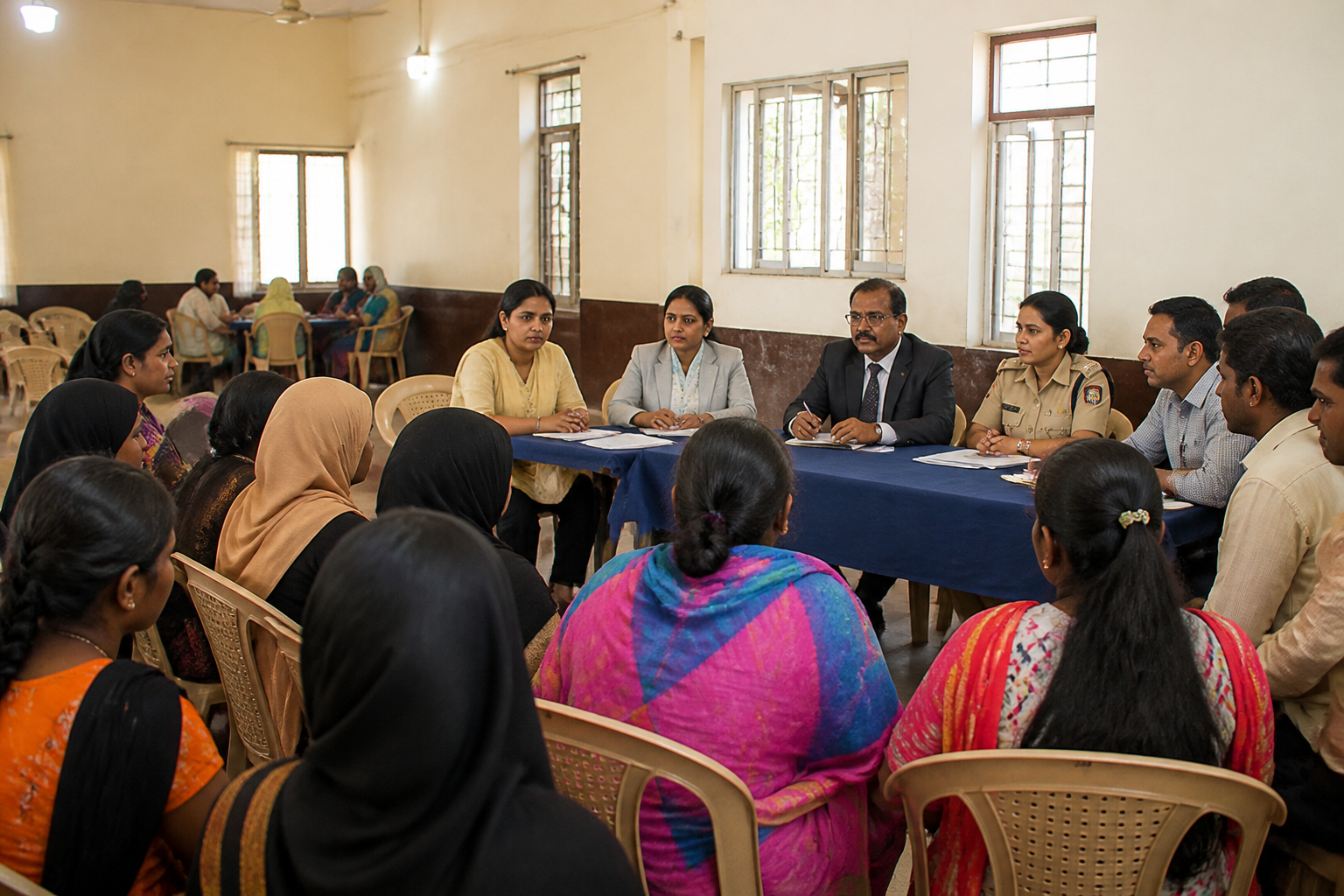
A Hyderabad legal clinic has brought together victims and witnesses in 35 cases involving atrocities against Dalit and Adivasi women and girls, with senior government officials assuring them of legal assistance, compensation and rehabilitation.
The cases, which include murder, rape and cheating on the pretext of love, were discussed at a clinic organised by Dalit Sthree Sakthi (DSS) on Wednesday. Victims and witnesses recounted their experiences of seeking justice before government officials and civil society representatives who attended as jury members.
DSS national convener Jhansi Geddam presided over the clinic and coordinated the proceedings. The event created a forum for the victims and witnesses to present their grievances directly to officials involved in prosecution, social development and rural poverty alleviation.
Director of Public Prosecutions Sambasiva Reddy commended the victims for maintaining faith in the justice system and the Constitution. He assured them of assistance in prosecuting the cases and said special courts would be established in every district.
The assurance places the cases within a wider institutional framework that includes prosecution, dedicated judicial forums and financial support. The clinic did not itself determine the legal outcome of any case, but provided a platform for the affected families to seek support from officials responsible for different parts of the justice and rehabilitation system.
Divya Devarajan, Chief Executive Officer of the Society for Elimination of Rural Poverty and Panchayat Raj Commissioner, stressed the need for financial assistance to victims. She said support would be extended through Sneha Cooperative Societies and that the Society for Elimination of Rural Poverty, in coordination with the Scheduled Castes Development Department, would help victims secure bank loans.
The proposed assistance indicates that rehabilitation is being treated as extending beyond compensation alone. Access to credit and cooperative support can form part of the institutional response for victims, although the report did not specify the number of beneficiaries, loan amounts or timelines for delivery.
Scheduled Castes Development Department Commissioner Vijayendra Boyi expressed anguish over the crimes and said the incidents reflected prevailing regressive social conditions. She assured the victims of compensation and rehabilitation while emphasising that financial assistance alone would not be sufficient and that justice must be secured in every case.
The government has sanctioned ₹40 crore towards compensation for victims of atrocities, while another ₹31 crore is in the process of being sanctioned, according to the official information shared at the clinic. The report did not provide a case-wise breakdown of the sanctioned amount or clarify how the funds would be distributed among the victims represented at the event.
The clinic therefore highlighted two linked administrative challenges: ensuring that criminal cases move through prosecution and the courts, and delivering compensation and rehabilitation without treating financial assistance as a substitute for justice. The next steps identified at the event include assistance in prosecuting the cases, establishing special courts in every district, extending support through Sneha Cooperative Societies and processing compensation and rehabilitation measures.

