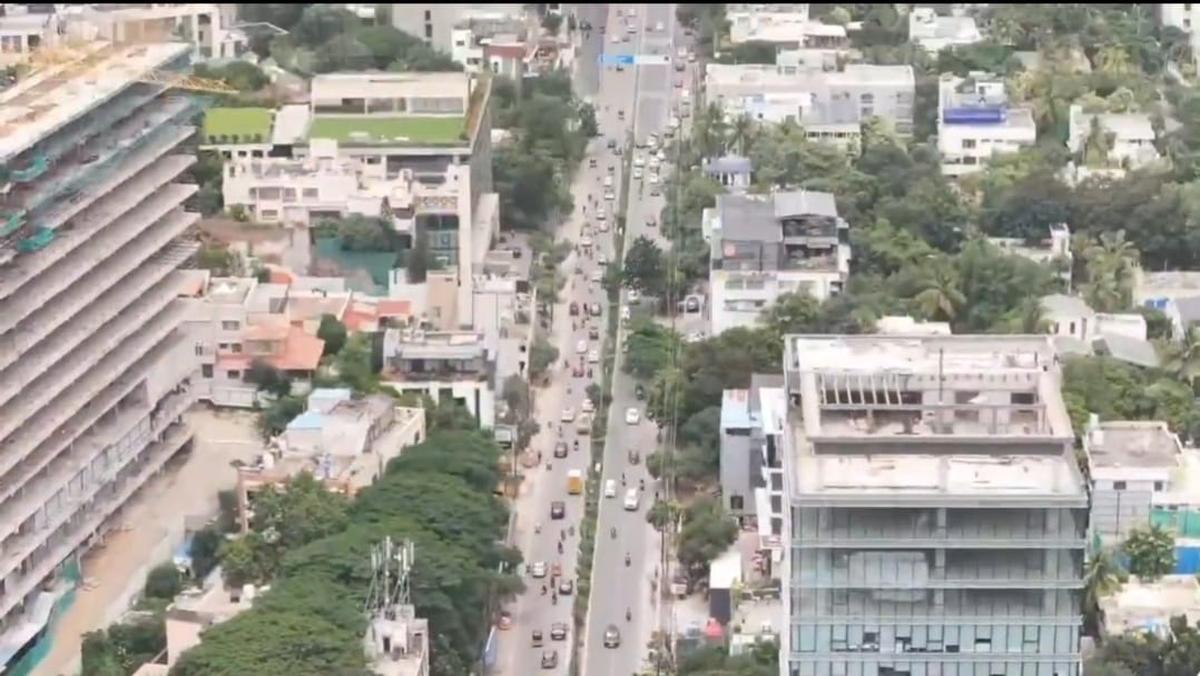
Hyderabad KBR Traffic Flow Improves Without Flyovers
A temporary traffic experiment around Hyderabad’s KBR National Park is prompting fresh questions about how the city tackles congestion. Since August 18, traffic has been moving in one direction along the affected stretch, and commuters have reported significantly shorter travel times. The improvement has revived debate over whether large grade-separator projects are always necessary when traffic management can deliver immediate gains.
The KBR one way traffic arrangement was introduced while construction continues under the Hyderabad City Innovative and Transformative Infrastructure (H-CITI) programme. The wider project involves seven flyovers and seven underpasses, with an investment exceeding ₹1,000 crore. The early response to the traffic change has been notable. At junctions connecting Road No. 82, Road No. 92, Jubilee Hills and Road No. 45, vehicles have continued moving through peak periods without the prolonged queues previously associated with the corridor. Traffic personnel have been managing movement at key points as commuters adjust to the new arrangement. A major factor appears to be the removal of conflicting vehicle movements. Under the one-way system, vehicles no longer need to make as many U-turns or cross opposing traffic streams. This has reduced points of friction and allowed the existing road network to handle traffic more continuously.
The KBR one way traffic experiment, however, comes with a trade-off. Some journeys may become longer because motorists have to follow a revised route before reaching their destinations. That can increase fuel use and operating costs, particularly for autos and other commercial vehicles. The timing also makes the experiment important from an urban planning perspective. Large infrastructure projects can require years of construction, substantial public expenditure and significant disruption to surrounding neighbourhoods. The current traffic response raises a basic planning question: should cities first test lower-cost operational measures before committing road space and capital to permanent structures? There is also an environmental dimension around KBR National Park. Any major road expansion near a significant urban green area needs to account for ecological sensitivity alongside traffic capacity. Protecting mature trees, reducing construction-related disruption and limiting additional vehicle dependence are relevant to the corridor’s long-term resilience.
Urban transport planners note that traffic management should not be judged only by vehicle speeds. Pedestrian safety, public transport access, emissions, fuel consumption and the impact on surrounding residential areas also matter. For Hyderabad, the experience could provide useful evidence for future junction and corridor planning. If traffic can be improved through better lane management and directional movement, such measures could complement—not automatically replace—larger infrastructure. The immediate priority is to measure the results systematically before deciding whether temporary traffic changes should influence permanent road design.