


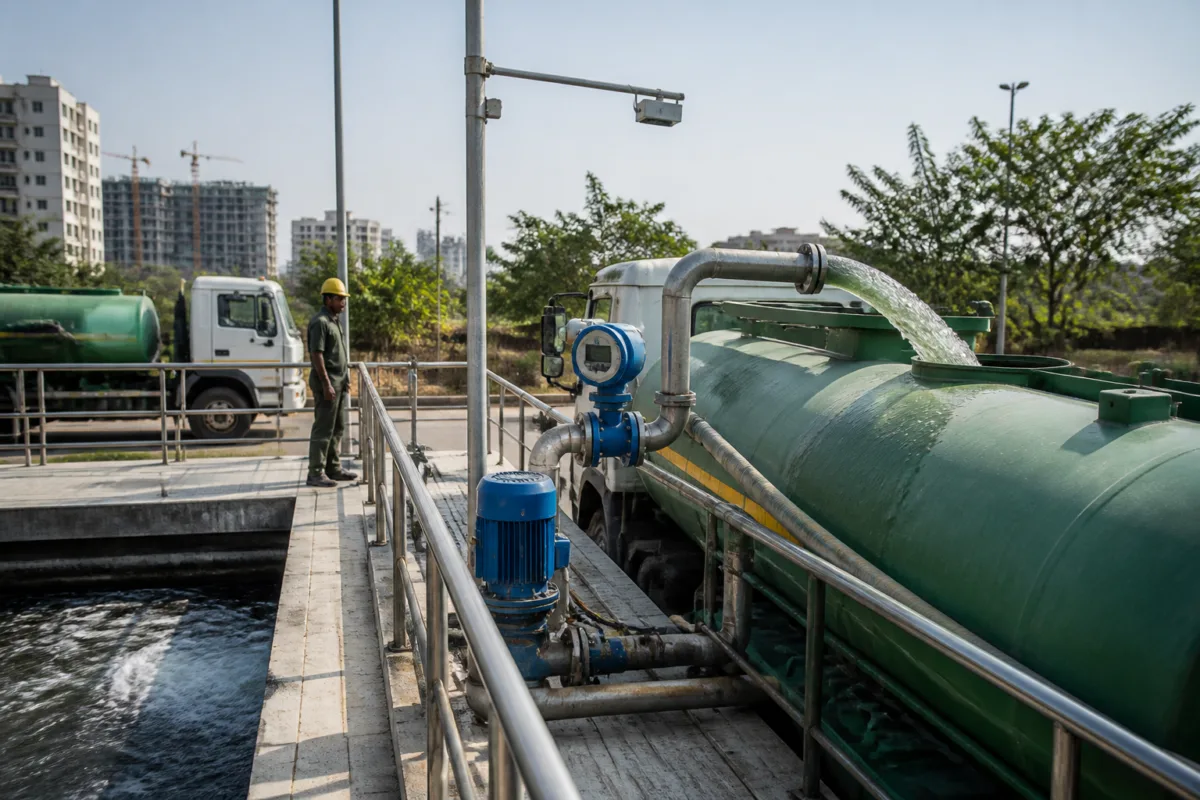
Hyderabad green water tankers will begin supplying treated wastewater for construction sites, industries and parks from November 1, as the Hyderabad Metropolitan Water Supply and Sewerage Board moves to reduce the use of groundwater and drinking water for non-potable activities.
The service will use GPS-equipped tankers and online bookings. HMWSSB managing director K. Ashok Reddy reviewed preparations on Friday following directions from Chief Minister A. Revanth Reddy. The board is also assessing demand among construction sites, commercial complexes, government establishments and gated communities before finalising the operating network.
Under the planned system, treated wastewater will be collected from selected sewage treatment plants and supplied through designated filling stations. HMWSSB officials have been instructed to identify nearby government and private sewage treatment plants and arrange the infrastructure required for tanker operations, including filling platforms, pumps and flow meters.
Each tanker will carry special branding and GPS tracking. Electronic point-of-sale machines at filling stations will record the quantity supplied, while a proposed mobile application will handle customer registration, bookings, tanker allocation, digital payments and delivery confirmation. The system is intended to create a traceable chain from treatment plant to end user rather than relying on unrecorded water deliveries.
Customers who own tankers will be allowed to use the service under prescribed rules. Other users will be able to book tankers registered with HMWSSB. The board has not provided details in the supplied report on the final tariff, the number of tankers to be deployed or the specific sewage treatment plants that will initially serve customers.
The treated water is intended only for non-drinking purposes. Proposed uses include plantation work, road cleaning and dust control, as well as requirements at construction sites, industrial premises, parks and other large properties. Separating these uses from potable water supplies could reduce demand on drinking-water networks, particularly where construction and landscaping activities require regular tanker deliveries.
The initiative comes amid concerns over El Nino conditions, according to the report. Its implementation will depend on whether the board can match demand with nearby treatment capacity and maintain consistent quality across multiple filling locations. The decision to use GPS tracking, digital volume records and electronic payments indicates that monitoring supply and delivery will be a central part of the system.
Ashok Reddy has directed officials to conduct continuous water-quality testing and awareness campaigns for builders, industries and the public. Those measures are expected to support the distinction between treated wastewater for approved uses and water meant for human consumption. The board’s immediate next step is to assess demand and complete preparations for the planned November 1 launch.

