


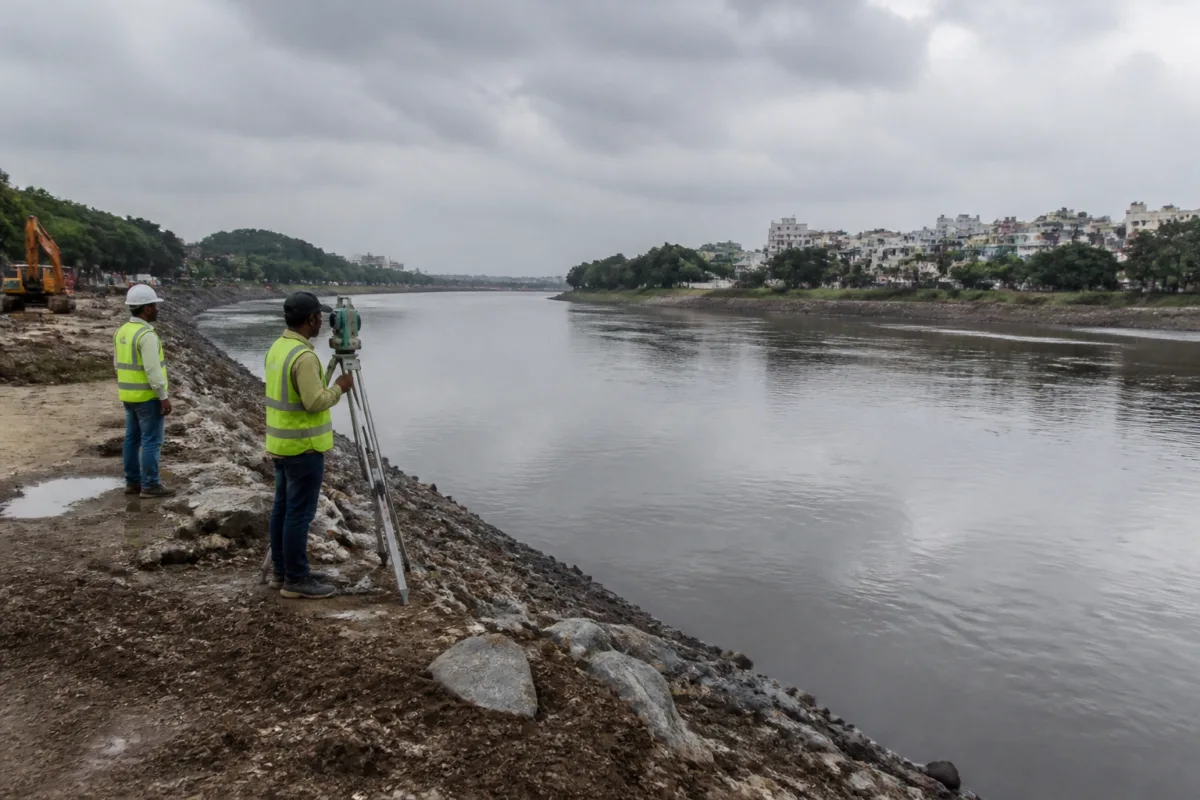
The Musi Riverfront Development Corporation Ltd (MRDCL) has invited tenders for a cable-stayed bridge across the Musi River, connecting Osmansagar and Bapughat as part of the first phase of Hyderabad’s riverfront development project. The proposed works extend beyond the bridge and include river cleaning, flood mitigation, retaining walls, embankments, roads, utility corridors and drainage infrastructure.
The tender covers the proposed connection between Osmansagar and Bapughat under the Musi riverfront project’s Phase-I plan. The project involves the rejuvenation and development of a 19.05-km stretch of the river, divided into two zones based on the locations of the planned works.
Zone 1A covers the 7.53-km stretch between Himayatsagar and Bapughat. Zone 1B covers the 11.52-km stretch between Osmansagar and Bapughat. The proposed cable-stayed bridge falls within the latter stretch and is intended to form part of the wider riverfront infrastructure network.
According to the report, the project scope includes cleaning the river and carrying out flood mitigation works along the identified stretches. It also includes the construction of retaining walls and river embankments, which are intended to form part of the physical works along the river corridor.
The tender package also includes roads and bridges, utility corridors, stormwater drain works, trunk sewer mains and rubber dams. This means the proposed riverfront development is being structured as a combined transport, drainage, sewerage and river-management project rather than as an isolated bridge construction exercise.
The cable-stayed bridge will be executed either through an engineering, procurement and construction turnkey model or under a design-build contract model. The selected agency will also be responsible for operation and maintenance for five years, according to the tender details reported by Deccan Chronicle.
The inclusion of stormwater drains, trunk sewer mains and flood mitigation works places the project within Hyderabad’s broader urban water-management system. These components are especially significant for a river corridor where mobility infrastructure, drainage capacity and flood management are being planned together. The tender information, however, does not specify the bridge’s length, estimated cost, number of lanes, construction schedule or expected completion date.
The project’s immediate next step is the tendering process for agencies to execute the proposed works. Further details on the selected contractor, the final contract model, construction milestones and operational arrangements are expected to emerge through the procurement and award process.

