Hyderabad Bengaluru Highway Sees Longer Travel Times
HYDERABAD: The Hyderabad–Bengaluru road corridor is undergoing a major transition, with widening projects, new speed enforcement measures and construction activity reshaping driving conditions along the route. While several sections remain in good condition, travellers report longer journey times, temporary bottlenecks and weather-related road deterioration, underscoring the challenge of upgrading a busy intercity corridor without disrupting mobility.
Recent traveller observations indicate that a journey between central Hyderabad and Bengaluru’s eastern suburbs can now take about 8.5 hours, compared with roughly seven hours around a decade ago, excluding rest breaks. Increased enforcement, construction activity and traffic interruptions are among the factors contributing to the longer journey. The Hyderabad–Bengaluru highway is also seeing expanded speed monitoring. Travellers have reported additional cameras around intersections and median openings, particularly along sections between Shadnagar and the Pullur toll plaza. Lower speed limits at selected locations require drivers to reduce speed sharply, potentially affecting average journey times while improving enforcement and road safety. Road geometry and traffic-calming infrastructure are another consideration. Speed humps around Dhone, Anantapur, Gutturu and Lepakshi Junction can interrupt vehicle flow, particularly for long-distance traffic. For a highway carrying substantial passenger and freight movement, inconsistent operating speeds can influence journey reliability as much as the overall road condition.
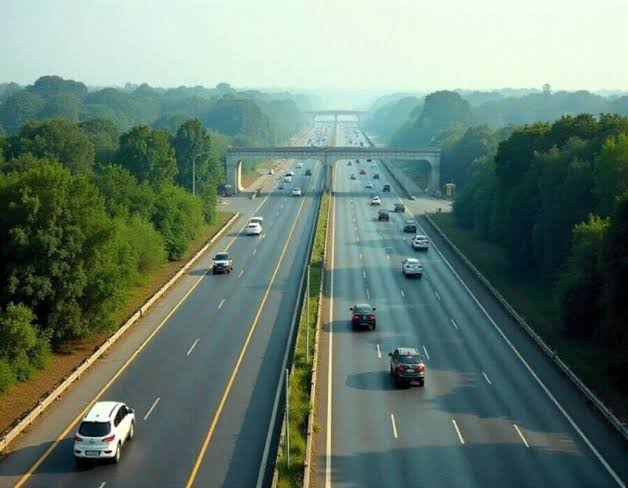
At the same time, significant capacity expansion is under way closer to Hyderabad. Sections between Shamshabad and the beginning of the Shadnagar bypass are being widened from six to eight lanes, while additional six-laning work is taking place at multiple points towards Kurnool. Such projects could eventually improve capacity, but construction zones are creating temporary constraints. Flyover construction near Raikal toll plaza has reportedly produced bottlenecks, with incidents involving stalled heavy vehicles capable of causing lengthy queues. These disruptions highlight the need for effective traffic management around active construction sites, particularly during night-time freight movement.
Weather has added another layer of uncertainty. The Kurnool–Gooty section has reportedly suffered surface deterioration following rains, with roadwork continuing at some locations. By contrast, the Gooty–Anantapur–Devanahalli stretch has been described as being in comparatively good condition. The corridor’s evolution also points to a broader infrastructure challenge. Expanding highway capacity is important for regional trade, employment access and passenger mobility, but construction needs to be matched by predictable travel times, safe junction design, drainage and well-maintained surfaces. For Hyderabad and Bengaluru, the long-term value of the corridor will depend not only on how many lanes are added, but on how efficiently the entire route functions. Coordinated construction, weather-resilient road design and consistent safety measures could help ensure that capacity expansion translates into more reliable intercity travel.